How to remove sticker residue from glass and plastic easily
By Dan Kauna, August 3, 2026Peeling a sticker off a newly bought glass jar or plastic container often leaves behind a sticky, dirty patch that refuses to wash away with water. Scraping the spot with a knife risks leaving ugly scratches across the surface.
Instead of spending hard-earned money on commercial chemical removers, a simple kitchen staple offers a quick solution in just two minutes.
Applying a few drops of vegetable cooking oil directly to the leftover glue breaks down the stubborn residue completely, making it easy to wipe away with a plain cloth.
How cooking oil dissolves sticker glue
The glue used on price tags belongs to a family called pressure-sensitive adhesives. Manufacturers design these glues using synthetic rubber or acrylic polymers, so they stay sticky without needing water or heat.
Because these materials resist water, washing the container with ordinary soap and water barely makes a dent.
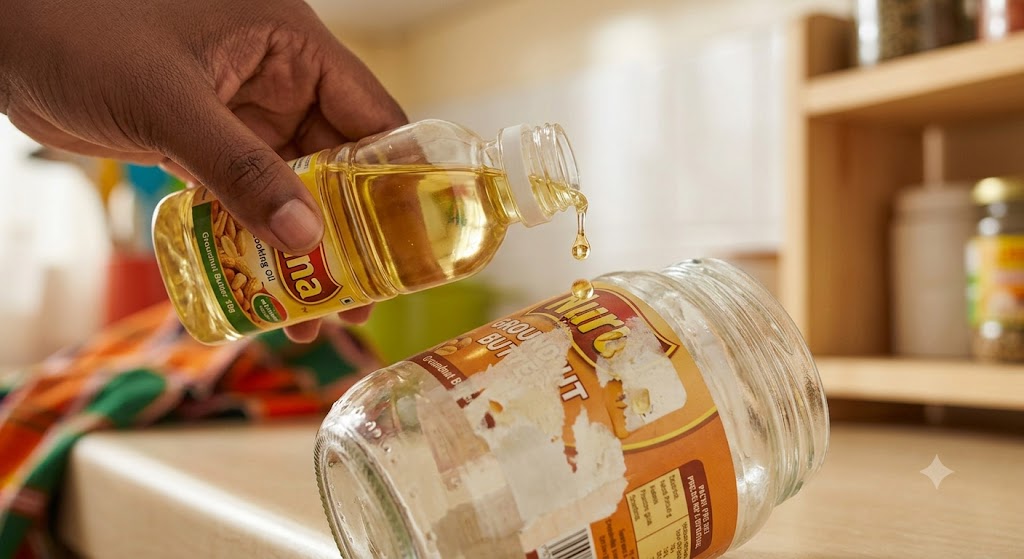
Cooking oils, including sunflower and vegetable oil, work as natural liquid solvents. When poured over the sticker patch, the oil breaks into the rubbery glue structure and softens it.
Research published in the International Journal of Adhesion and Adhesives highlights that “pressure-sensitive adhesives are viscoelastic materials with a combination of liquid-like viscous and solid-like elastic properties.”
The fatty acids in cooking oil weaken this bond, loosening the grip on glass or plastic surfaces without damaging the underlying material.
Simple steps to lift sticker residue
Cleaning off the sticky patch takes only a few quick steps. Pour two to three drops of cooking oil onto the affected spot and spread it evenly over the glue using a finger or a small piece of cloth.
Let the oil sit untouched for two minutes so it can soak deep into the adhesive.
After two minutes, wipe the spot firmly with a dry paper towel or kitchen cloth. The softened glue lifts off cleanly in a single stroke. To finish, wash the container with warm water and dishwashing soap to remove the light oil film left behind.
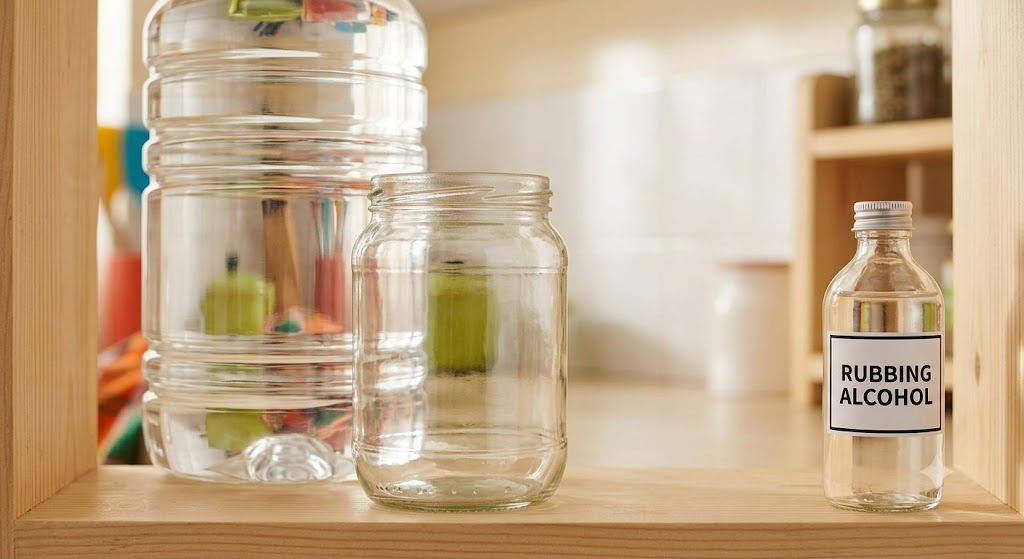
For items where oil might not be ideal, rubbing alcohol provides a great alternative. The alcohol dissolves acrylic polymers quickly and evaporates without leaving any mark, leaving containers completely clean.