How charcoal is made and what it costs Kenya’s forests
By Dan Kauna, July 20, 2026Every evening across Kenya, smoke rises from millions of jikos as families prepare supper. Whether boiling a pot of githeri or roasting meat, charcoal remains the go-to fuel for most homes.
Yet, very few people stop to think about how a heavy tree branch turns into that light, black piece of charcoal resting in the jiko.
How wood turns into charcoal without burning away
Turning green timber into fuel comes down to a simple process called pyrolysis. In simple terms, wood is cooked inside a closed space with almost no air.
If wood is burned in the open, oxygen feeds the flames and leaves you with a pile of useless ash. But when you cut off the oxygen and raise the heat to between 300°C and 500°C, the wood does not catch fire. Instead, the intense heat bakes out water and drives off unwanted gases.
What remains is mostly pure carbon. Dry wood naturally gives off about 15 to 18 megajoules of heat per kilogramme.
Once transformed into charcoal, that energy jumps to nearly 30 megajoules per kilogramme. That is why charcoal burns hotter, lasts longer, and produces far less smoke than raw firewood.
The hidden forest cost behind every bag
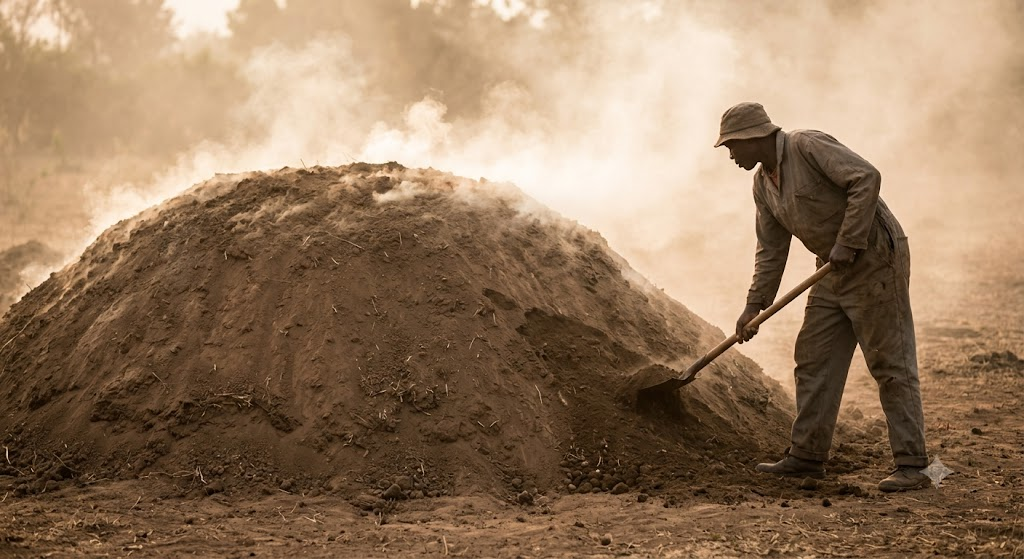
The way charcoal burners bake this fuel determines how many trees disappear from our forests. Most producers in Kenya still use traditional earth mounds, covering stacks of logs with grass and soil. Because these earth kilns leak heat and let in too much air, a huge amount of wood simply burns away to ash.
Traditional earth kilns convert only 10 to 15 percent of the wood’s weight into charcoal. It takes roughly 8 to 10 kilogrammes of green wood to produce just 1 kilogramme of charcoal.
Modern retort kilns are far better because they trap and reuse escaping gases to keep the heat high.
Research shows that “retort-kilns have a much higher efficiency rating of 35%–40% in comparison with earth-mound kilns; they also reduce air pollution by up to approximately 75%, as the smoke produced is partly burned off during the carbonisation process.”
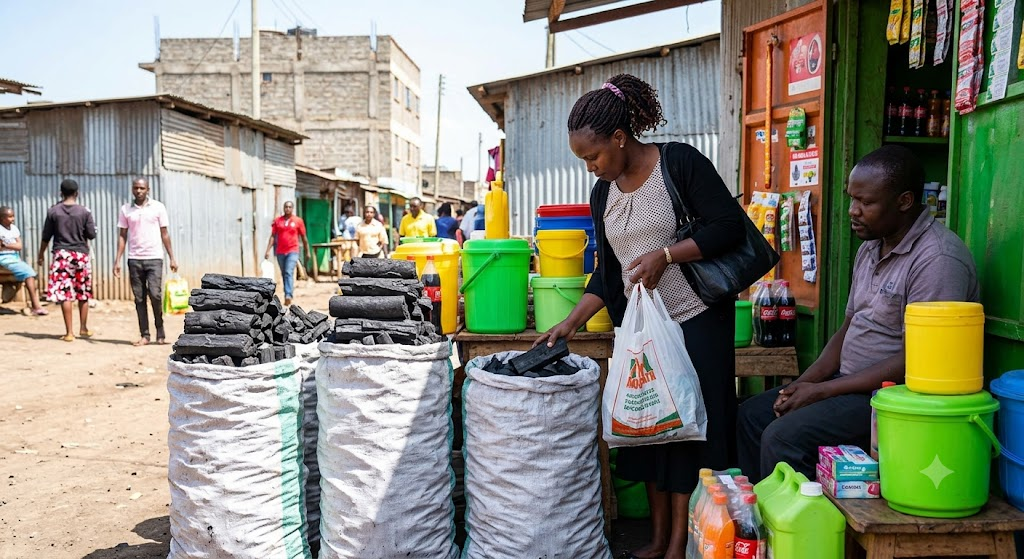
When you buy a tin of charcoal for Ksh150 or a big sack for Ksh2,200 at a local duka in Nairobi, you pay for cutting, burning, and transport. The retail price never accounts for the 90 percent of wood wasted along the way, a price Kenya’s forest cover continues to pay.