Advertisement
How to track your budget and beat impromptu buying dopamine rush
13th May, 2026 01:41 PM
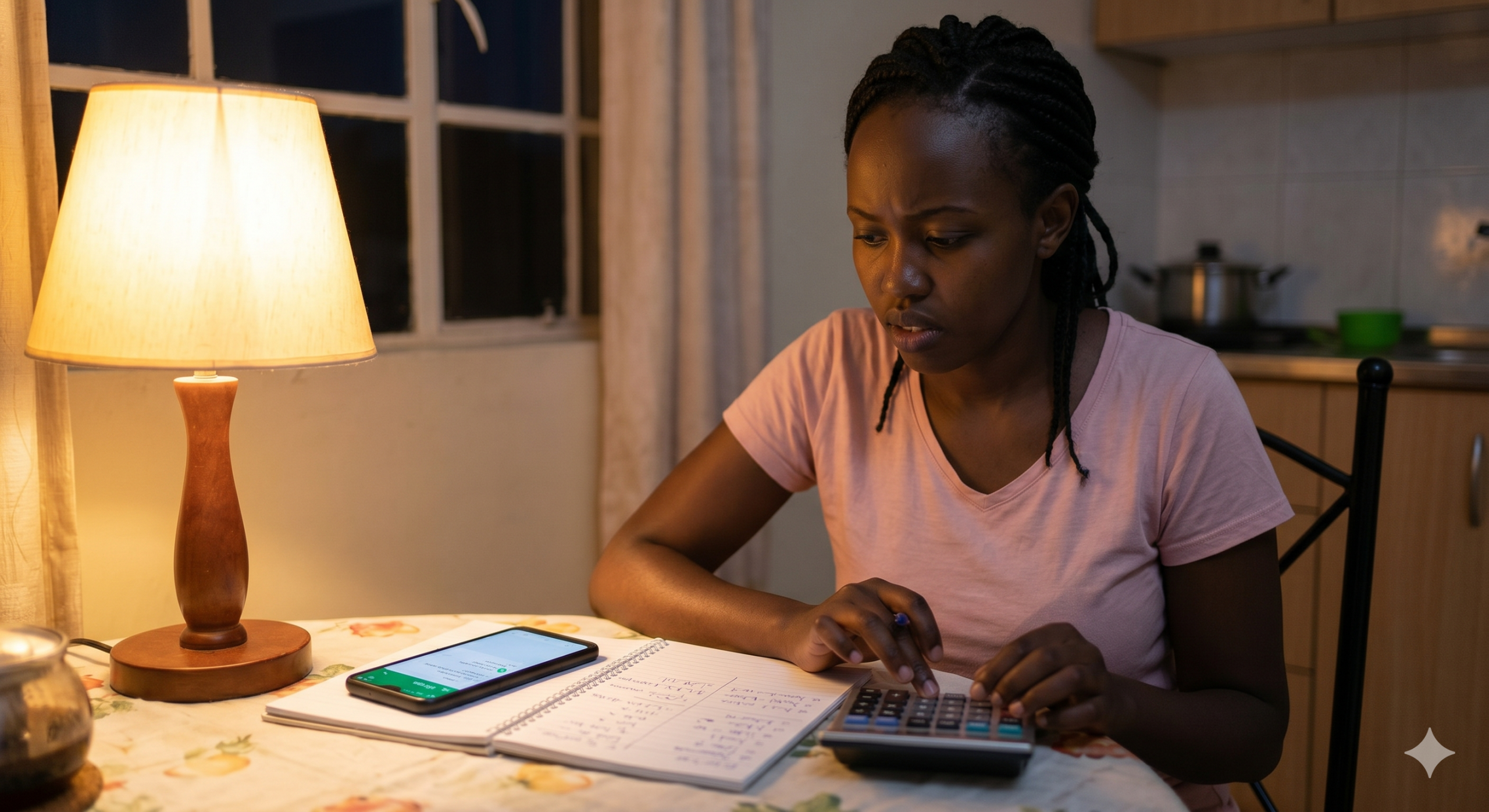
Most people have made a budget at some point. Fewer people have ever truly tracked their spending.
And that gap between the plan and the reality is exactly where money disappears every month.
A 2023 study from the University of Wisconsin-Madison, published in the Consumer Interests Annual, found that “active tracking through manual expense recording requires more engagement and is associated with higher financial self-awareness”, and it is that self-awareness, not the budget plan itself, that actually changes how you spend.
The same study found that consistent tracking led to a measurable reduction in discretionary spending over time.
In short: the budget tells you where money should go. Tracking tells you where it went. You need both.
How to actually track your spending
Tracking does not have to mean spreadsheets or complicated apps.
It means building a simple, repeatable habit of recording and reviewing where your money goes.
Here are three methods, from the most basic to slightly more structured. Pick one you will actually stick to.
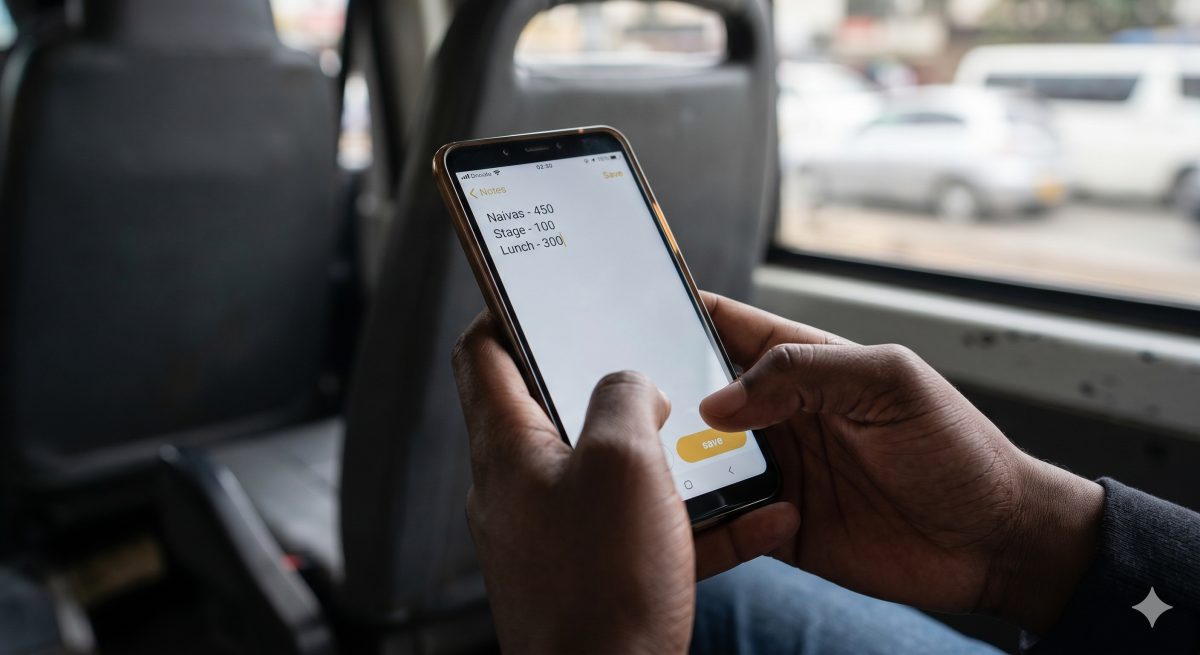
1. The notes-app method. Open the notes app on your phone and create a simple running list. Every time you spend money, add the amount and a one-word category – food, transport, data, entertainment. Do this for one week. Most people are genuinely surprised by what they see. This method works because the barrier to entry is zero: no downloads, no setup.
2. The daily two-minute check-in. Each evening, open your M-Pesa or mobile banking statement and add up what you spent that day. Compare it to your daily budget. If you spent Ksh900 on food when you budgeted Ksh600, you now know to adjust for the rest of the week instead of finding out on the 28th.
3. The weekly category review. Every Sunday, sort your week’s spending into broad buckets – rent/utilities, food, transport, personal, savings, and miscellaneous. Add each one up and check it against your monthly budget, prorated for the week. This works especially well if your income comes in unevenly across M-Pesa, bank, and freelance payments, because it smooths out the noise.
Whichever method you choose, the rule is the same: look at your money regularly. That habit alone will change how you spend it.
How to avoid impromptu spending
Tracking shows you what happened. These habits help prevent the damage in the first place.
Give yourself a pause rule. For any unplanned purchase above Ksh1,000, wait 24 hours before buying it. Most impulse purchases do not survive a night’s sleep. For anything above Ksh5,000, wait 48 to 72 hours.
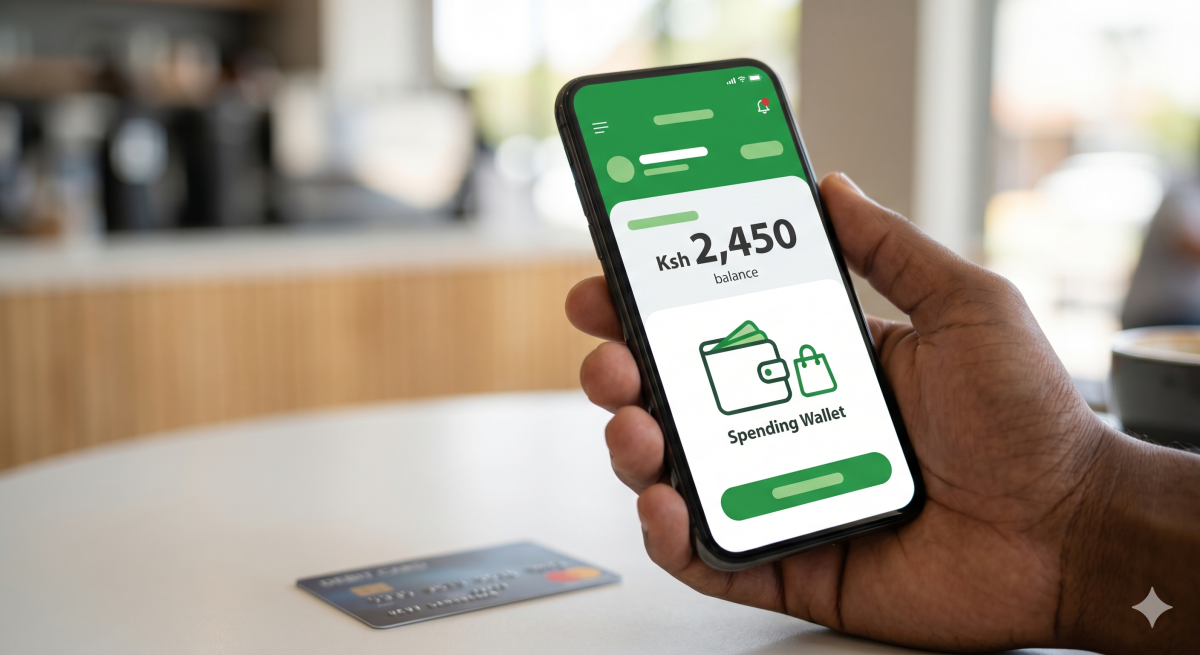
Use a separate spending wallet. Keep your monthly discretionary money (the amount budgeted for personal spending and entertainment) in a separate M-Pesa account or sub-wallet. Once it is empty, it is empty. Keeping it separate from your main account removes the temptation of seeing a large balance and assuming there is room to spend.
Unsubscribe from promotional content. Most impromptu spending is triggered. Flash sale texts, “limited offer” notifications, and promotional emails are engineered to bypass your better judgment. Turn off retail notifications and unsubscribe from marketing emails.
Budget a small “guilt-free” line. Paradoxically, one of the best ways to avoid impulse spending is to allow for it in small amounts. If Ksh1,500 a month is ring-fenced for random treats, you are far less likely to blow Ksh6,000 on a bad day because the budget felt too tight.
When you know exactly where your money goes and have a system that catches impulse decisions before they land, the budget stops being a wish list and starts being something that actually works.