How to tell if eggs are still good
By David Nthua, March 9, 2026Many people throw away eggs the moment the date printed on the carton passes. It is a habit that feels safe, but in many cases, it leads to unnecessary food waste.
The truth is that the date on an egg carton usually tells you about quality, not the exact moment the eggs become unsafe.
Food safety experts explain that eggs stored properly in a refrigerator can remain safe to eat for three to five weeks after the pack date, and sometimes even longer.
This means that before throwing away a carton of eggs, it is worth checking their freshness using a few simple methods that people have relied on for years.
Understanding how to test eggs at home can help you avoid wasting food and also give you more confidence in your kitchen.
The float test
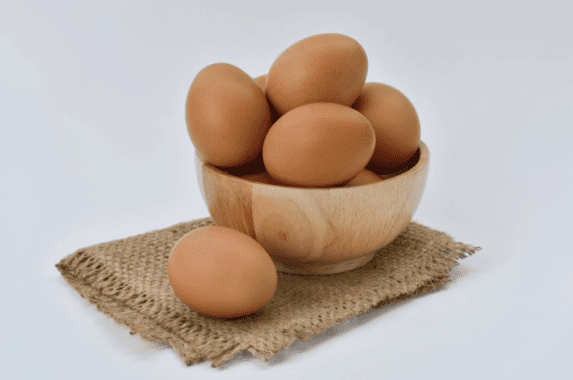
One of the simplest and most popular ways to check egg freshness is the float test. It requires nothing more than a bowl of cold water.
Place the egg gently into the bowl and observe how it behaves. If the egg sinks to the bottom and lies flat on its side, it is very fresh. If it sinks but stands upright, the egg is older but still safe to use for most cooking.
If the egg floats to the surface, it is usually a sign that the egg has gone bad and should be discarded.
This happens because eggshells contain tiny pores. Over time, moisture slowly escapes through these pores while air enters the egg. As the air pocket inside grows larger, the egg becomes lighter and eventually floats.
While the float test helps estimate freshness, it is always wise to confirm the result with another quick check after cracking the egg.
Understanding the pack date
Many cartons also include a three-digit number called the pack date, which tells you the exact day of the year the eggs were packaged.
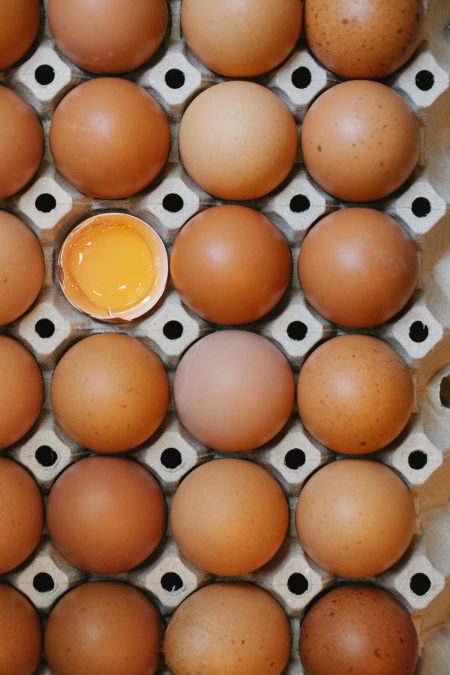
For example, a code reading 001 represents January 1, while 365 represents December 31. Because eggs are usually packed within a day of being laid, this code can give you a clearer idea of how old the eggs really are.
Checking the pack date is often more useful than relying on the “sell by” date printed on the carton.
The sniff and look test
Once an egg is cracked into a bowl, it becomes much easier to judge its quality.
A fresh egg typically has a firm, rounded yolk that sits high, while the egg white remains thick and close to the yolk. As eggs age, the white becomes thinner and spreads out more across the plate.
Smell is also an important indicator. Fresh eggs have almost no odour. If an egg gives off a strong sulfur or rotten smell, it should be thrown away immediately.
Most people find that a spoiled egg is impossible to miss once it is cracked open.
A simple flashlight trick
Another method used by farmers and egg graders is known as candling. Traditionally, this involved holding an egg in front of a candle flame to inspect its interior. Today, many people simply use the flashlight on their phone.
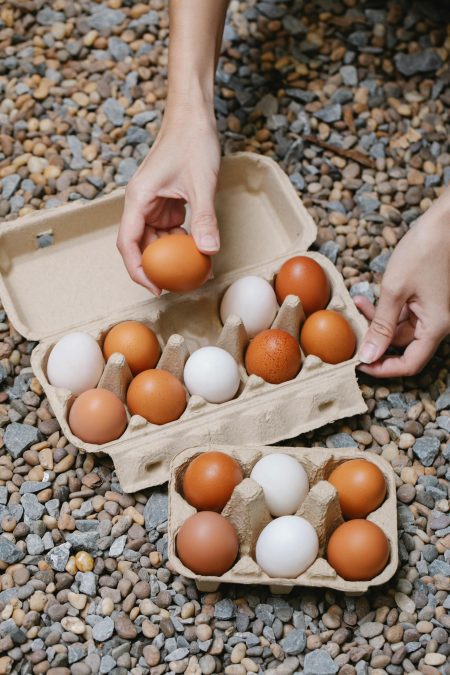
In a dark room, shine the light through the egg. A fresh egg will show a small air pocket, while older eggs reveal a larger one. Although this method takes a little practice, it can give a useful visual clue about the egg’s age.
Using eggs before they spoil
If you discover that your eggs are no longer very fresh but still safe to eat, they can still be used in many recipes. Slightly older eggs are excellent for hard boiling, because the larger air pocket makes them easier to peel.
They also work well in baking, scrambled eggs, omelettes, pancakes, and casseroles, where texture differences are less noticeable.
Learning how to check egg freshness can save money and reduce unnecessary waste.
Instead of throwing away eggs simply because of a date on the carton, a few quick checks can help you decide whether they are still perfectly good for your next meal.