How Freemasonry shaped the history of Nairobi’s All Saints Cathedral
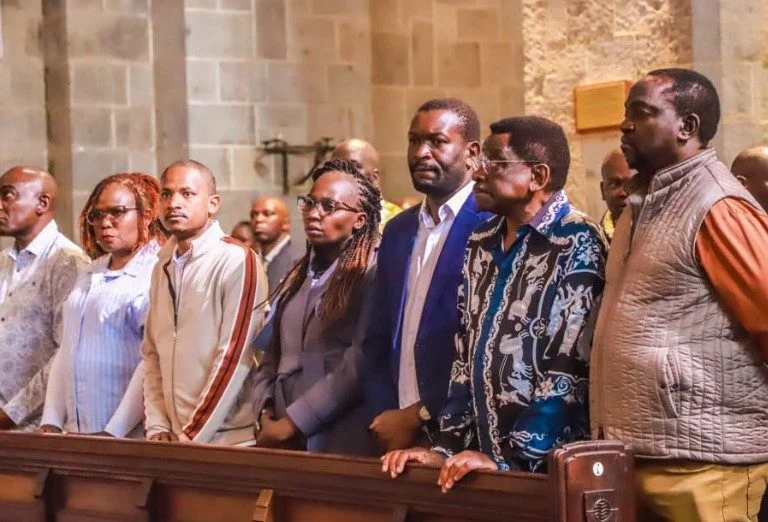
By Katemarthason Okudo, September 13, 2026All Saints Cathedral has stood at the heart of Nairobi for more than a century, serving as a place of worship and an important landmark in the capital. On Sunday, September 13, 2026, the cathedral once again found itself at the centre of public attention as the Linda Mwananchi movement gathered there for a church service ahead of its Nairobi mobilisation.
A large crowd of supporters gathered around the cathedral, with the movement expected to proceed to several parts of the city before culminating in a rally at Jacaranda Grounds.
But beyond today’s political activity, All Saints Cathedral has a long history that dates back to the colonial period and includes a connection to Freemasonry that has attracted public curiosity over the years.
How All Saints Cathedral began
The origins of the cathedral can be traced to the early Anglican community in Nairobi. The first Bishop of Mombasa, William George Peel, arrived in Nairobi in 1900 and conducted Anglican services for the growing European community and Uganda Railway workers.
As the city expanded, the existing church facilities became inadequate. In July 1914, members of the European Anglican community held a public meeting to raise money for a permanent church in central Nairobi.
The foundation stone for what became All Saints Church was laid on February 3, 1917, by Sir Henry Conway Belfield, the then Governor of Kenya. Bishop J.J. Willis of Uganda blessed the stone, while a document containing a prayer was placed beneath it.
The first section of the building was completed quickly. The western bays of the nave and side aisles were dedicated in July 1918, although construction of the full cathedral continued for decades.
Where Freemasonry comes in
The connection between All Saints Cathedral and Freemasonry needs some context.
Historical accounts identify the foreman who oversaw aspects of the cathedral’s construction as a Freemason. This has contributed to descriptions of All Saints as one of Nairobi’s early buildings associated with Masonic craftsmanship.
However, this does not mean that All Saints Cathedral was founded as a Masonic institution or that the Anglican Church and Freemasonry are the same organisation.
Freemasonry was established among European colonial communities in East Africa during the period when Nairobi was developing as a colonial administrative and railway centre. Skilled craftsmen and professionals who belonged to Masonic lodges were involved in different construction projects at the time.
The presence of a Freemason among the people involved in constructing All Saints therefore forms part of Nairobi’s wider architectural history. It should not automatically be interpreted as evidence that the cathedral was a Freemason place of worship.
The cathedral’s own history identifies it as an Anglican institution established for Christian worship, while its official website describes it today as the Provincial Cathedral of the Anglican Church of Kenya and the cathedral of the Diocese of All Saints’ Cathedral, Nairobi.
The building itself
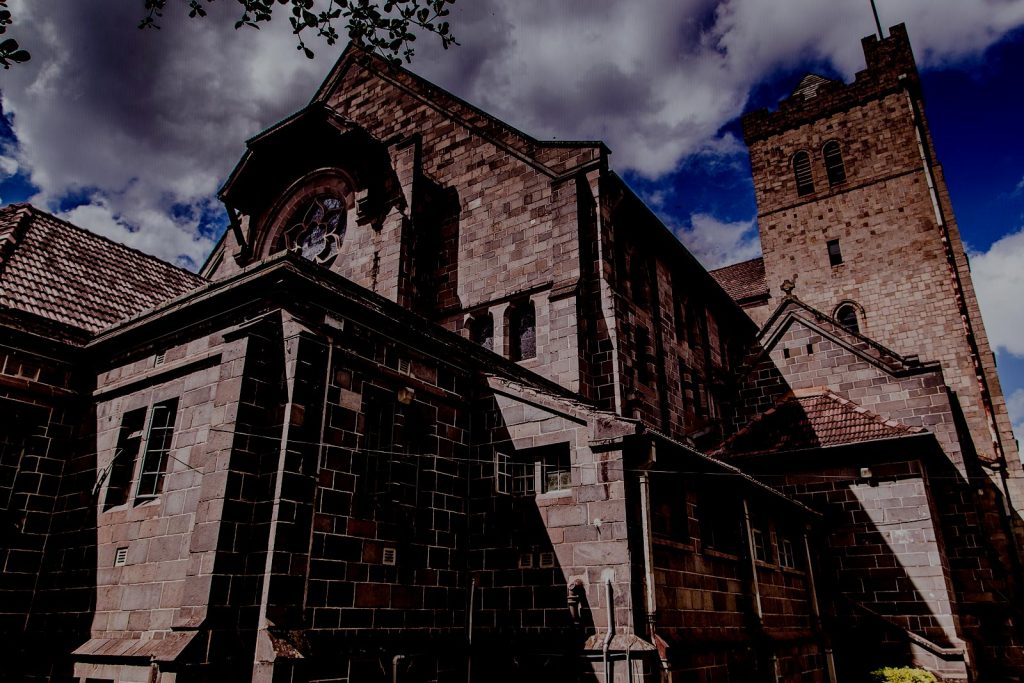
All Saints Cathedral was designed in the Gothic Revival tradition, a style that was common in many large Anglican churches in Britain and its former colonies.
Its stone walls, pointed arches, towers, stained-glass windows and timber features give it the appearance associated with traditional English Gothic churches. The building was constructed in phases rather than completed at once.
Construction continued for many years, with additional sections completed in later decades. Historical accounts put the completion of the major construction programme in the early 1950s.
The cathedral’s main sanctuary is now recognised as a national monument and listed building under the National Museums of Kenya. Its position in the centre of Nairobi has also made it a significant venue for national, religious and civic events.
From colonial church to national landmark
Although the cathedral began during the colonial period and initially served a largely European Anglican community, its role changed as Kenya developed.
Today, All Saints Cathedral has a diverse congregation and occupies a prominent position within the Anglican Church of Kenya. It has also become a place associated with national conversations and public events beyond regular worship.
Its location near Nairobi’s central business district means that political and social events in the capital can easily bring the cathedral into the public spotlight.
That was evident again on September 13, 2026, when Linda Mwananchi supporters gathered at the cathedral ahead of the movement’s Nairobi programme. Reports showed a large crowd outside the church, with supporters carrying Kenyan flags, placards and whistles as they waited for the service and the activities that were to follow.
Why the cathedral continues to attract attention
More than 100 years after its foundation stone was laid, All Saints Cathedral remains one of Nairobi’s most recognisable historic buildings.
Its story brings together the development of Nairobi, the history of Anglican Christianity in Kenya, colonial-era architecture and the work of skilled craftsmen of the period, including individuals who belonged to Masonic organisations.
The Freemasonry connection is therefore one part of a much wider history. The cathedral itself remains an Anglican place of worship and a national landmark, while its location continues to place it at the intersection of Nairobi’s religious, social and public life.
I’ve kept the Freemasonry angle factual rather than repeating the stronger claim that “Freemasons built the cathedral” as though it were a Masonic institution. The documented point is that the construction had involvement from a Freemason, while the cathedral’s own history identifies its Anglican origins.