Advertisement
Why sleeping past 9 am on weekends makes Mondays harder
30th May, 2026 10:37 AM
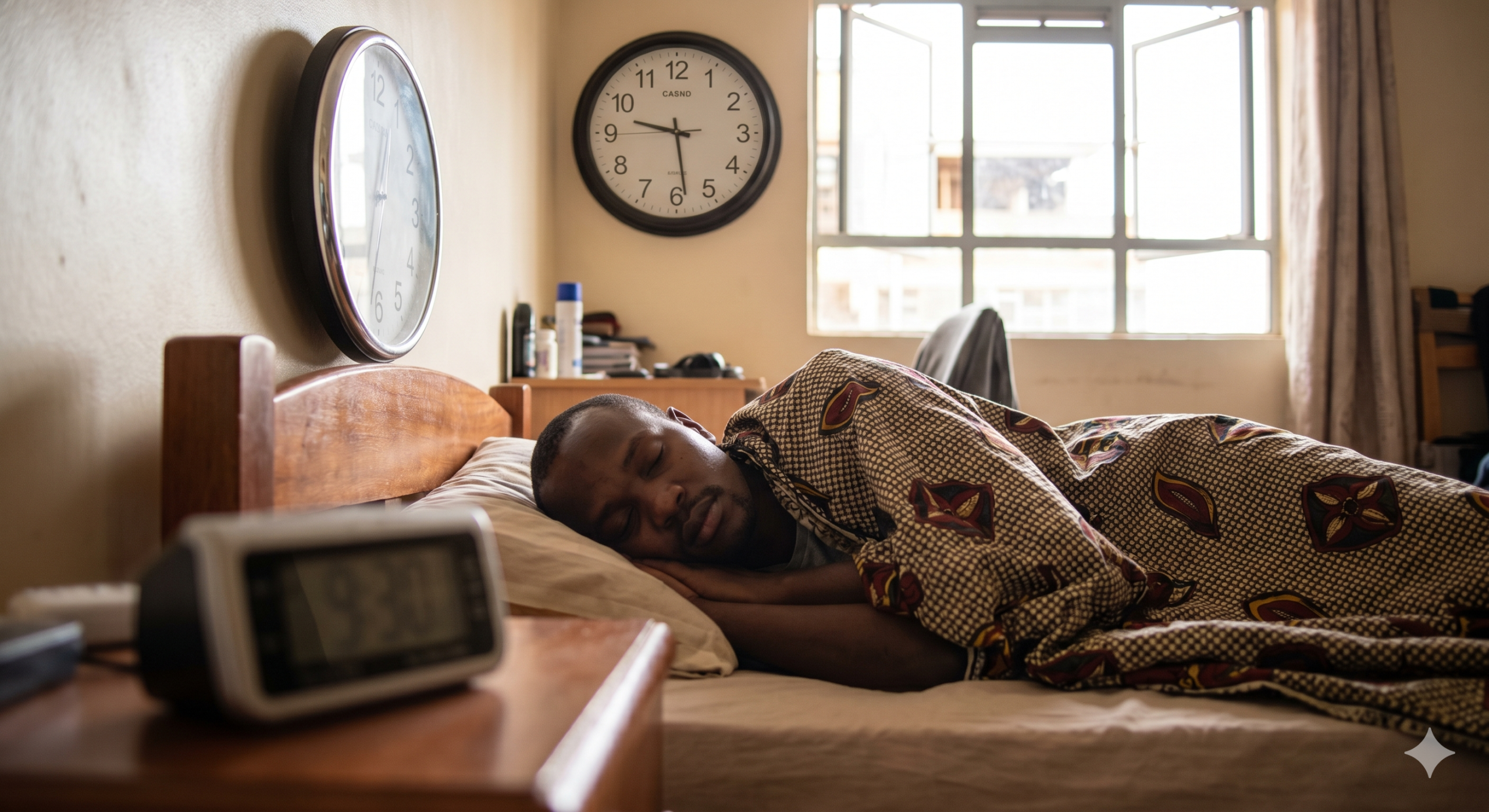
Most people look forward to Saturday morning with one simple plan: sleep in, for as long as possible. No alarm, no schedule, no guilt. It feels like rest.
According to chronobiologists (scientists who study biological time) it may be doing the opposite.
The disruption has a name. Researchers call it social jet lag, a term coined by German chronobiologist Till Roenneberg in 2006 to describe what happens when your biological clock and your social schedule pull in opposite directions.
Roenneberg put it plainly: “The behaviour looks like if most people on a Friday evening fly from Paris to New York or Los Angeles to Tokyo, and on Monday they fly back.”
The difference is that nobody boards a flight. The only thing that changes is when you go to sleep.
What happens inside the body
Your circadian rhythm (the internal 24-hour clock that governs sleep, hormone release, body temperature, and alertness) anchors itself to consistent signals, especially light exposure and wake time.
When you sleep until 9am or 10am on a Saturday after waking at 6am all week, your brain registers the shift and begins resetting your clock to match the later schedule.
By Sunday night, your body believes it is in a different time zone. It has not made you more rested. It has simply moved the clock forward.
Then Monday arrives. Your alarm goes off at 6am, but your internal clock thinks it is 4am. That is the fog. That is why concentration lags, memory feels sluggish, and simple decisions feel heavier than they should.

A 2025 study published in the Journal of Sleep Research by Takashi G. Sato and colleagues found that social jet lag was “consistently the most explanatory factor for cognitive performance” across multiple days of testing, with Monday showing the sharpest impairment.
The researchers assessed attention and sustained focus in adults living ordinary social lives, not in a sleep lab, making the findings particularly relevant to daily life.
The fix that does not mean giving up your weekend
The goal is not to set a 6am alarm on Saturday. That would defeat the purpose entirely.
The target, supported by sleep researchers, is to keep the difference between your weekday and weekend wake time within one hour. If you wake at 6am during the week, aim to wake no later than 7am on weekends.
The midpoint of your sleep – roughly the halfway point between when you fall asleep and when you wake, should stay broadly consistent across all seven days.

Equally important is what happens in the morning after you wake. Stepping outside and getting natural light within the first 30 minutes of waking helps anchor your circadian clock and signals to your brain that the day has genuinely begun.
The other piece is Saturday night. Staying up until 1am or 2am and then trying to maintain an early wake time is a losing battle. The two ends of the sleep window work together. A consistent bedtime (or at least one that does not vary by more than an hour) matters as much as the wake time.
The weekend is still yours. You can rest, slow down, and sleep more deeply. The research simply asks that you do it in the same time zone.