Why pull-ups can be more challenging for women than men
By Katemarthason Okudo, August 17, 2026Pull-ups are often viewed as one of the simplest ways to measure upper-body strength. The exercise requires a person to lift their entire body weight using muscles in the back, shoulders, arms and core.
Yet for many people, especially women who are just beginning their fitness journey, completing even one pull-up can feel like an impossible task.
This difference has often created the false impression that women are less capable of building strength. However, fitness experts say the challenge has more to do with biology and body composition than determination or athletic ability.
The good news is that the difficulty of the exercise does not mean women cannot master it. With the right training and consistency, many women can build enough strength to perform multiple pull-ups.
The role of upper-body muscle mass
One of the biggest reasons pull-ups can be more difficult for women is the difference in upper-body muscle mass.
Women generally have less muscle mass in their shoulders, chest, and arms than men. Studies have shown that women may have significantly less upper-body muscle, which affects their ability to generate the force needed to lift their bodies over a pull-up bar.
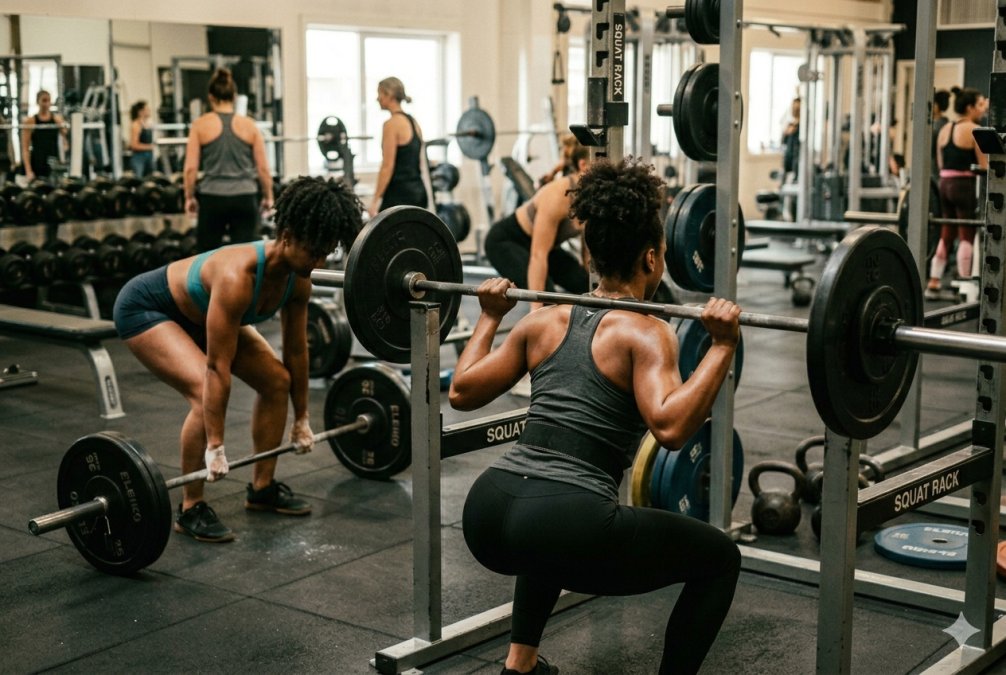
Unlike exercises such as walking, cycling or squats, pull-ups rely heavily on muscles found in the upper body. This means that someone with stronger back and arm muscles will usually find the movement easier.
However, muscle mass can be increased through training. Strength experts emphasise that regular resistance exercises can gradually improve pulling strength.
Strength-to-weight ratio matters
Pull-ups are not only about strength. They also depend on the relationship between body weight and muscle strength.
During a pull-up, a person must lift their entire body against gravity. If muscle strength does not increase at the same pace as body weight, the exercise becomes more demanding.
The mechanics of a pull-up are closely linked to physics. The more weight the body has to move upwards, the more work the muscles must perform. This is why even physically active people sometimes struggle with pull-ups despite performing well in other exercises.
Body structure can influence performance
Anatomy also plays a role. Factors such as shoulder width, body composition and the body’s centre of gravity can influence how efficiently a person performs a pull-up. Women also tend to have a slightly higher percentage of body fat and narrower shoulders, which can make the movement less mechanically efficient.
These differences should not be viewed as disadvantages but as natural variations in human physiology.
Women often have other physical advantages
Interestingly, research suggests that women may perform better than men in certain types of muscular endurance exercises.
According to studies published in PubMed, women often experience less muscle fatigue during specific activities because of differences in muscle fibres and metabolism.
This means that while explosive upper-body movements such as pull-ups may require more training, women may perform exceptionally well in endurance-based activities.
Training can make all the difference
Learning to perform a pull-up usually takes time. Exercises such as resistance-band pull-ups, lat pull-downs, rows and assisted pull-ups can help strengthen the muscles involved in the movement.
Consistency is often more important than natural ability. Small improvements made over weeks and months can eventually lead to major changes. Rather than comparing themselves with others, fitness experts encourage women to focus on gradual progress.
The inability to perform a pull-up today does not determine future performance. With patience and proper training, what once seemed impossible can eventually become another exercise added to a regular workout routine.