Why fingers wrinkle in water and what your body is doing about it
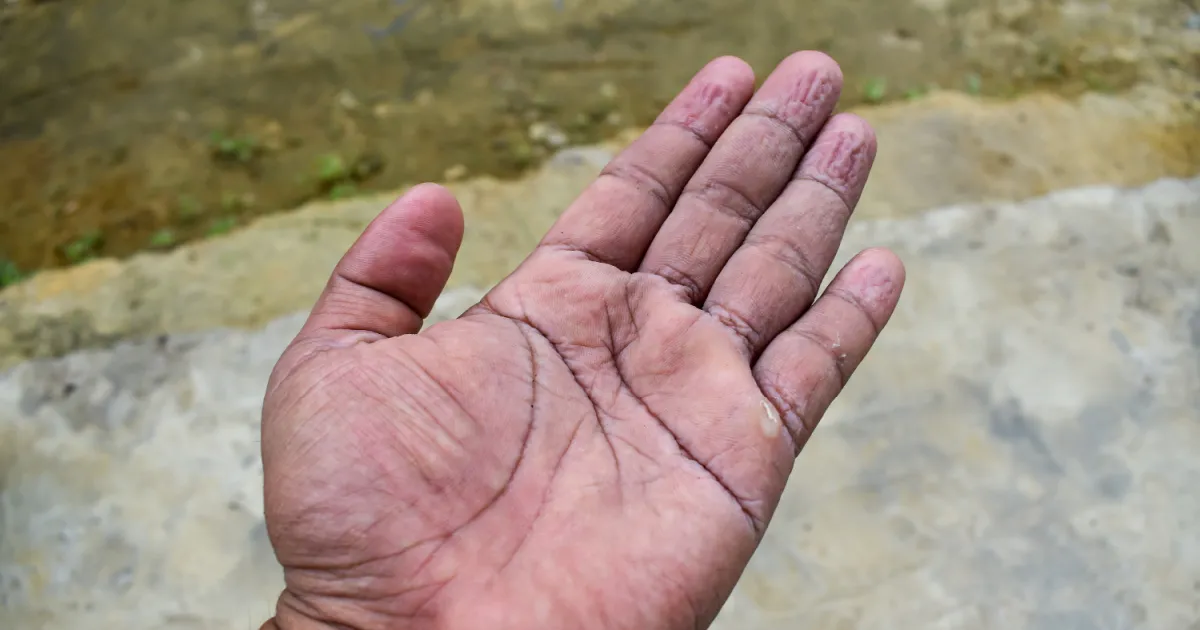
By Katemarthason Okudo, September 4, 2026After washing clothes, taking a long bath, or spending time swimming, you may notice that your fingers no longer look the same. The skin becomes folded and wrinkled, especially around the fingertips and palms.
It may seem as though the skin has simply absorbed water and become swollen. However, the process is more interesting than that. The wrinkling is largely controlled by the body’s nervous system and involves changes in the small blood vessels beneath the skin.
For most people, the changes are temporary and disappear after the hands are removed from the water.
It is not simply because the skin absorbs water
For many years, the common explanation was that the outer layer of the skin absorbed water, causing it to swell and form wrinkles. Research has since shown that the process involves the nervous system.
When fingers remain in water for several minutes, blood vessels underneath the skin constrict. This reduces the volume beneath the skin, causing the surface to pull down and form the familiar wrinkles.
According to the Cleveland Clinic, this response is known as aquagenic wrinkling and is linked to the autonomic nervous system, which controls involuntary processes in the body.
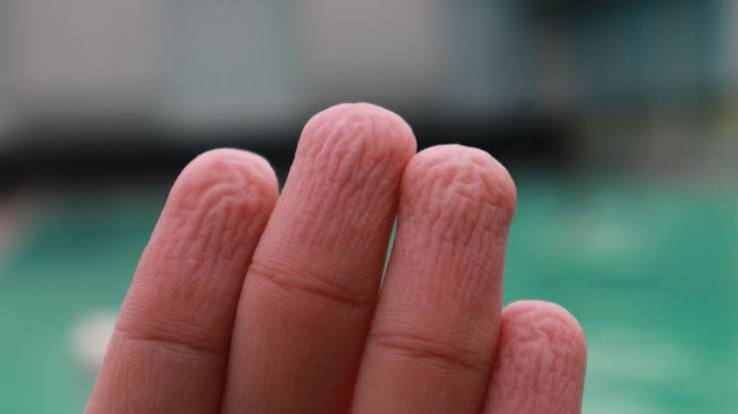
This is why the effect does not usually appear immediately after the hands touch water. It takes some time for the nervous system and blood vessels to respond.
Why does the body do this?
Scientists believe the wrinkling may have a practical purpose rather than being an accidental reaction.
The folds created on the fingertips may help improve grip when handling wet objects. Similar patterns can make it easier for water to drain away from the contact surface, potentially giving the fingers better traction.
Water-induced finger wrinkling has been investigated as a possible adaptation that could improve the handling of wet objects.
The exact evolutionary advantage is still being studied, but the response demonstrates that the skin is capable of making temporary changes in response to its surroundings.
Why do the wrinkles disappear?
Once the hands are taken out of the water, the blood vessels gradually return to their usual state. As blood flow and the tissues beneath the skin return to normal, the wrinkles slowly disappear.
The time this takes can vary depending on how long the hands were exposed to water, the temperature, and individual differences in circulation.
There is usually no need to rub, stretch or apply any special treatment to the fingers. Simply drying the hands and allowing them to return to their normal state is enough.
Cold water can cause other changes
Temperature also matters when the hands are exposed to water. Cold conditions can cause blood vessels near the skin to narrow as the body attempts to conserve heat.
Blood vessels in the fingers and toes can also narrow significantly in people with Raynaud’s phenomenon, causing changes in colour and sensations such as numbness or tingling.
This is different from ordinary water-induced wrinkling. A person should therefore pay attention if their fingers repeatedly become unusually pale, blue or painful, particularly when exposed to cold.
What should you do when your fingers wrinkle?
Ordinary wrinkling after bathing, washing or swimming does not require treatment. Once you leave the water, dry your hands and give the skin time to return to normal.
If your hands feel dry after repeated exposure to water and soap, using a moisturiser can help protect the skin. The NHS recommends emollients to soothe and hydrate dry skin by forming a protective layer that helps retain moisture.
It is worth seeking medical advice if wrinkling occurs unusually quickly or is accompanied by persistent itching, pain, swelling, skin changes or other symptoms even when the hands have not been in water.