What you should know about nosebleeds
By Katemarthason Okudo, May 22, 2026Nosebleeds, medically known as epistaxis, are more common than many people think and can affect both children and adults. While they often look alarming, most cases are not serious and can be managed at home with simple first aid.
Health experts note that dry weather, frequent nose picking, allergies, and minor injuries are among the leading causes. According to guidance from the Cleveland Clinic Kenya, most nosebleeds originate from small blood vessels in the front part of the nose that are easily irritated.
Common causes
Several factors can lead to nosebleeds, especially in environments with dry air or dust, which is common in many parts of Kenya. Dry nasal passages can crack and bleed easily. Frequent colds, sinus infections, and allergic reactions can also inflame the inside of the nose.
Other triggers include excessive nose blowing, inserting objects into the nose, and sudden injuries to the face. High blood pressure has also been linked to recurring nosebleeds in adults, although it is not always the direct cause. Health workers at Kenyatta National Hospital noted that repeated nosebleeds should not be ignored, especially when they occur without a clear trigger.
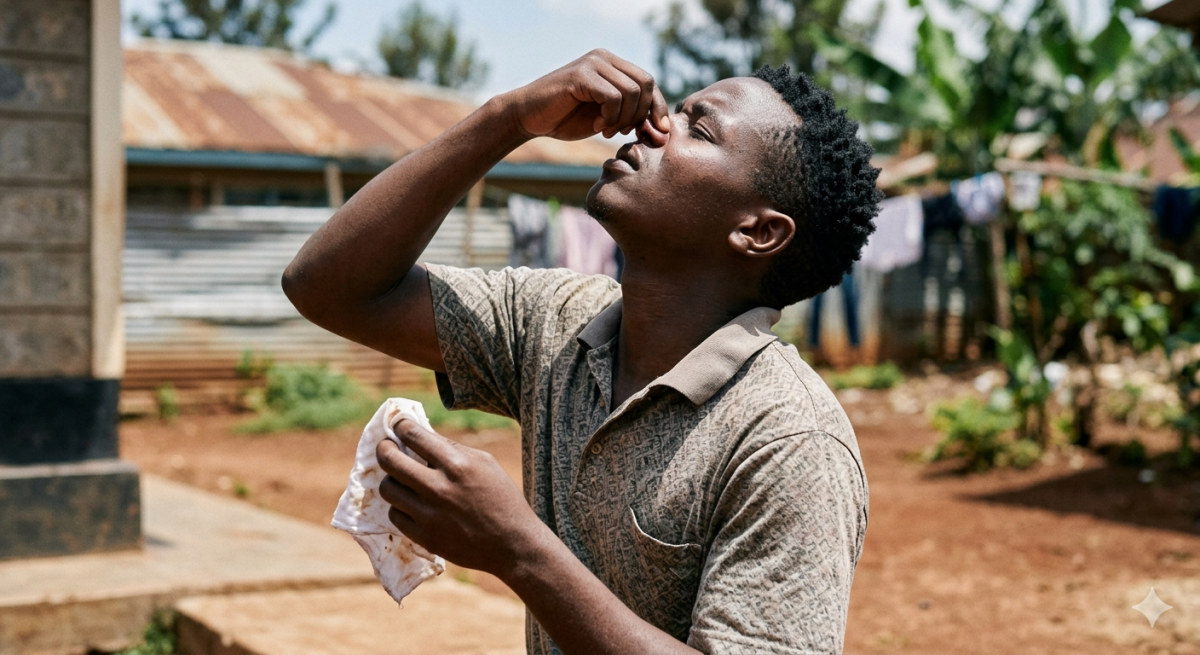
The Mayo clinic has previously emphasized that “most anterior nosebleeds can be managed safely with simple pressure techniques and do not require medical intervention,” highlighting the importance of correct first aid before seeking hospital care.
Safe first aid: what to do when a nosebleed starts
When a nosebleed occurs, the first step is to remain calm. Sitting upright and leaning slightly forward helps prevent blood from flowing into the throat, which can cause nausea or choking. Pinching the soft part of the nose for about 10 minutes continuously is the most recommended method to stop the bleeding.
Applying a cold compress to the bridge of the nose can also help reduce blood flow. It is important to avoid tilting the head backward, as this common mistake may worsen the situation. If bleeding continues for more than 20 minutes, medical attention is necessary.
Prevention tips and when to seek help
Preventing nosebleeds often involves keeping the nasal passages moist. Health experts recommend using saline sprays, drinking enough water, and applying a thin layer of petroleum jelly inside the nostrils in dry conditions. Avoiding nose picking and being gentle when blowing the nose can also reduce irritation.
Individuals who experience frequent nosebleeds, heavy bleeding, dizziness, or nosebleeds following an injury should seek medical care promptly.