Something stuck in your eye? What to do and what to avoid
By Katemarthason Okudo, September 25, 2026A grain of dust, an eyelash, or a small piece of dirt can make the eye suddenly feel uncomfortable. The first reaction for many people is to rub the eye or try to remove whatever is irritating.
However, the eye is a delicate part of the body, and the way a foreign object is handled can make the problem worse. Rubbing may scratch the cornea, the clear surface at the front of the eye, especially if the particle is trapped under the eyelid.
Most small particles that land on the surface of the eye can be washed out safely, but some eye injuries require medical attention.
Why the eye becomes painful
The surface of the eye contains many sensitive nerves. When a small object lands on it, the eye may immediately begin watering as part of its natural response.
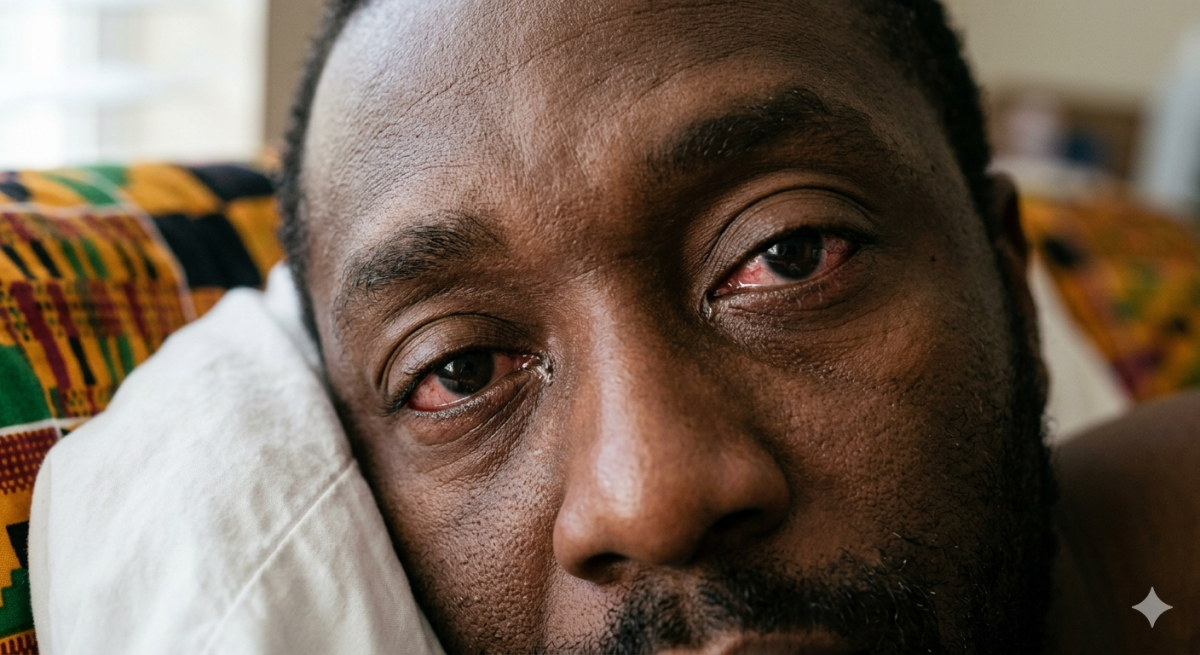
A person may experience redness, irritation, excessive tearing, pain, or a feeling that something is still stuck in the eye. If the object scratches the cornea, the discomfort may continue even after the particle has been removed.
A foreign body on the cornea can cause pain, redness, watering, sensitivity to light, and sometimes blurred vision. A particle trapped under the eyelid can also scratch the surface of the cornea when the eyelid moves.
Start by washing the eye
If something such as dust or grit gets into the eye, the safest first step is usually to wash it out with clean water.
The hands should be washed before touching the area around the eye. The affected eye can then be held open while clean water is allowed to gently flow over it. Blinking several times during the process can also help the tears and water move the particle away.
According to the NHS, minor eye injuries caused by things such as dust often improve on their own, and washing the eye with clean water can help remove something that has entered it.
If the irritation disappears after washing and the eye feels normal again, further treatment may not be necessary.
Avoid rubbing or using sharp objects
Rubbing the eye may feel like the quickest way to remove an irritating particle, but it can cause a scratch on the cornea. It may also push the object further across the surface of the eye.
It is also important not to use tweezers, pins, fingernails, or other objects to try to remove something that appears stuck. Putting unprescribed substances or household remedies into the eye can also cause further irritation.
Contact lenses should be removed if possible and should not be worn again until the eye has recovered.
When the object needs medical attention
Not every foreign object can be safely removed at home. A piece of glass, metal, wood or another sharp material may become embedded in the eye and should not be pulled out.

An injury caused by something travelling at high speed, such as a fragment produced while cutting, drilling or grinding, can also be more serious than it initially appears.
The NHS advises urgent medical attention if a sharp object has pierced the eye, something has struck the eye at high speed, there are vision changes or there is severe pain.
A chemical splash is also an emergency. The eye should be flushed immediately with plenty of clean water while medical help is sought.
Do not ignore symptoms that remain
Sometimes the object is removed, but the eye continues to feel as though something is inside it. This can happen when the surface has been scratched. Persistent redness, worsening pain, blurred vision, increased sensitivity to light, or continued watering should be assessed by a healthcare professional.
A minor speck of dust may only require careful rinsing, but an embedded or high-speed foreign object can cause serious damage. Protecting the eyes when working with power tools, cutting materials, gardening or handling substances that can produce flying particles can reduce the risk of injury.
When something gets into the eye, the safest approach is to avoid rubbing, gently rinse with clean water when appropriate, and seek professional care when the object cannot be removed safely or vision and pain are affected.