Russia’s Ebola vaccine claim sparks hope, but scientists are demanding proof
By Willow Health, June 13, 2026Russia claims it has a candidate vaccine that can protect against the Bundibugyo virus, the Ebola strain ravaging eastern DRC, with no approved cure or treatment, but international scientists are urging caution.
Expert advisory groups convened after the World Health Organisation (WHO) declared the outbreak a Public Health Emergency of International Concern have prioritised two candidate vaccines and three therapeutics for clinical trials, while fresh funding of over $100 million (Ksh13 billion) has been committed to accelerate the search for a Bundibugyo-specific vaccine.
At the heart of the crisis is a charge that has hardened into anger across the outbreak zone: that decades of scientific neglect, driven by Western funding priorities, left Africa without tools to fight a disease it has known since 2007.
But as the outbreak in DRC’s Ituri Province surpasses 635 confirmed cases and 127 confirmed deaths, Moscow’s Gamaleya Research Centre says its existing Ebola vaccines likely offer protection against the current strain. International scientists, however, are insisting that Russian vaccines must first undergo large-scale clinical trials before they can be used.
Meanwhile, communities in the outbreak zone are asking a more pointed question: why does a disease known to science since 2007 still have no vaccine at all?
Russia says its vaccine technology could be quickly adapted to fight the Bundibugyo strain of Ebola

Gamaleya Centre’s Scientific Director, Alexander Gintsburg, said the institute’s initial vaccines could fight Bundibugyo, citing a genetic similarity of about 60 to 70 per cent between the vaccine strain and the current variant. He proposed vaccinating health workers in outbreak areas on that basis.
Russia’s Health Minister, Mikhail Murashko, backed the claim, saying Moscow’s vaccine technology could be quickly adapted to fight Bundibugyo, drawing on research from the 2014-2016 West Africa Ebola outbreak.
There is a significant catch. Gintsburg acknowledged that the institute does not have a Bundibugyo pathogen sample to actually test for efficacy.
The three Russian vaccines, GamEvac and GamEvac-Combi, registered in 2015, and GamEvac-Lyo in 2020, are not licensed by the WHO, the European Medicines Agency or the US Food and Drug Administration.
They were administered to about 2,000 people in Guinea during the 2017-2018 Ebola outbreak, but only under Russian approval.
Moses Masika, a Kenyan virologist and vaccinologist specialising in tropical and infectious diseases, said international licensing requires far more than a genetic similarity argument.
“The Gamaleya vaccine would need to undergo large Phase III clinical trials to generate data on efficacy and safety before such licensure,” he said.
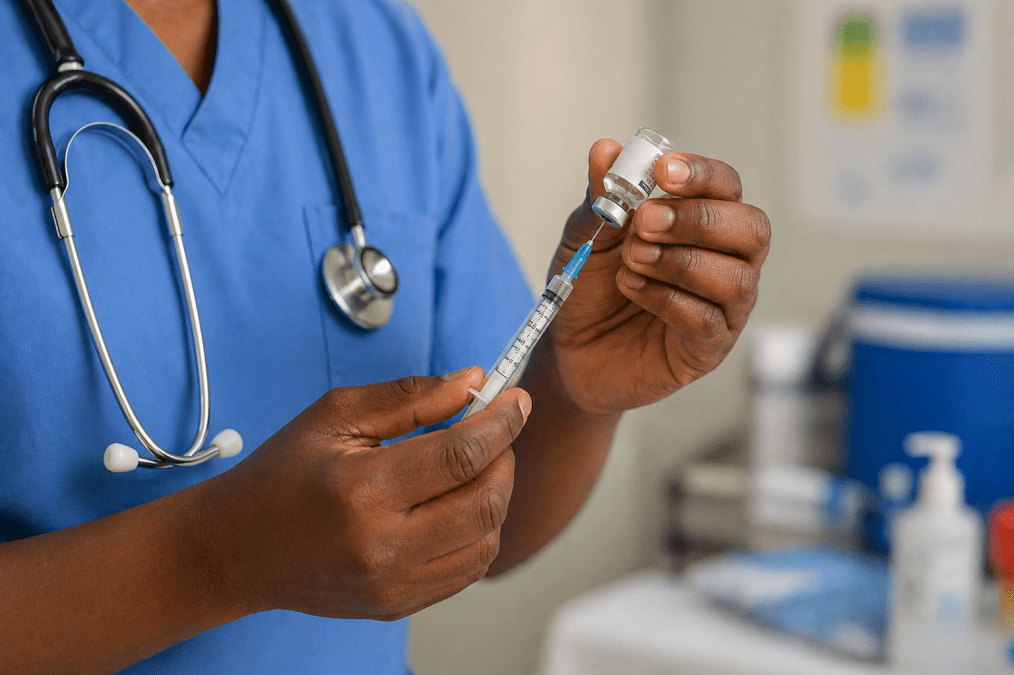
Standard vaccine development takes between five and fifteen years. Even the accelerated pathway used for COVID-19 required ten to eighteen months, alongside massive funding, parallel processing and prior platform readiness.
The Bundibugyo strain was ignored; now we are facing an outbreak with no medical countermeasures
Masika listed nine critical stages of vaccine development: virus identification and characterisation, antigen selection, vaccine platform selection, preclinical development, clinical trials, regulatory review and approval, manufacturing scale-up, distribution and implementation, and post-marketing surveillance.
“Most vaccine candidates fail in preclinical stages,” he noted. It is also technically possible, he explained, to load several virus targets into the same vaccine.
“One of the licensed Ebola vaccines, Zabdeno/Mvabea, protects against Zaire and Tai Forest orthoebolaviruses and Marburg,” he said.
Githinji Gitahi, CEO of Amref Health Africa, made the consequences of the vaccine gap plain. “It’s a strain with no diagnostics, therapeutics and vaccines.
The strain was ignored, and now we are facing an outbreak with no medical countermeasures,” he said in June 2026.
With nothing approved for use, Gitahi described community surveillance as the “first vaccine.” “We need fast detection at the community level. We must quickly arrest the disease before it spreads because there’s no vaccine or cure,” he said.
The neglect of Bundibugyo has a logic, if not a justification. Masika explained that out of 50 Ebola outbreaks recorded since 1976, 35 were caused by the Zaire strain, including the catastrophic 2014-2016 West Africa epidemic with over 28,000 cases.
Frequency drove funding. Bundibugyo, with only two small prior outbreaks, offered little incentive for vaccine developers.
The first, in Uganda in 2007-2008, caused 42 deaths among 131 confirmed cases. The second, in DRC in 2012, recorded 38 confirmed cases and 13 deaths.
That neglect is now a crisis. When Africa CDC Director-General Dr Jean Kaseya visited Ituri Province, locals put the question to him directly.
“Locals are asking me why we still don’t have a vaccine or medicine for this disease 19 years later?” he said on 28 May 2026.
A community leader in Bunia argued that had Bundibugyo struck the United States or Europe, a vaccine would already exist.
Wealthy nations have been taking pathogen samples from Africa for years without sharing treatments
Kaseya did not disagree. “Wealthy nations have been taking pathogen samples from Africa for years without committing to sharing the treatments developed from them.
We need to benefit from our pathogens and stop begging every time we have an outbreak,” he said.
He added, “We are all human beings living on the same planet. How will Africa feel if one day we find out there was a vaccine hidden somewhere?”
The two WHO-prequalified Ebola vaccines that do exist target only the Zaire strain. Ervebo, manufactured by Merck and prequalified in 2019, is recommended for outbreak settings.
Zabdeno/Mvabea, from Janssen Vaccines, a Johnson and Johnson company, received WHO prequalification in 2023 and protects against Zaire, Tai Forest orthopoxviruses and Marburg.
Experts have noted that Ervebo’s evidence of cross-protection against Bundibugyo remains inconclusive.
Following the WHO’s PHEIC declaration on 17 May, expert advisory groups were convened to fast-track candidates.
They prioritised three therapeutics for clinical trials: the monoclonal antibodies MBP134 and Maftivimab, and remdesivir, an antiviral.
A combination of MBP134 and remdesivir was also recommended for evaluation.
Obeldesivir, an oral antiviral, was recommended for post-exposure prophylaxis among contacts of confirmed and probable cases.
On vaccines, the rVSV Bundibugyo candidate developed by the International AIDS Vaccine Initiative (IAVI) was identified as the most promising, though it will need seven to nine months before clinical trials can begin.
The ChAdOx1 Bundibugyo candidate, developed by Oxford University and manufactured by the Serum Institute of India, could reach clinical trials within two to three months, but requires additional animal data first.
Structural underfunding the core barrier to African-led vaccine development
Funding is beginning to move. CEPI has committed roughly $60 million (Ksh7.8 billion) to Moderna and two other groups, with up to $50 million (Ksh6.5 billion) for Moderna’s investigational candidate, $8.6 million (Ksh1.118 billion) for the Oxford/Serum Institute shot, and $3.2 million (Ksh416 million) for IAVI’s candidate. Gavi the Vaccine Alliance has committed $40 million (Ksh5.2 billion) to accelerate access to investigational and subsequently approved vaccines.
Dr Masika identified structural underfunding as the core barrier to African-led vaccine development. “Funding has not been available in Africa, though the situation is slowly changing. South Africa is currently developing a cholera vaccine through Biovac.
Africa also participates in and manages clinical trials, including several for Ebola vaccines, hence playing a crucial role in generating the data needed to determine safety and efficacy,” he said.
Discussions on ethical pathogen sharing remain unresolved. The Pandemic Agreement adopted by consensus at the 78th World Health Assembly addressed the question but left no binding commitments on benefit-sharing, leaving the grievance voiced in Ituri unanswered.