Advertisement
Open defecation: Where villagers fear devils, toilets more than cholera
24th July, 2026 03:54 PM
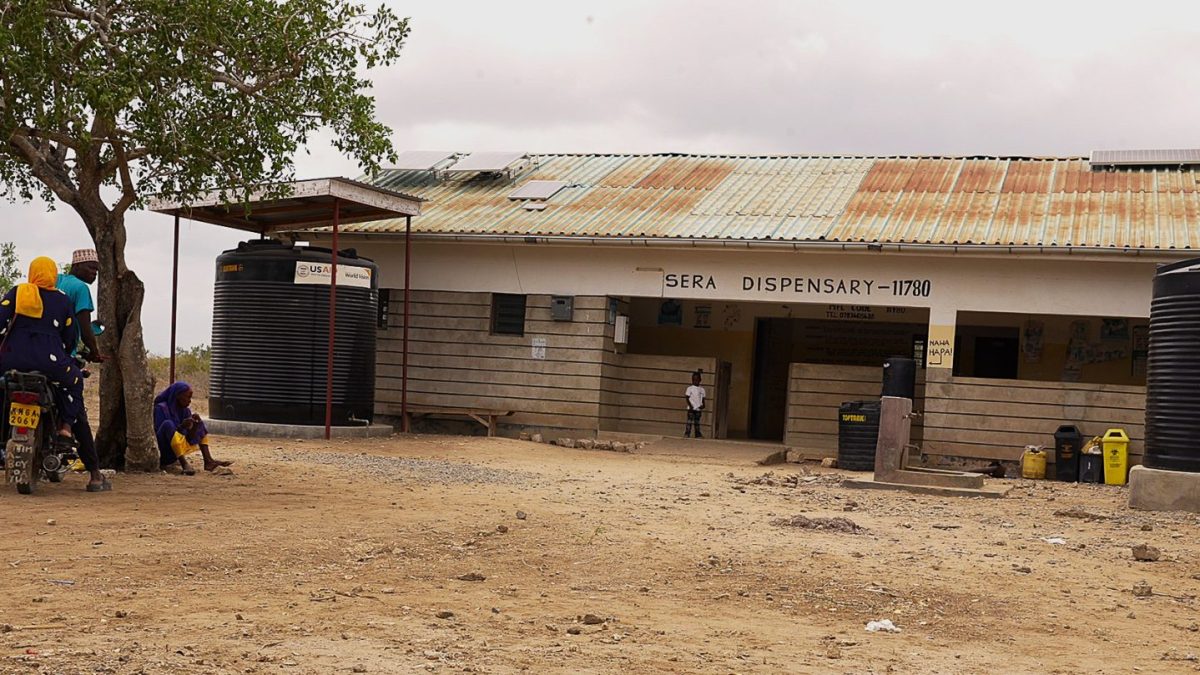
Salah Kuno fell unconscious after a bout of diarrhoea in Tana River, where people know how deadly cholera is, but just won’t build or trust toilets.
One afternoon in April 2023, Salah Kuno, 52, a resident of Kurole village in Sera, Tana River County, arrived home for lunch and ate a hearty meal of potatoes with a lot of tomatoes before taking an afternoon nap.
It did not take long before he started having a stomachache and a running stomach. After a few bouts of diarrhoea, Kuno fell unconscious outside his house. “I fell down, and my wife got out of the house to find me sprawled on the floor. He got my brother, and they made calls to get me a car to the hospital,” he said.
At Sera Dispensary, Kuno was diagnosed with cholera, a disease spreading like wildfire across the plains of Tana River County. He used up to three drips of water a day and was feeling better the next day. His discharge was short-lived, however, as he was readmitted after collapsing again.
Tana River County was experiencing floods between March and May that year. While the county government and NGOs responded to the flooding, treatment and prevention of cholera took centre stage. At the heart of the outbreak lies a much bigger problem – open defecation. The county holds the unenviable position of having the fourth highest rate of open defecation in Kenya, driven by a mix of fear, costs and cultural beliefs.
Hassan Roba, the Chief Nurse and facility in-charge at Garsen Sub-County Hospital, said the Tana Delta is a lowland area prone to flooding when it rains, displacing residents. “During these times, we have outbreaks of diarrhoeal diseases and particularly cholera, which has affected us in many villages,” he said.
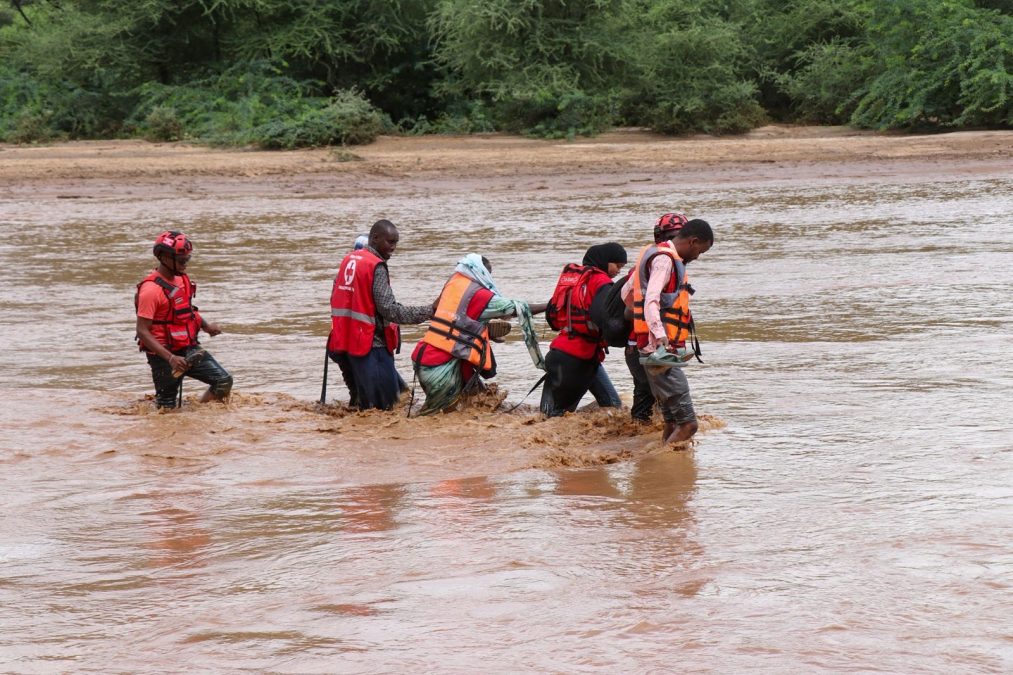
Open defecation spreads cholera and diarrhoea besides driving high child mortality rates
Sera Dispensary received its first cholera case on 15 February that year, according to Ben-Cliff Onyango. “We decided to close the facility after we had taken one sample that came to us. We took it to Garsen, and when the rapid diagnostic test came back as positive, we decided to declare cholera as an outbreak in our facility,” he said.
Unprepared to handle a cholera outbreak and lacking an isolation room, Onyango and his team used the entire facility for isolation. The dispensary continued receiving patients for over a month until the last case was treated at the end of March. “We received a total of 62 patients over the age of five and 27 patients under the age of five,” he said.
Despite recurrent outbreaks and public health campaigns about the dangers of open defecation, the community has been slow to adopt sanitation practises such as using toilets.
Open defecation poses severe public health problems, spreading diseases like cholera and diarrhoea, driving high child mortality and malnutrition. According to the UNDP, over 4.5 billion people – more than half the global population -lack safe sanitation. World Bank data shows that 15 per cent of Sub-Saharan Africa’s population, equivalent to 195 million people, practises open defecation. Countries with the highest rates include Eritrea, Niger and South Sudan, at 67 per cent, 66 per cent and 63 per cent respectively.
In Kenya, 14 per cent of the population practises open defecation. While this is below the regional average, it falls short of the standard set by countries that have achieved open defecation-free status, including Seychelles, The Gambia and Eswatini.
Tana River County is ranked fourth in open defecation after Turkana, Wajir and Samburu
Tana River County remains a concern. According to a 2017 report, it ranked fourth in Kenya with an open defecation rate of 71.9 per cent, after Turkana, Wajir and Samburu. Only 18 of its villages had been declared open defecation free at the time.
In Kurole village, a lone pit latrine stands a short distance from the entrance to Kuno’s homestead. The door’s upper frame hangs detached, swinging ajar, with dried leaves and gathered soil suggesting it has gone unused for some time.
Kuno says the latrine is the only one in the village and that no one uses it. Many people prefer to defecate in the surrounding bushes, he said, and the cost of building a toilet discourages those who might otherwise construct one.
Leti Victor, the County Public Health Officer, says financial barriers are compounded by ignorance and cultural beliefs. “There are also cultural barriers because you may go to a homestead and ask them why they don’t have a latrine and they tell you it is expensive; others will say they can’t share a latrine and others will say going to a pit latrine one meets devils,” she said.
Despite these challenges, Tana River County has made some progress. It now has 36 open defecation-free villages, 18 of which were certified last year.
Open Defecation Free verification must be achieved before funds are disbursed
The county is one of two – alongside Murang’a – selected to pilot the Ksh3.5 billion K-WASH programme funded by the World Bank. The initiative focuses on expanding water and sanitation access, strengthening rural water supply systems and upgrading small water works.
Under K-WASH, Open Defecation Free verification must be achieved before funds are disbursed, meaning counties must demonstrate results before accessing money. This differs from other sanitation funds where donors provide financing upfront for the construction of infrastructure. Tana River has struggled to meet these verification thresholds.
“For us, ODF is a process because you are dealing with attitudes, you are dealing with someone who has to make a choice to go look for food or dig a latrine,” Victor said.
Inadequate staffing and funding continue to hamper the county’s efforts. Just 40 public health officers cover all five sub-counties, serving a population of 315,943 according to the 2019 census.
The USAID funding freeze last year dealt a further blow to sanitation efforts nationwide
Denis Munai, a WASH Programme Manager at Amref Health Africa, said Kenya’s Environmental, Sanitation and Hygiene Policy has prioritised a Community-Led Total Sanitation strategy, which empowers communities to change their behaviour and build sanitation systems independently.
He said the strategy works best where there are concerted efforts involving both development partners and government. “Strategies require funding and concerted efforts to ensure that even the most remote communities are reached,” he said.
The USAID funding freeze last year dealt a further blow to sanitation efforts nationwide. “The funding situation for sanitation in the country is dire because USAID was funding various sanitation projects across the country. We are advocating for national and county governments to fund sanitation as a line item in their budgets,” Munai said.
For communities like Kurole, the consequences of inaction are measured not in policy gaps but in lives. Until attitudes shift, funding flows and toilets replace bushes, the cycle of floods, contamination and cholera outbreaks will continue to repeat itself – and families like Kuno’s will keep paying the price.