Why garlic turns blue or green when cooked in vinegar
By Dan Kauna, July 23, 2026You crush fresh garlic, throw it in the pan with a bit of vinegar, and a few minutes later, it turns bright blue or green.
For many home cooks preparing a meal, this sudden change looks like a mistake or a sign that the garlic has gone bad.
You do not need to throw away your food, as the colour change is just a safe chemical reaction.
Why the colour changes
Fresh garlic has sulphur compounds and a natural enzyme called alliinase stored inside its cells. When you cut or crush the cloves, you break those cellular walls and let the enzyme mix with the sulphur.
Adding an acidic ingredient like vinegar, lemon juice, or tomatoes lowers the pH level, which speeds up the reaction between them.
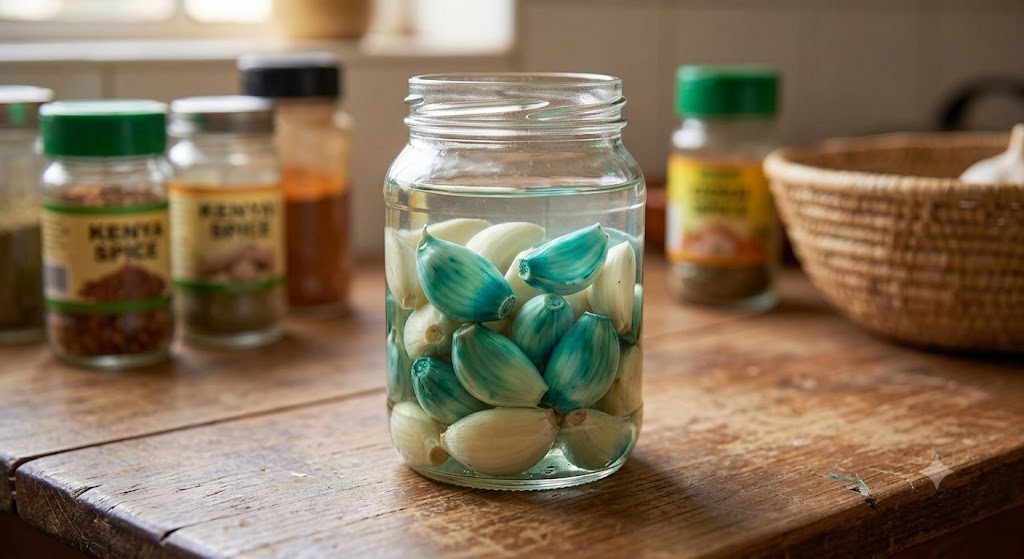
As the mixture reacts, the amino acids and sulphur form new compounds called pyrroles. When these pyrroles combine under mild heat or acid, they create blue and green pigments.
Research published in the Journal of Agricultural and Food Chemistry shows that “the pigment is a mixture of numerous pyrrole-based purple/blue and yellow species,” which join together to change the appearance of the clove.
These new pigments are completely natural and are similar to chlorophyll, the substance that makes plant leaves green.
Is blue garlic safe to eat?
Even though the bright shade looks strange in a pot of food, blue or green garlic is entirely safe to eat. The reaction does not create toxic substances, and it does not destroy the nutritional value of the garlic.
The taste remains mostly the same, though garlic pickled in vinegar will taste a bit milder.
Garlic stored in the fridge for a long time is more likely to turn blue because cold temperatures break down its natural sugars and create more of the compounds that form the pigment.
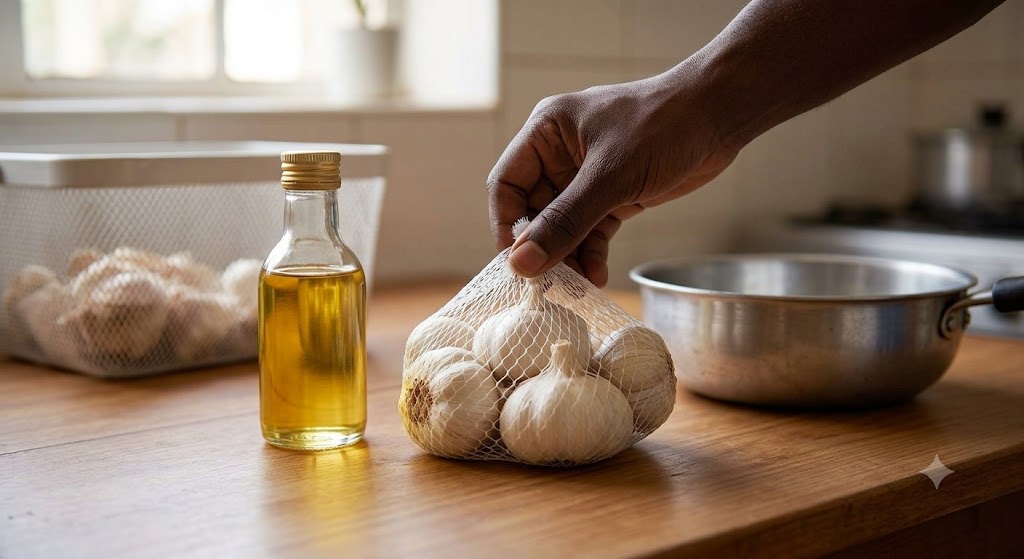
If you want your food to keep its normal colour, use fresh garlic kept at room temperature. You can also fry the garlic in cooking oil first before adding vinegar or tomatoes, as high heat stops the enzyme before the reaction can happen.