Science of why food tastes better outdoors
By Dan Kauna, June 13, 2026You have probably noticed it without ever thinking too hard about it.
The smokie at the outdoor food fair hits differently. The grilled maize from the roadside vendor tastes better than the same maize reheated at home. The packed lunch eaten on a bench under an acacia tree somehow feels more satisfying than the same meal eaten at a desk.
It’s not your imagination. Science has a lot to say about why.
Your brain is doing much more than tasting
Taste, it turns out, is not just what happens on your tongue.
Researchers at Oxford University’s Crossmodal Research Laboratory published a major review in the journal Appetite in 2025, examining how nature-related stimuli shape what we eat and how we experience it.
They found that evoking nature, whether through the blues and greens of water or greenery, the colour or scent of flowers, or birdsong, can influence both the sensory and hedonic responses to food and drink.
In other words, the colours, sounds, and smells of an outdoor environment are quietly recalibrating the pleasure your brain extracts from every bite.
This happens because flavour is a full-body, multisensory event. The brain integrates what your eyes see, what your ears pick up, what your nose catches on the breeze, and the emotional state you are in – all before it decides how good something tastes.
Outdoors, that information stream is richer. Natural light sharpens colour contrast, making food look more vivid and appealing. Ambient birdsong and a gentle breeze lower mental background noise.
Even the smell of plants and grass plays a part, nudging the brain into a calmer, more receptive state.
Lower stress, sharper senses
When cortisol, the body’s primary stress hormone, is elevated, it dulls sensory perception and suppresses appetite regulation.
A study published in Frontiers in Psychology by researchers at the University of Michigan found that spending just 20 to 30 minutes outdoors produced a measurable drop in cortisol levels.
As lead researcher Dr MaryCarol Hunter put it, “for the greatest payoff, in terms of efficiently lowering levels of the stress hormone cortisol, you should spend 20 to 30 minutes sitting or walking in a place that provides you with a sense of nature.”
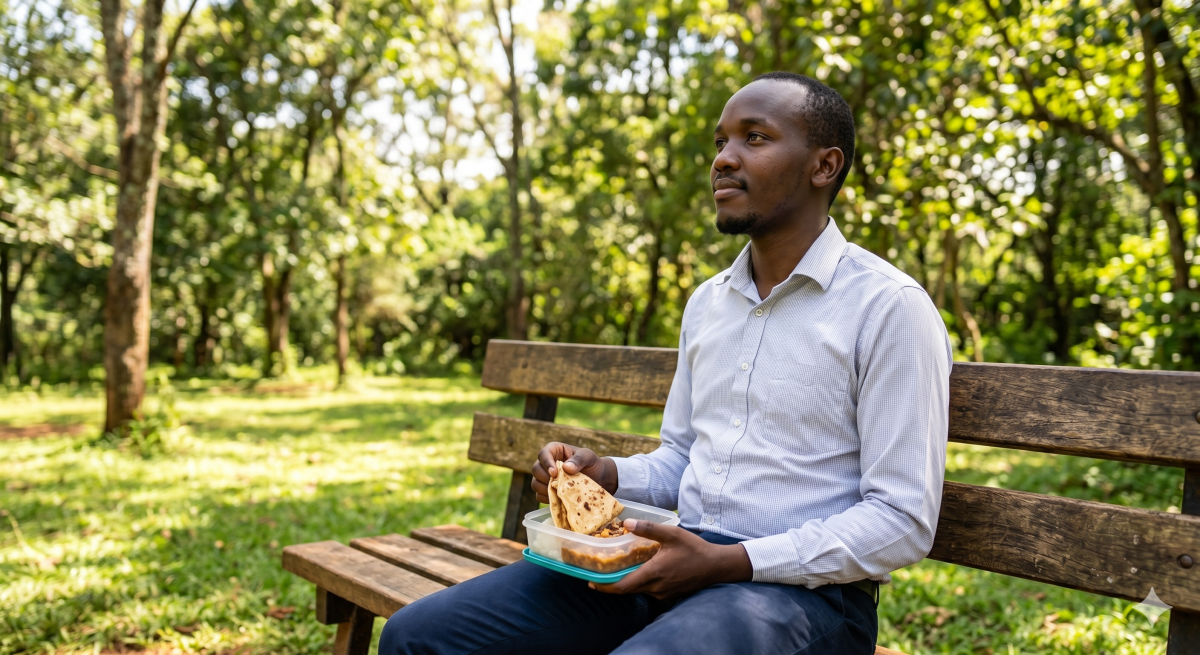
A calmer body is a more receptive one, and your brain is primed to enjoy food eaten in a lower-stress state more fully.
There is also what researchers call reduced cognitive load. Indoors, especially at a desk or in a meeting room, the brain is juggling screens, deadlines, and social cues.
Outdoors, that load lightens. When the mind is not overextended, more cognitive bandwidth is available for the actual eating experience, and pleasure ratings go up.
What this means for how Kenyans eat
You don’t need a rooftop restaurant or a trip to a forest to engineer a better meal.
A mat under a tree, a balcony, a shaded veranda, or even a window seat with a garden view can meaningfully shift the experience.

Taking lunch outside the office, even for 20 minutes, does double duty: it lowers stress and heightens the sensory pleasure of whatever you are eating.
The science is essentially confirming what many families have always known. Eating outside, together, in open air, is more than a preference. It is better for the food.