Foods that amplify the pleasure of watching football
By Dan Kauna, June 11, 2026There’s a reason the football hits differently when there is food on the table. It’s not just habit or hunger.
The science of how food interacts with high-stimulus events like a live match explains why certain combinations have become rituals across the world, from Old Trafford to living rooms in Nairobi.
Your brain is already working before kick-off
When you sit down to watch a game and there is food nearby, your brain does not wait for the first bite.
The smell of roasting meat, the sight of a bowl of crisps, the sound of a cold drink being opened, all of it activates the brain’s reward circuitry before you have tasted anything.
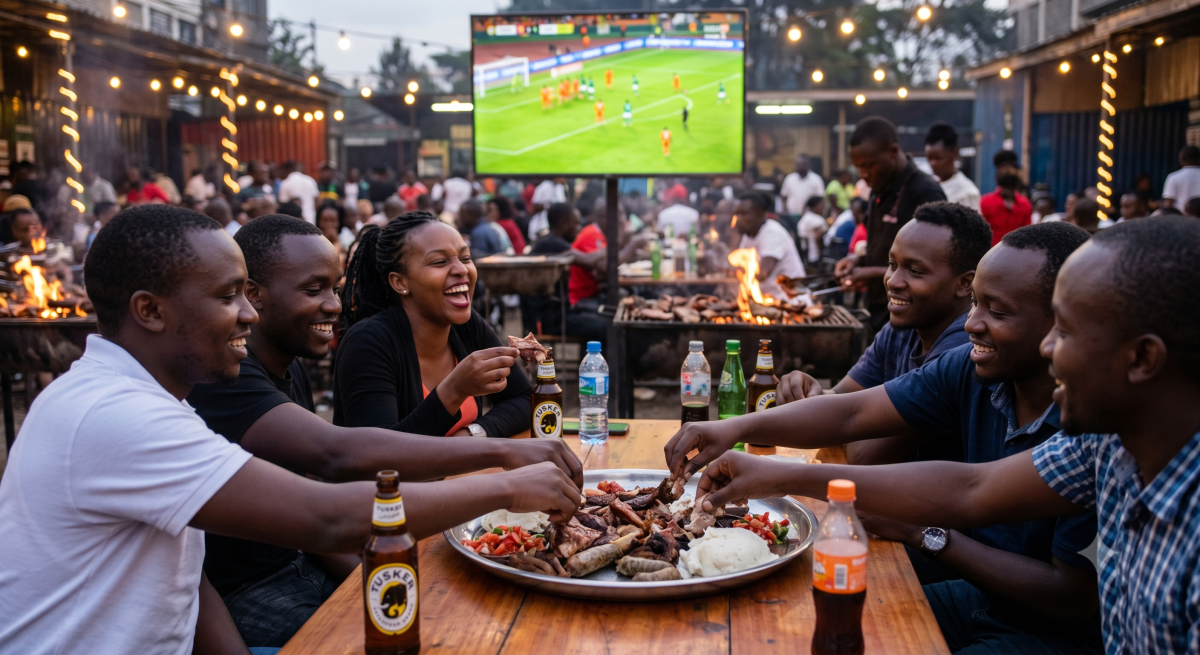
This is well-documented in neuroscience research. Stimulation with food-associated cues of different sensory categories has been shown to be a potent trigger of activity in brain reward circuits, including frontal, ventral striatal, amygdala, and midbrain regions.
That reward system runs on dopamine, the same chemical that fires when your team scores.
Umami, the savoury taste found in nyama choma, groundnuts, crisps and stock-based soups, is particularly effective at activating it.
Research in neuroimaging has shown that “combining umami compounds produces a pleasure response in the brain that is stronger than either component alone”, a synergistic effect traced to activity in the orbitofrontal cortex, the region tied to subjective enjoyment.
Crunchy textures add another layer. During moments of tension and heightened arousal, like a penalty shootout, the physical feedback of biting into something firm matches the body’s alert state. The two reinforce each other.
Eating together is the real upgrade
The food matters. The company matters more, and research confirms it. A large study found that the causal direction runs from eating together to feeling closer, rather than the other way around, suggesting that social eating may have evolved as a mechanism for facilitating social bonding.
That study, published in Adaptive Human Behavior and Physiology by Professor Robin Dunbar of the University of Oxford, drew on national survey data and found that communal meals, especially those involving laughter and shared experience, consistently strengthened social bonds.
Watch a game at a party or in a bar and you will feel this. The goals land harder. The near-misses sting more. The experience is amplified precisely because other people around you are eating the same food, reacting to the same moments, at the same time.
Why certain match-day foods stuck
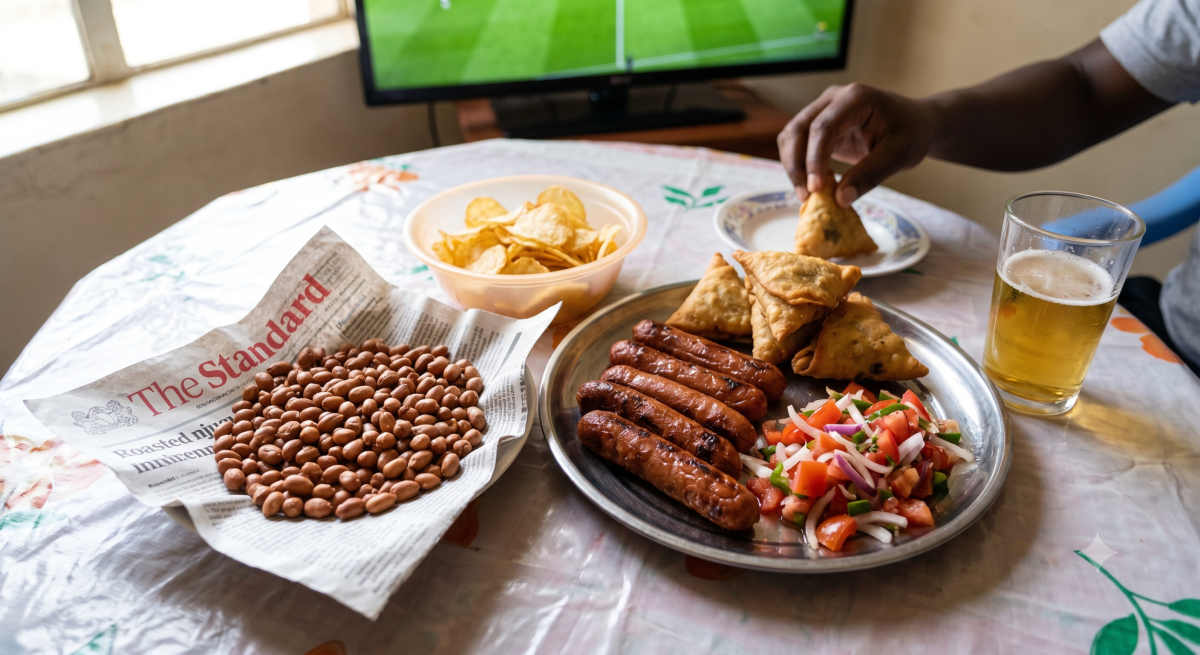
Across cultures, match-day food follows a pattern: it is easy to eat without cutlery, carries bold flavour, and can be shared from a central plate or bowl.
Crisps, roasted groundnuts, smokies, samosas, and nyama choma. These foods work because they allow continuous engagement with the match without the interruption of a full meal.
They are also high in salt and fat, which the brain’s reward system responds to strongly, a preference rooted in our evolutionary past when calorie density was a survival advantage.