5 signs it is time to replace your makeup sponge or brush
By Dan Kauna, September 28, 2026Many people keep the same makeup sponge or foundation brush in their bag for months without a second thought. However, applicators have a limited lifespan.
Using worn-out tools drags old product, facial oil, and dead skin cells across your face, resulting in streaky makeup and blocked pores.
A 2020 study published in the Journal of Applied Microbiology revealed that most used makeup tools harbour dangerous bacterial levels.
Lead researcher Dr Amreen Bashir noted that “consumers’ poor hygiene practices when it comes to using make-up, especially beauty blenders, is very worrying when you consider that we found bacteria such as E. coli.”
Recognising when a tool has reached the end of its life protects your skin and saves product. Here are five clear signs it is time for a replacement.
1. Permanent discolouration and deep staining
If washing your sponge or brush with warm water and mild soap no longer lifts foundation stains, product has settled deep into the material.
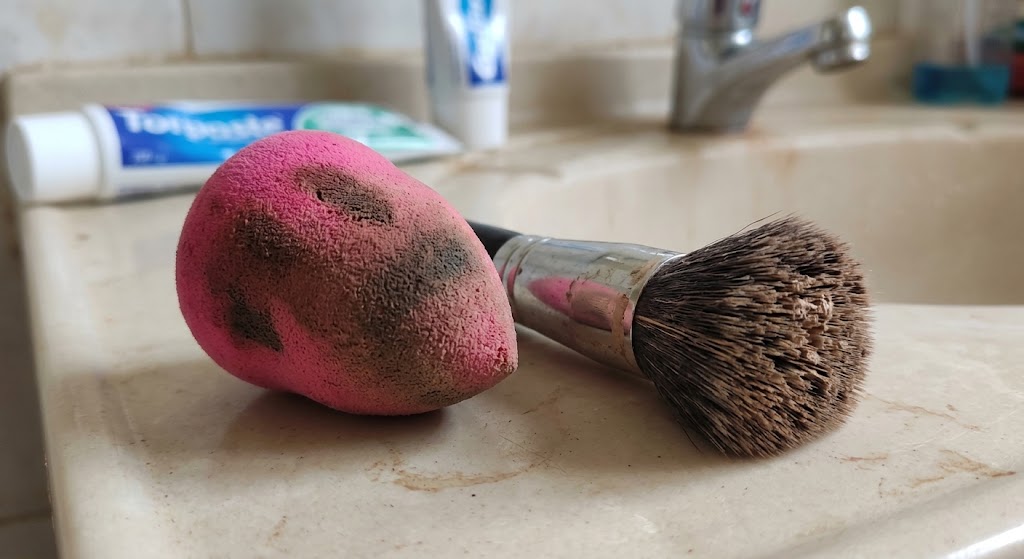
Sponges absorb liquid formulas quickly, creating dense layers of buildup inside the core. Once stains become permanent, cleaning product out completely becomes impossible.
2. A musty or sour odour
Clean beauty tools should have no noticeable smell. A musty or sour scent indicates that trapped moisture has allowed mould or bacteria to grow inside the foam or dense bristles.
Washing will not eliminate internal mould, so an odd odour means the tool must be discarded immediately.
3. Shedding bristles and lost shape
A quality foundation or powder brush should keep its shape and feel soft against your skin. Loose metal ferrules, bent bristles, or constant shedding show that the internal glue has broken down.
Shedding bristles cause uneven makeup application, and rough ends can scratch delicate skin.
4. Crumbling foam and lost elasticity
Daily handling and washing eventually break down sponge foam and synthetic fibres.
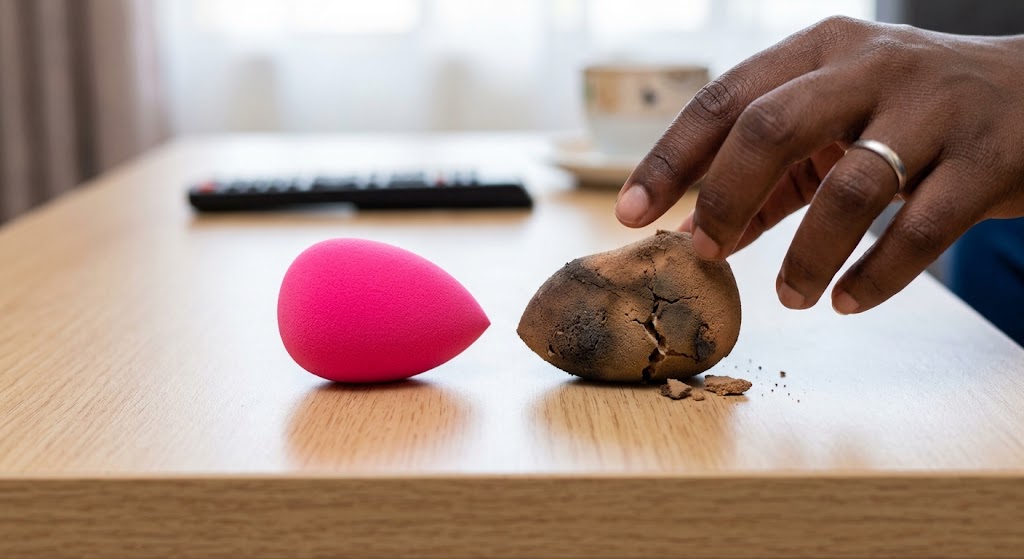
If your blender feels stiff, develops visible surface cracks, or fails to bounce back when squeezed, the material has degraded.
Damaged sponges absorb liquid foundation instead of spreading it evenly.
5. Unexplained skin breakouts and irritation
Frequent pimples on your cheeks or jawline often trace back to contaminated tools.
When a freshly washed sponge still triggers breakouts, bacteria and hardened oils remain trapped inside, transferring directly into your pores during every application.
Replacing sponges every three months and brushes every year keeps your skin clear and healthy.