Does skipping meals actually help you lose weight?
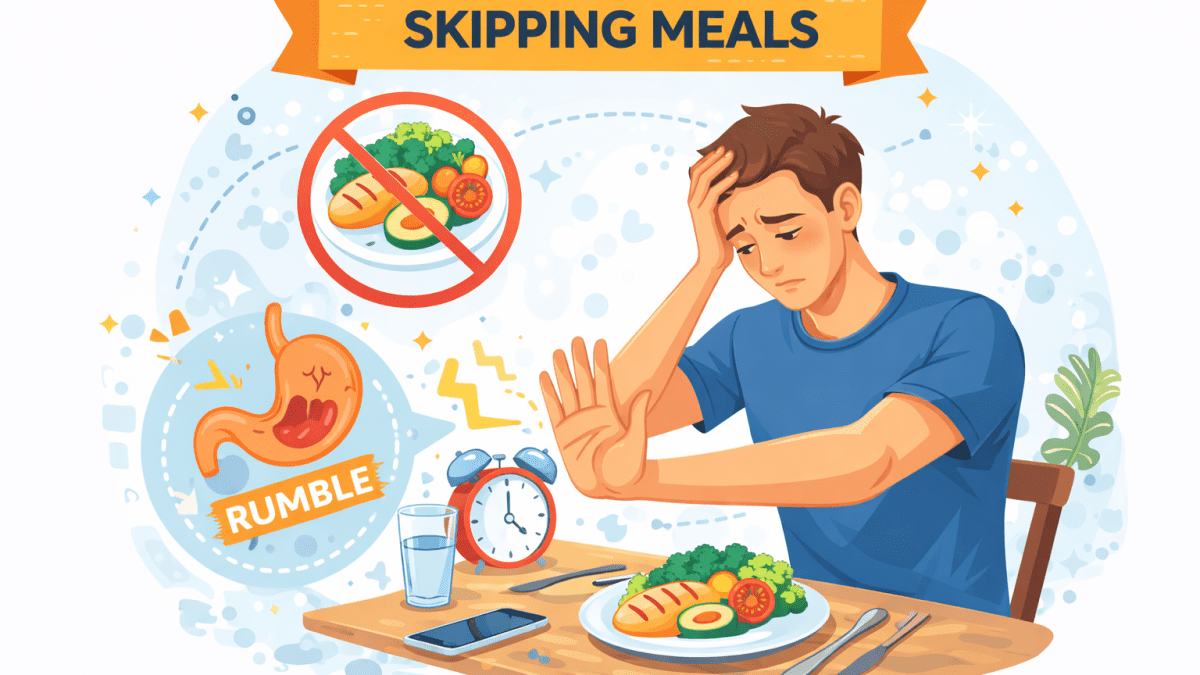
Many people trying to lose weight believe that skipping meals is a quick and effective solution. It sounds logical. Eat less, lose more.
But does science support this idea? The answer is more complex than it seems.
What happens when you skip meals
You might also like



When you skip meals, your body does not simply start burning fat immediately. Instead, it goes into a conservation mode.
Your metabolism may slow down as the body tries to preserve energy.
In the short term, you might lose some weight. However, this is often due to water loss or reduced food volume, not actual fat loss.
Over time, skipping meals can lead to stronger hunger signals, which may cause overeating later in the day.
The link between skipping meals and weight gain
Several studies in nutrition science show that irregular eating patterns can disrupt appetite control.
When you skip meals, especially breakfast or lunch, your blood sugar levels drop. This can lead to fatigue, irritability and cravings for high sugar or high fat foods.
As a result, many people end up eating larger portions later, cancelling out any calorie deficit. In some cases, this pattern can even contribute to weight gain rather than weight loss.
Does body type matter?
Body composition plays a role in how your body responds to food.
- Ectomorphs, who naturally have a faster metabolism, may not gain weight easily. Skipping meals for them can lead to muscle loss and low energy rather than fat loss.
- Endomorphs, who tend to store fat more easily, may believe skipping meals will help. However, irregular eating can slow metabolism further and increase fat storage over time.
This shows that skipping meals is not an effective long term strategy for any body type.
What actually works for weight loss
Science supports a more balanced approach. Sustainable weight loss depends on maintaining a consistent calorie deficit while still nourishing the body.
Key strategies include:
- Eating regular, balanced meals
- Including protein, fibre and healthy fats
- Managing portion sizes
- Staying physically active
Regular meals help stabilise blood sugar, control hunger and support metabolism.
The role of intermittent fasting
It is important to distinguish between random meal skipping and structured approaches like intermittent fasting. Intermittent fasting involves planned eating windows and has shown benefits for some people.
However, even in fasting, the focus is still on overall nutrition and calorie control. Simply skipping meals without structure is not the same and often leads to poor results.