‘Shoot the leg’ order and 5 other outcomes after 3 protest waves leave over 50 dead
By Martin Oduor, July 10, 2025In a span of less than a month, Kenya has been convulsed by three distinct waves of protests, each met with a forceful, at times lethal, state response.
As the dust settles on the latest Saba Saba demonstrations, a grim picture emerges: more than 50 people have lost their lives, caught between popular discontent and a government increasingly determined to assert control, even if it means issuing controversial directives like ‘shoot the leg’.
The series of escalating confrontations has cast a pall over President William Ruto’s administration, drawing sharp condemnation from human rights organisations and the international community.
First wave: Ojwang’s death

The initial spark ignited on June 17, 2025, following the death of Albert Ojwang, a 31-year-old blogger and teacher, in police detention.
His death, which human rights groups quickly attributed to police brutality, galvanised activists and youth.
In Nairobi, a protest against Ojwang’s death saw Boniface Kariuki, a mask vendor, shot at close range.
Kariuki’s injury, captured by the media, became a potent symbol of the crackdown.
While official figures for this specific protest wave are often subsumed into broader tallies, human rights organisations indicated that several lives were lost in the initial days of protests related to Ojwang’s death, setting a sombre precedent for the weeks to come.
Second wave: June 25th anniversary
Just over a week later, on June 25, 2025, thousands took to the streets nationwide to commemorate the first anniversary of the Gen Z-led anti-Finance Bill protests of 2024.
This wave quickly escalated into clashes with law enforcement.
Interior Cabinet Secretary Kipchumba Murkomen issued a stark warning, widely interpreted as a “shoot-to-kill order,” particularly for individuals threatening police officers or attempting to steal firearms from stations.
Murkomen, on Thursday, June 26, 2025, issued shoot-to-kill orders on anyone trying to storm a police station.
Speaking when he toured some of the police stations to assess the aftermath of the June 25, 2025, Gen Z memorial protests, Murkomen told the locals that he had ordered the police officers to shoot anyone who would invade a police station with ill intentions.
“Ile shida inafanya saa zingine polisi wapige wakora risasi ni kwa sababu wanashikwa, wanaenda alafu wanarudi kuchekelea polisi wakisema sasa tulifika wapi, hakuna kwenye tulienda. Na tumeambia polisi, mtu yeyote ambaye atakaribia police station, piga yeye risasi,” Murkomen said.

The June 25, 2025, protests saw several deaths and wanton destruction of property.
According to human rights organisations like Amnesty International and the Kenya National Commission on Human Rights (KNCHR), at least 16 people were killed across the country during the June 25 protests, with hundreds more injured. Official figures for this specific day were initially lower but rose as investigations continued.
Third wave: Saba Saba demos
The latest and deadliest confrontation occurred on July 7, 2025, historically known as Saba Saba Day, a significant date in the country’s pro-democracy movement.
Protests against police brutality, high cost of living, and perceived government overreach erupted in multiple counties, mostly in satellite towns around Nairobi and in Mt Kenya region.
It was in the aftermath of these protests that President William Ruto issued a deeply controversial directive.
“Anyone burning down someone else’s business and property should be shot in the legs, so that they will pass through the hospital as they go to court. They (the police) should not kill them, but they should hit them and break their legs,” a visibly angry Ruto said while speaking in Nairobi on Wednesday, July 9, 2025.
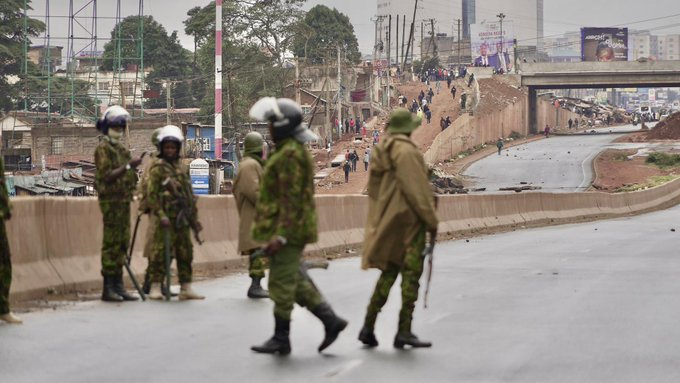
This “shoot the leg” order, while framed by the President as an alternative to lethal force, was widely condemned by human rights groups as a dangerous endorsement of state-sanctioned violence and disproportionate use of force.
The human toll from the July 7 Saba Saba protests was devastating.
The state-funded Kenya National Commission on Human Rights (KNCHR) reported that the death toll from Monday’s demonstrations alone surged to 31, marking the highest single-day toll since the protests began this year.
This brought the total number of deaths from the three protest waves in just a few weeks to at least 50 people, with human rights organisations often citing figures higher than initial government estimates for various incidents.
In addition to the fatalities, the KNCHR documented 107 injuries, 532 arrests, and two enforced disappearances during the Saba Saba protests.