Explainer: Why govt wants more funds for SHA
By Aloys Michael, October 29, 2025The government is intensifying its push for increased funding to sustain ongoing health sector reforms, emphasising that adequate financial support is crucial for the success of the new Universal Health Coverage (UHC) framework.
Health Cabinet Secretary Aden Duale has called on Parliament to increase allocations to the Primary Healthcare Fund (PHCF) and the Emergency, Chronic and Critical Illness Fund (ECCIF), warning that the ambitious health reforms could stall without sufficient financing.
Also watch: Ruto says SHA funds will go directly to hospitals and not to counties.
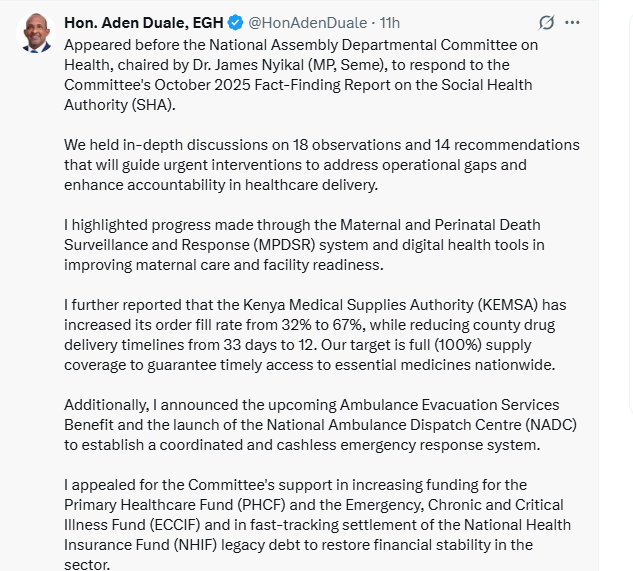
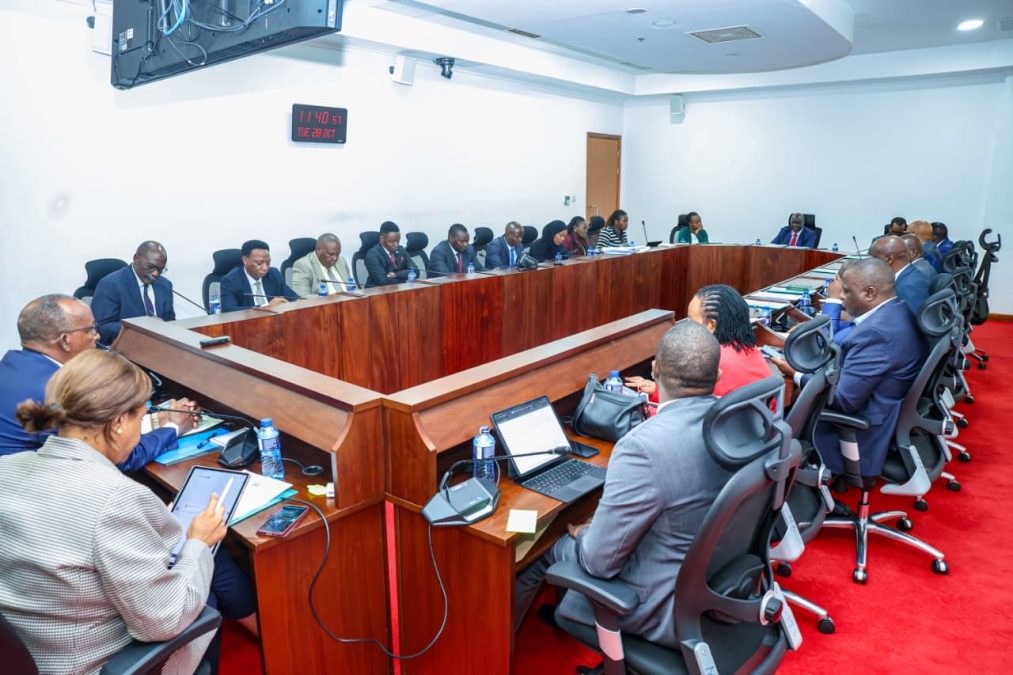
Duale appeared before the National Assembly Departmental Committee on Health, where he noted that the government made major strides in operationalising the Social Health Authority (SHA), but the year-old health insurance model was suffering from inadequate resourcing.
“The Primary Healthcare Fund is the backbone of preventive and promotive care at the community level. We are appealing for additional resources to strengthen this system and improve service delivery across counties,” Duale told the committee on Tuesday, October 28, 2025.
While responding to the Committee’s October 2025 Fact-Finding Report on SHA, Duale further revealed that the Ministry was implementing several reforms to improve efficiency and restore confidence in the sector.
Health funding crisis?
The Primary Healthcare Fund (PHCF) was established under the Social Health Insurance Act, 2023, to support free and equitable access to primary healthcare services.
The fund is typically meant to cover essential services at Level 1 to 3 health facilities, including community units, dispensaries, and health centres, and focuses on preventive, promotive, and basic curative care.
“Our target is to achieve full (100 per cent) supply coverage to guarantee timely access to essential medicines across the country,” he said.
On the other hand, the Emergency, Chronic, and Critical Illness Fund (ECCIF) is designed to provide financial protection for high-cost treatments, including emergency medical care, chronic disease management, and interventions in critical illnesses like cancer.
According to Duale, both funds are currently underfunded relative to their mandates, and these shortfalls limit their ability to provide consistent coverage nationwide.
The CS also called for the fast tracking of the settlement of the National Health Insurance Fund (NHIF) legacy debt to restore financial stability in the sector.
During the same meeting, the CS also announced that the ministry was set to roll out Ambulance Evacuation Services benefits and launch the National Ambulance Dispatch Centre (NADC) to coordinate emergency responses across the country. The NADC will be cashless and technology-driven.
Within Kenya’s budgetary and legislative framework, the Ministry of Health will be required to submit annual budget proposals to the National Treasury, including requests for PHCF and ECCIF funding for consideration.
Parliament, through the National Assembly’s Departmental Committee on Health and the Budget and Appropriations Committee, will then scrutinise the requests and recommend increased allocations.
If Duale’s concerns are considered valid and the initial budget is deemed insufficient, Parliament can pass supplementary appropriation bills to provide additional funds for underfunded programmes.