Advertisement
Dalmas Otieno: Life and times of a whirlwind of change in Kenyan politics
07th September, 2025 04:00 PM

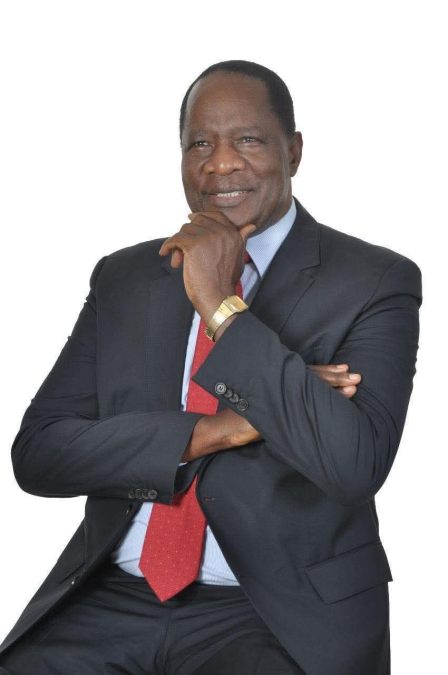
The former cabinet minister and long-serving Rongo MP Dalmas Otieno Anyango has died at the age of 80 in Nairobi on Sunday, September 7, 2025.
His passing brings down the curtain on a consequential career that spanned more than three decades of Kenya’s turbulent political life, from the one-party era under Daniel arap Moi to the coalition experiments of the 2000s.
Otieno was a politician, economist, technocrat and conciliator. His career reflected Kenya’s own political transitions: from authoritarian dominance to multi-party democracy, and later to coalition power-sharing.
Education and training
Born on April 19, 1945, Otieno studied applied economics at Makerere University after attending Strathmore College between 1966 and 1967. Colleagues credited his economist’s training for his capacity to analyse problems systematically and to push for institutional rather than ad hoc solutions.
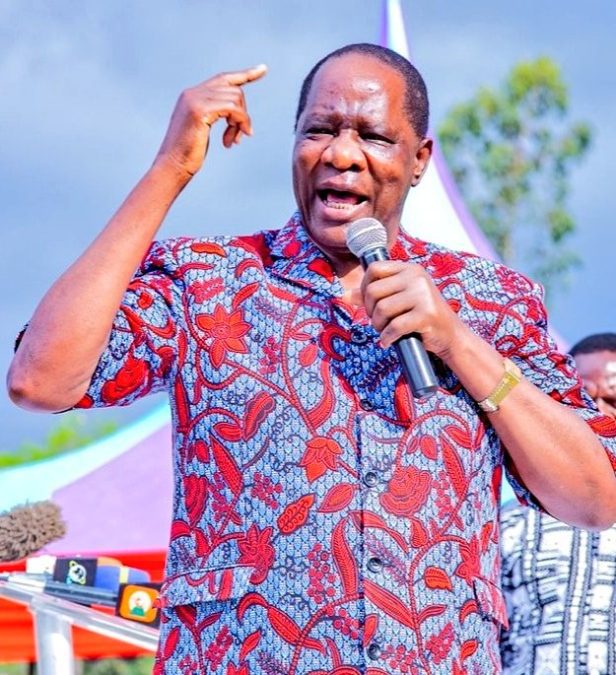
It was this mindset that enabled him to steady the often-contentious Public Service docket during the Grand Coalition years, when mistrust between the principals threatened to paralyse government.
Rise to the cabinet
Otieno entered Parliament in 1988 as MP for Rongo. Within months, he was elevated to the Cabinet, where he held influential portfolios including Industrialisation (1988–1991), Labour and Human Resource Development (1991) and Transport (1991–1996).
His tenure coincided with Kenya’s push to open up its economy and modernise state-owned corporations.
After the disputed 2007 elections and the violence that followed, he returned to government as Minister of State for Public Service in the Grand Coalition administration. The docket placed him at the heart of reforms meant to professionalise the civil service and balance the demands of the fragile Kibaki–Odinga power-sharing deal.
Political bridge-builder
His family is a political one. It recalled that at the onset of the devolved system of government, one of his son’s Frederick Otieno Alias Nyang, contested for the Migori gubernatorial elections on an independent party ticket and lost to Zachary Okoth Obado of PDP then.
One of Otieno’s most enduring contributions was his role in political conciliation. In the 1990s, he chaired the Inter-Parties Parliamentary Group (IPPG) process, which set the rules for the 1997 elections.
Though imperfect, those reforms were credited with widening space for opposition politics and laying the groundwork for the democratic transition of 2002.
He later allied himself with Raila Odinga’s Orange Democratic Movement (ODM) and subsequently with the Coalition for Reforms and Democracy (CORD). His shifting affiliations mirrored the fluid nature of Kenyan politics in the multiparty era, yet he remained known for his calm and pragmatic approach.
Career Beyond Politics
Before venturing into elective office, Otieno had already built a formidable career in business and finance. He earned a fellowship in the Chartered Insurance Institute in London in 1979 and rose through Kenya’s corporate sector. He served as senior manager at Kenya Commercial Bank between 1982 and 1985 and later as treasurer of the Kenyatta University Council from 1983 to 1987.
His professional grounding informed the technocratic style he brought to public service. Even when out of Parliament, Otieno kept close ties to business, chairing Tasley Consultants and advising on investment projects.
Steady hand in Parliament
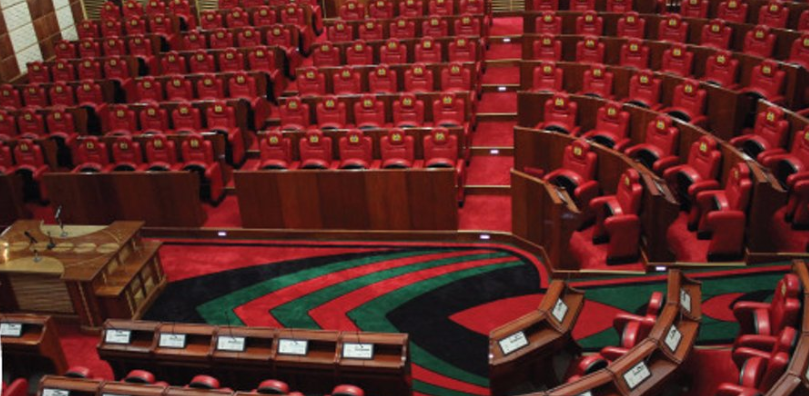
Otieno’s parliamentary career was long and varied. After his first stint as Rongo MP from 1988, he returned in 2008 and served on the influential Speaker’s Committee until 2013. He was re-elected again that year but lost his seat in 2017, as South Nyanza politics underwent a generational shift.
Though he no longer held elective office, he remained an influential elder statesman in Migori County, often urging leaders to embrace issue-based campaigns over personality-driven politics.
Legacy of quiet Strength
Otieno’s style was markedly different from many of his contemporaries. As Minister for Industrialisation and later for Transport, he championed policies around productivity and competitiveness rather than populist slogans. At Public Service, he won quiet praise for organising files, harmonising systems, and professionalising departments that had been left in disarray.
Critics sometimes faulted him for being too reserved, but admirers saw his low-key approach as evidence of independence and depth. In the noisy theatre of Kenyan politics, his preference for substance over spectacle made him easy to underestimate, yet his colleagues knew he was indispensable during moments of national crisis.
Personal losses and legacy
Otieno’s final years were marked by deep personal grief. In February 2024, he buried his wife, Jane, in Migori, where mourners celebrated her humility and dedication. Earlier, in 2008, he lost his son, Isaiah, in a tragic accident in Canada, a blow that friends say remained a quiet shadow over his life.
For a generation that lived through the 1990s reforms, Otieno symbolised the steady hand, willing to negotiate, capable of compromise, and insistent that Kenya’s institutions must outlast the passions of the day.
As funeral arrangements take shape, Kenyans are reflecting on a legacy built not on fiery speeches but on carefully brokered settlements, pragmatic leadership, and institutional memory.
Dalmas Anyango Otieno, economist, technocrat, minister, and Rongo power-broker, remains etched in Kenya’s political memory as the man who kept the state steady when steadiness was scarce.