Advertisement
Godzilla Minus Zero review: Japanese monster returns with spectacular sequel
28th September, 2026 01:23 AM
Even by the standards of older movie stars who catch a major second wind later in their careers, Godzilla pulled off an impressive return to the spotlight three years ago.
Godzilla Minus One, the most recent reboot featuring the 70-year-old kaiju from his native Japan, wasn’t just another monster-movie success. It became the highest-grossing Japanese-language movie ever released in North America and won an Academy Award for its visual effects.
Now, Japanese Godzilla characters are mainstream enough to pop up in Happy Meals, and the Toho-made sequel Godzilla Minus Zero is world-premiering at the New York film festival.
Returning characters, new threat
Writer, director and VFX maestro Takashi Yamazaki returns for the sequel, bringing his lead characters back with him.
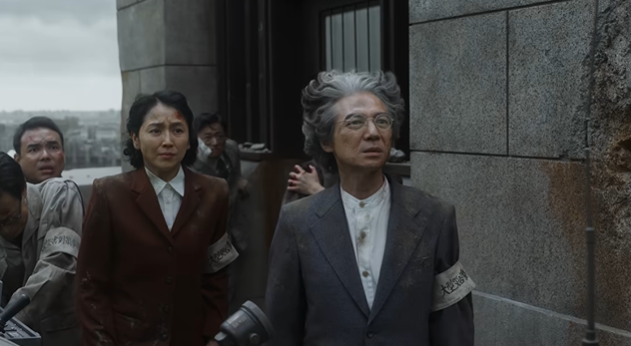
Minus Zero catches up with former military pilot Kōichi Shikishima (Ryunosuke Kamiki), his now-wife Noriko (Minami Hamabe), and their adopted daughter Akiko (Sae Nagatani) two years later, in 1949.
Another monster threat looms over post-war Japan in the form of a dragon-like creature dubbed Ghidorah, whose menace will be familiar to kaiju fans. He is featured from the very first scene of the film.
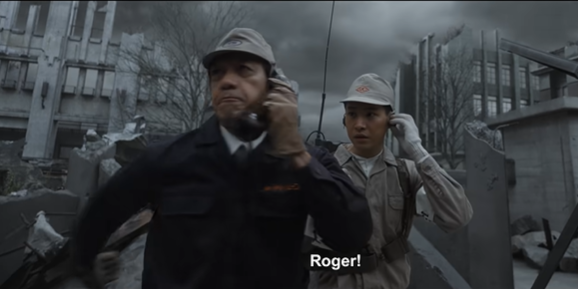
Ghidorah’s appearance sends alarms through the disaster-response agency that employs Kenji Noda (Hidetaka Yoshioka), who returns from the previous film. Noda is joined by Makoto Aoyama (Masami Nagasawa), a meteorologist who introduces less artillery-heavy defence mechanisms.
Humans face impossible forces
In the tradition of its emotionally involving predecessor, Godzilla Minus Zero grapples with humans’ attempts to control forces that initially seem impossible to harness.
The characters wield more advanced technology while still relying on determination and improvisation to protect their country. With decreased human helplessness come greater dangers and new dilemmas.
The film’s version of the US military, for example, is willing to provide planes but not troops to aid in the fight, which is partially how Kōichi and Noriko are drawn back into the conflict.
The partners’ skills make them valuable assets, raising questions about the sacrifices expected when citizens are sent into battle. There is also an intriguing element of body horror.
Spectacular monster action
Yamazaki said at a NYFF press conference that he sought to avoid fan expectations about how the sequel would unfold.
The movie remains committed to its human melodrama, although the family-soap elements are less effective at times. The relationship between Kōichi and Noriko feels strangely glum, while there is little sense of time passing for their makeshift family.
That’s not to say the monster action falls by the wayside.
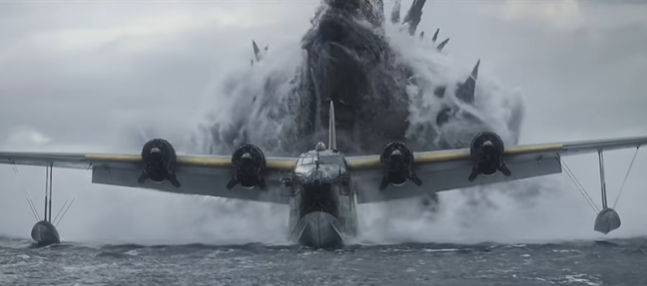
The extended climax features some of the most majestic CG monster action put to film. Godzilla Minus Zero combines fight-to-the-death grappling with disaster-movie scale and horror-movie thrills.
Like its predecessor, the movie favours quality of visual effects over quantity, with Ghidorah’s lightning-like attack beams providing some of its most striking imagery.
If Yamazaki’s previous Godzilla movie allowed crowd-pleasing thrills to punch through its mid-century anxieties, this one lands more ambiguously.
Godzilla Minus Zero is screening at the New York film festival and will be released in Australia on November 5 and in the US and UK on November 6.