Dorea Chege opens up about her secret battle with fibroids
By Valerian Khakayi, January 21, 2026Kenya’s actress and digital content creator Dorea Chege has, for the first time, revealed her deeply personal struggle with fibroids, a battle she kept private.
Speaking during a conversation with the gospel duo Wapendwa Muziki, Dorea opened up about her delivery experience after visiting Ninah at the hospital following her first child’s birth.
In the video that was uploaded on Tuesday, January 20, 2026, on Wapendwa’s channel, she revealed that she had five large fibroids, some of which were blocking her cervix and surrounding her womb.
The condition made her pregnancy extremely challenging, and she experienced intense pain while trying to deliver naturally.
After her child was delivered via emergency C-section, the fibroids were removed in surgery. She described spending a long time in the theatre, recovering from the complex procedure.
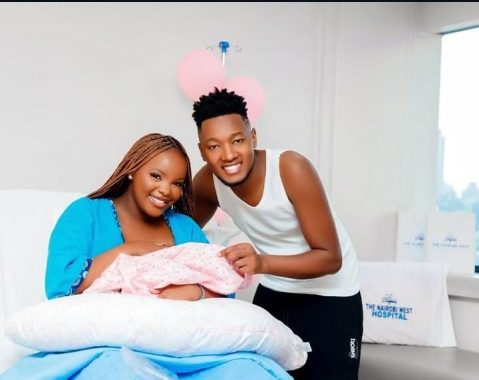
”Nilikuwa na five fibroids na zilikuwa kubwa so after mtoto ametolewa zikatolewa nilika kwa theatre for long .Yangu ilikuwa imeblock cervix na pia zilikuwa around the womb,” Dorea revealed.
”Sikuwa na dilate so ilikuwa kama emergency, nikapelekwa C-section direct but nilikuwa nataka kupata normal but nililabor for so long – a whole day, a whole night, all that pain, alafu nikaambiwa niende C-Section sikuwa naamini I felt so bad.”
Nina’s fibroids
During the conversation, Ninah’s husband, Mesh, also said that the doctor explained they could not deliver Nina naturally because the fibroids had blocked her cervix.
”Daktari alisema hatuwe tukampata through normal the fibroids ilienda ikablock cervix,” Mesh said.
On her part, Ninah added that hers was just one fibroid, but it had caused problems as it was blocking her cervix.
“Yangu ilikuwa moja but ilitusumbua ilukuwa imeblock cervix, 9.5,” Ninah added.
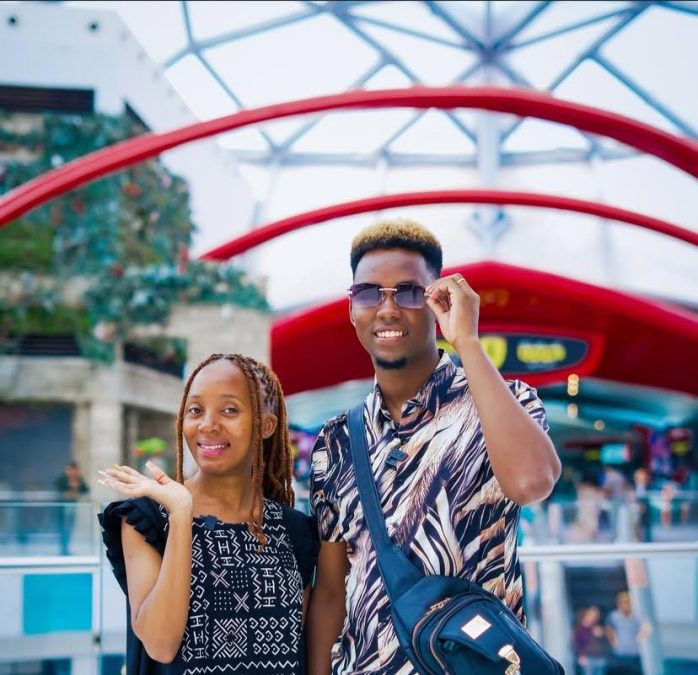
Uterine fibroids
Uterine fibroids are non-cancerous growths in or around the uterus. For some, they are small and harmless. For others, they can grow to the size of melons, disrupting daily life and threatening fertility.
Studies suggest that up to 80 per cent of women of African descent will develop fibroids by age 50. Black women are more likely to develop large, symptomatic fibroids earlier in life.
In Kenya, this adds to the already heavy burden of maternal health challenges. Heavy bleeding can lead to chronic anaemia, while fibroids during pregnancy increase the risks of miscarriage or preterm birth.
Yet, awareness remains low, and treatment options are limited. Myomectomy (surgical removal of fibroids) and hysterectomy (removal of the uterus) are often the only solutions offered. These procedures are expensive and often inaccessible for the average Kenyan woman.