Mosiria raises concern over early campaigns, warns against using young Kenyans for political gain
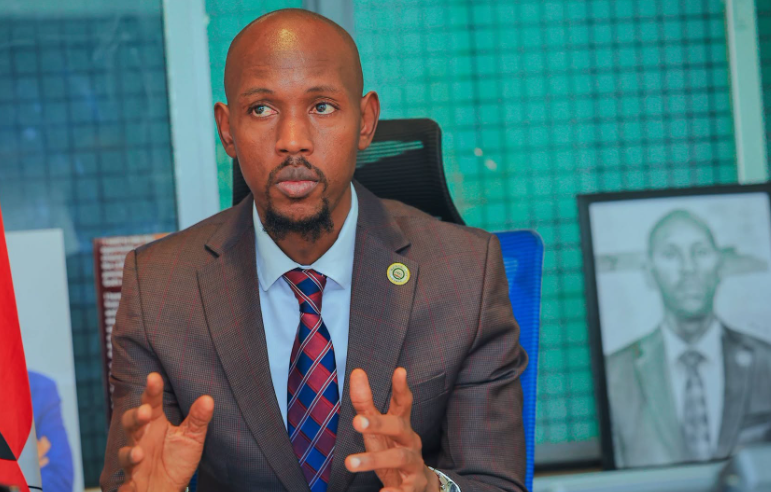
By Katemarthason Okudo, August 17, 2026Nairobi County’s Chief Officer for Customer Engagement and Citizen Service, Geoffrey Mosiria, has raised concerns over what he described as the growing culture of early political campaigns in Kenya, warning that ordinary citizens, especially young people, continue to bear the greatest burden.
In a statement shared on his social media page, Mosiria questioned whether the constant political activity taking place across the country was benefiting citizens or simply serving the interests of politicians preparing for future elections.
Mosiria said he had taken time to reflect on what the law says about early campaigns and the impact they have on ordinary Kenyans.
According to him, the biggest casualty in the country’s political cycle is the common citizen, who is often left waiting for development and better services while leaders focus on maintaining political influence.
Culture of continuous campaigns
Mosiria noted that political campaigns in Kenya appear to begin immediately after elections, regardless of whether a leader wins or loses.
He argued that some elected leaders spend more time protecting their political positions instead of focusing on the responsibilities entrusted to them by voters. “Today, I sat down and asked myself: what does the law say about early political campaigns, and how is Mwananchi benefiting from all this?” Mosiria said.
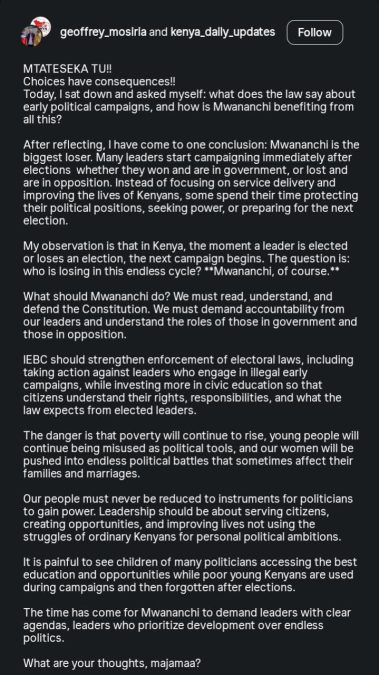
After reviewing the situation, he said he reached one conclusion. “My observation is that in Kenya, the moment a leader is elected or loses an election, the next campaign begins. The question is: who is losing in this endless cycle? Mwananchi, of course,” he added.
His remarks come at a time when political activity has continued to intensify in different parts of the country, with leaders from both government and opposition camps holding frequent public meetings and rallies.
Call for civic education
Mosiria also called on Kenyans to familiarise themselves with the Constitution and understand the roles of elected leaders.
He emphasised that citizens should demand accountability and ensure leaders remain focused on service delivery rather than political competition. “We must read, understand and defend the Constitution. We must demand accountability from our leaders and understand the roles of those in government and those in opposition,” he said.
He further urged the Independent Electoral and Boundaries Commission (IEBC) to strengthen the enforcement of electoral laws, particularly those relating to early campaigns. According to Mosiria, civic education should also be expanded to help citizens better understand their rights and responsibilities.
Political tools
The Chief Officer expressed concern over the increasing involvement of young people in political activities that, in his view, offer little long-term benefit.
He warned that poverty could continue to rise if young people remain trapped in political battles instead of being supported through education, employment and economic opportunities.
“The danger is that poverty will continue to rise, young people will continue being misused as political tools, and our women will be pushed into endless political battles that sometimes affect their families and marriages,” Mosiria stated.
He also questioned the inequality between the opportunities available to the children of political leaders and those available to many young Kenyans. “It is painful to see children of many politicians accessing the best education and opportunities while poor young Kenyans are used during campaigns and then forgotten after elections,” he said.
As political discussions continue across the country, Mosiria insisted that leadership should focus on improving lives rather than preparing for the next election.