Salasya calls for controlled legalisation of marijuana in Kenya
By Paulette Mboga, November 30, 2025Mumias East Member of Parliament (MP) Peter Salasya has called for the controlled legalisation of marijuana in Kenya, saying the country must have proper policies before allowing its use.
On Sunday, November 30, 2025, he noted that, unlike in the United States, where dispensaries offer different types of weed for specific purposes, Kenya lacks the capacity to differentiate products, putting young people at risk.
Also watch: Salasya: I will be Kenya’s first president from Western
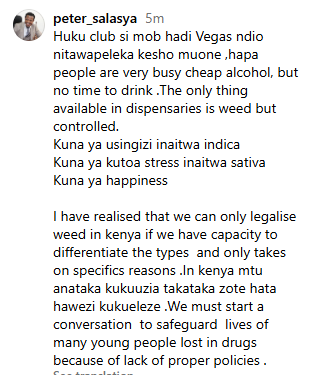
Salasya said, “Huku club si mob hadi Vegas ndio nitawapeleka kesho muone; hapa people are very busy with cheap alcohol but have no time to drink. The only thing available in dispensaries is weed, but it is controlled. Kuna aina ya usingizi inaitwa indica. Kuna ya kutoa stress inaitwa sativa. Kuna ya happiness.”
He added that legalisation should only happen when the country can manage the different types and regulate their use for specific reasons.
Proper policies
He explained that in Kenya, people often sell drugs without knowing the products they offer, saying, “In Kenya, mtu anataka kukuuzia takataka zote hata hawezi kukueleze. We must start a conversation to safeguard the lives of many young people lost to drugs because of a lack of proper policies.”
Salasya’s comments highlight his concern over the rise of unregulated drugs and the dangers they pose to youth in the absence of clear laws and education on safe use. He believes that controlled legalisation could help protect lives while allowing adult use for medical or recreational purposes under strict guidelines.
Also watch: Salasya urges youth to register as voters ahead of 2027 elections
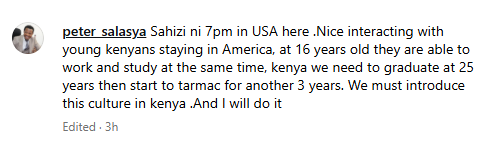
This call comes after Salasya proposed that Kenya adopt the work-study culture he observed among young Kenyans living in the United States. In an Instagram post on Sunday, November 30, he noted that at 16 years old, many young Americans can work and study at the same time.
He compared this with the Kenyan system, where students graduate around 25 years old and then spend additional years in the job market before fully starting their careers.
Salasya suggested that embracing such structured practices in Kenya could help young people become responsible and independent earlier.
Salasya’s recent observations on education, work, and controlled marijuana use show his interest in adopting international practices to benefit Kenya.
He believes that clear policies, education, and responsible management can reduce drug-related harm and improve opportunities for young people while guiding the country toward safer systems of regulation.