Thousands of workers in limbo as US-Africa trade deal set to expire
By BBC, September 30, 2025Ms Wambui has worked at Shona EPZ, helping to sew sportswear exclusively for the American market, for just six months.
In that short time, her salary has become the mainstay of her household. She supports her four-year-old daughter, two sisters in college, and her mother.
Losing her job, she says, would affect more than just her own life.
“If Agoa expires, where shall we go?” Ms Wambui asks in a worried tone, her hands and feet moving in time on the sewing machine as she stitches together pieces of fabric.
For her, a regular wage has meant more than income. It has meant dignity and the ability to pay school fees, keep food on the table and enabled her to look forward to a better future.
“It’s going to hit me hard. Starting to look for a new job. In Kenya, it’s hard to find a job, very hard,” she says as she folds the piece of fabric she has just stitched.
Kenya’s apparel industry has thrived under AGOA.
In 2024 alone, the country exported KSh 60 billion worth of clothing to the US, supporting more than 66,000 direct jobs, three-quarters of them done by women, according to the Kenya Private Sector Alliance, an umbrella group of private businesses.
Factories like Shona EPZ have become important sources of employment, especially for young people who have struggled to find stable work in a tough economy.
“Most of the people here were taken from the streets,” Ms Wambui says. “They were drug addicts. If it expires, they might go back there, and here they are reformed.”
Shona EPZ does not require new employees to be skilled – the company is committed to training those it gives a job to.
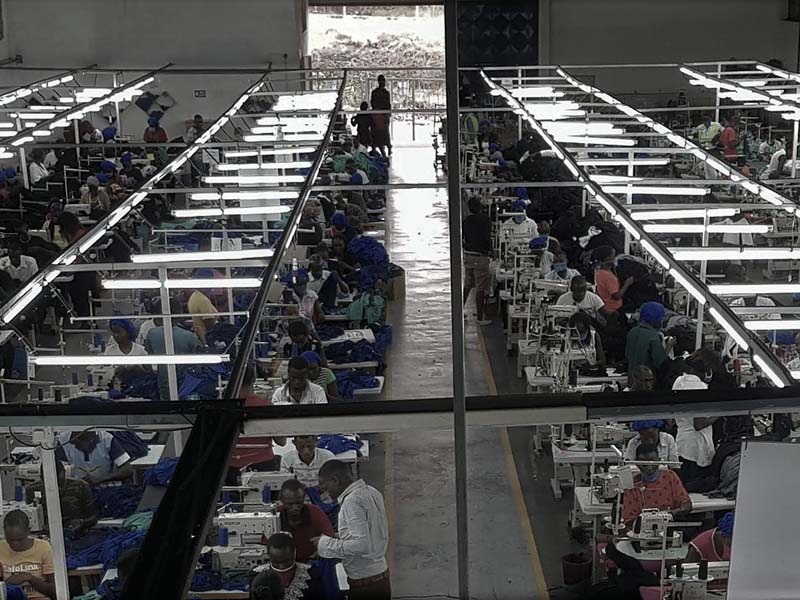
The lack of clarity over the future of Agoa has already had an impact on Shona EPZ’s output.
Normally, the factory produces nearly half a million garments each month, but this year output has slumped to about a third, as buyers hold back on long-term orders.
Garment sales from Kenya have also been hit this year by the 10% tariff introduced by the Trump administration earlier this year. A renewal of AGOA would not get rid of that, but would mean no additional tariffs.
The uncertainty stretches far beyond Kenya.
Across Africa, more than 30 countries currently export over 6,000 products to the US under AGOA, ranging from textiles to agricultural goods.
The programme has been credited with creating jobs, boosting industries, and giving African economies a stronger foothold in global trade.
But looking at a future deal, African negotiators need to rethink their approach, according to trade policy expert Teniola Tayo.
At last week’s UN General Assembly, trade was high on the agenda.
Kenya’s Trade Minister Lee Kinyanjui revealed that Nairobi was pushing for at least a short extension.
“An ideal situation would be the extension of Agoa so transition mechanisms can be put in place,” he said.
At the same time, Kenya is trying to strike its own bilateral deal with the US.
Last week, President William Ruto said he expected to sign a trade deal with the US by the end of the year while urging Washington to extend the continent’s duty-free access under AGOA for at least five more years.
South African President Cyril Ramaphosa similarly warned that its lapse would carry serious consequences for his country.
At the same time, Kenya and others are looking for new markets to reduce overreliance on the US.
Trade expert Ms Tayo says this should include taking advantage of the African free-trade area.
“When Africans trade amongst themselves, they tend to produce higher-value goods, more manufactured goods, versus simply exporting raw materials,” she argues.
But this all takes time, for workers like Ms Wambui, the timelines of diplomacy and trade negotiations feel far removed from the daily urgency of feeding a family.
She has just one request for the Kenyan and US governments: give young people more opportunities.
“We have ideas and the drive to make a difference. We just need support to show our potential,” she says as she and her colleagues head outside the factory for their lunch break.