Lawyer Willis Otieno: Digital systems are being used to exploit the poor
By Paulette Mboga, August 7, 2025Lawyer and political commentator Willis Otieno has criticised the Kenya Kwanza administration, accusing it of deliberately misleading Kenyans while engaging in what he calls “structured theft” under the guise of development and empowerment.
In a strongly worded statement on X on Thursday, August 7, 2025, Otieno claimed the ruling coalition has mastered deception, propaganda, and exploitation, calling it “competent at the wrong things.”
Citing the government’s flagship digital services platform, Otieno referred to the eCitizen system as a “heist,” arguing that rather than promoting transparency and service delivery, the platform was created to serve as a centralised “cash cow” with zero public oversight.
“The priority wasn’t service delivery,” Otieno said. “It was creating a black box for looting.”
He also criticised the newly launched Social Health Insurance Fund (SHA), terming it a cold, unjust alternative to the National Health Insurance Fund (NHIF).
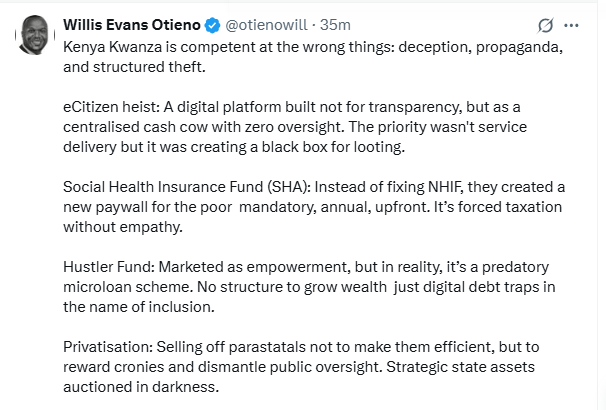
“Instead of fixing NHIF, they created a new paywall for the poor—mandatory, annual, upfront. It’s forced taxation without empathy,” he stated, describing the move as an additional financial burden on struggling households.
On the widely publicised Hustler Fund, Otieno had more to say. Though marketed as an empowerment tool, he labelled it a “predatory microloan scheme” that is plunging the poor into digital debt cycles with no real avenues for growth.
“No structure to grow wealth, just digital debt traps in the name of inclusion,” he said.
Selling public assets
The lawyer also expressed deep concern about the ongoing privatisation of state-owned corporations. According to Otieno, the process is being carried out in secrecy and is more about rewarding cronies than improving efficiency.
“Privatisation is not to make parastatals efficient,” he said. “It is to dismantle public oversight. Strategic state assets are being auctioned in darkness.”
He concluded by calling out the ruling coalition’s “Bottom-Up” economic promise, branding it a lie used to exploit the hopes of the poor.
“It was never about the poor,” Otieno said. “It was about weaponising poverty as a political narrative, winning elections on false hope, and then feeding the same poor into the grinder of elitist economics.”