Kagwe declares war on aflatoxin in animal feeds
By Nancy Marende, September 30, 2025Agriculture and Livestock Development Cabinet Secretary Mutahi Kagwe has declared a firm stand on the future of Kenya’s dairy industry, warning that milk exports will only succeed if farmers and feed manufacturers eliminate aflatoxin contamination and embrace a quality-based payment system.
Speaking during the official opening of the 17th African Dairy Conference and Exhibition (AFDA17) at the Kenyatta International Convention Centre on Tuesday, 30 September 2025, Kagwe stated that contaminated feeds are directly undermining Kenya’s ability to access lucrative international markets.
Also watch: Kagwe defends livestock vaccines, urges farmers to comply
“No export without quality. Aflatoxin in maize feed passes straight into milk and locks us out of lucrative markets. If we are serious about doubling production and exporting, we must fix feed quality first,” he cautioned.
The CS revealed that the government is preparing to roll out a Good Quality Milk Certification Programme, which will set strict benchmarks for hygiene and safety.
Under the scheme, farmers delivering high-quality milk will earn premium payments, while those supplying substandard produce will be penalised.
“We must all produce good quality milk, and the farmer must be recognised for doing the right thing. It cannot be the same amount for bad and good. Those who produce better will earn better,” Kagwe emphasised.
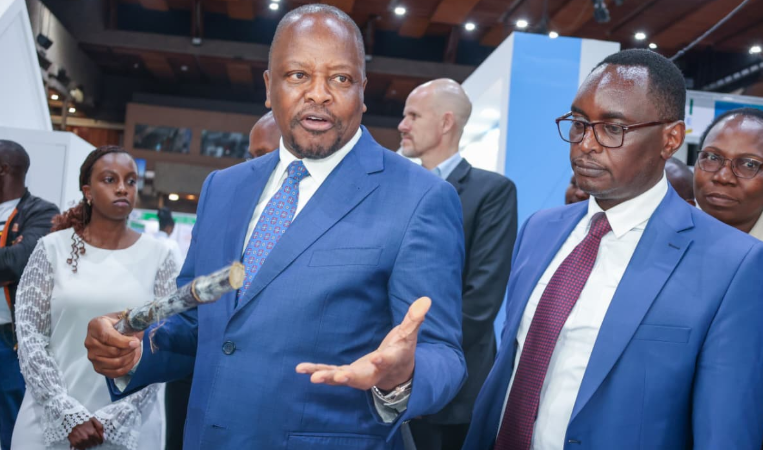
To combat aflatoxin, Kagwe urged feed manufacturers and farmers to adopt Aflasafe, a biological product proven to suppress contamination in maize.
“Use aflatoxin-free maize. Adopt Aflasafe. This is the only way to guarantee the best milk for Kenyans and protect our place in global markets,” he warned.
Also watch: Mutahi Kagwe calls for sustainable funding and an end to tea hawking
Kenya produced 5.3 billion litres of milk in 2024. Under the Bottom-Up Economic Transformation Agenda (BETA), the government targets to double output to 10 billion litres in the coming years.
Kagwe said achieving this ambitious goal will require tackling aflatoxin, cutting feed costs, improving cattle breeds, and rewarding farmers for quality.
He further called on African nations to share best practices and harmonise standards under the African Continental Free Trade Area (AfCFTA), stressing that the continent cannot continue importing milk powders while holding vast untapped potential.