Huddah expresses reservations about having children in poverty
By Paulette Mboga, August 12, 2025Kenyan socialite and entrepreneur Huddah Monroe has expressed her reservations about giving birth while languishing in poverty.
Weighing on a planned proposal to roll out a new long-term contraceptive in several African countries, including Kenya, she said that it will address the issue of children suffering.
The device, developed with support from the Bill & Melinda Gates Foundation, is designed to prevent pregnancy for up to eight years, the first contraceptive in the world to do so.
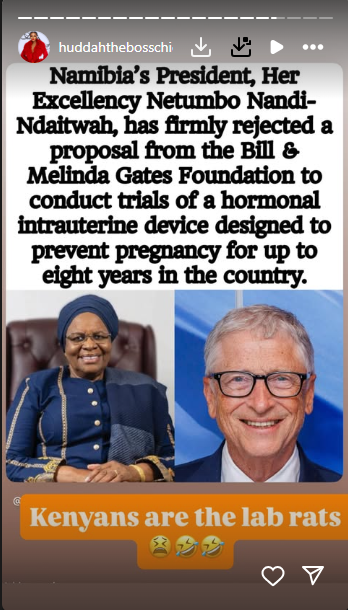
Huddah shared a screenshot of a news headline on Instagram on Tuesday, August 12, 2025. Huddah indicated that the technology could be used to address irresponsible parenting.
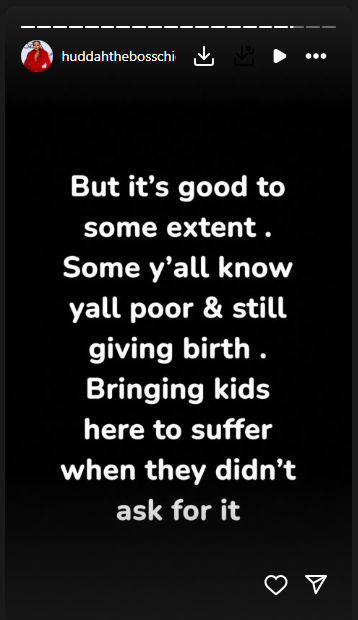
“But it’s good to some extent,” she wrote. “Some y’all know y’all poor and still giving birth. Bringing kids here to suffer when they didn’t ask for it.”
New contraceptive debate
The Gates Foundation-backed hormonal intrauterine device is being introduced in several African countries as part of a wider family planning initiative. The device, which can last up to eight years, is being promoted as a cost-effective, low-maintenance solution for women seeking long-term birth control. Kenya is among the first countries where the rollout is expected to take place.
In addition, the foundation plans to expand access to DMPA-SC, a self-injectable contraceptive, to more than 35 countries globally. This includes eight African nations: the Republic of the Congo, Madagascar, Malawi, Nigeria, Senegal, Uganda, Zambia, and Kenya. Proponents of the program say it offers women more reproductive autonomy and flexibility, particularly in regions where healthcare access is limited.
However, the program has also faced skepticism, with some community leaders and activists questioning whether African populations are being used as test subjects for medical interventions not yet widely adopted elsewhere.
Huddah’s remarks will probably reignite discussions around poverty, reproductive rights, and personal responsibility. While her critics have accused her over time of stigmatizing the poor, her supporters argue that she is raising uncomfortable but important questions about parenting choices in challenging economic conditions.