Amnesty International slams Tanzania for brutal crackdown, internet shutdown
By Aloys Michael, November 4, 2025Amnesty International has slammed the Tanzanian government for a partial internet and electricity shutdown following the country’s October 29, 2025, General Elections, raising concerns over human rights violations.
Also Watch: Amnesty International sounds alarm over escalating repression in Tanzania
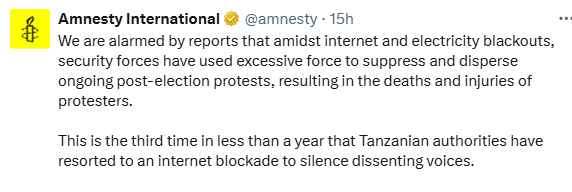
In a series of X posts released on Monday, November 3, 2025, the rights group noted that the blackouts, which have affected large parts of the country for nearly a week, have coincided with reports of security forces using excessive force against post-election protesters.
“This is the third time in less than a year that Tanzanian authorities have resorted to an internet blockade to silence dissenting voices. Authorities must immediately refrain from suppressing protests and instead respect, protect, and facilitate the right to peaceful assembly,” the X post read in part.
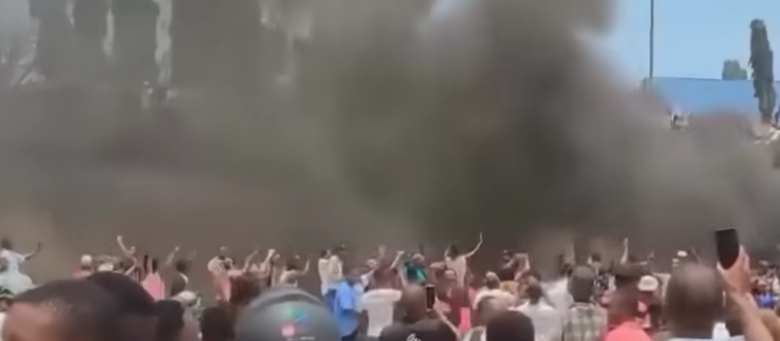
This comes amid reports that hundreds of protestors have been killed since the demonstrations erupted after Tanzanians took to the streets to protest the exclusion of key candidates from the polls in which President Samia Suluhu was declared the winner.
Also Watch: 2 Kenyans shot at Namanga border amid Tanzania election protests
Amnesty also called on the Tanzanian government to carry out prompt, independent investigations into the killings, ensure accountability for those responsible, and provide victims and their families with access to justice.
“Authorities must also provide victims and their families with access to justice and effective remedies,” it demanded.
Further, Amnesty also urged Tanzanian authorities to stop blocking access to information, including for international media, and to allow journalists to report freely by restoring internet access and essential public services.
“The authorities must also allow both local and international media to freely report on the human rights situation in the country and refrain from restricting access to information, both online and offline, including by immediately restoring internet access and access to basic public services,” the rights group said.
“The ongoing restrictions are making it difficult to verify information and to document election-related human rights violations.”
Crisis in Tanzania
Incidentally, the internet blackout has also been condemned by the African Commission on Human and Peoples’ Rights (ACHPR), which said it violates Article 9 of the ACHPR, guaranteeing the right to receive information and to express and disseminate it.
“The Commission calls upon the Government of Tanzania to exercise its duty of protecting human rights in the country, by ensuring that the citizens’ right to freedom of expression and access to information are respected and protected,” said ACHPR in a statement over the weekend.
Meanwhile, the United Kingdom (UK) Foreign, Commonwealth and Development Office (FCDO) had issued a second travel advisory to its citizens living in and travelling to Tanzania, warning of shortages of food, fuel, and cash in the country.
According to FCDO, the shortages have been worsened by the government’s decision to shut down the internet, disrupting access to information and essential services.
“FCDO advises against all but essential travel to Tanzania. This is consistent with advice for British High Commission staff to avoid all but essential travel,” the UK government said.
“This is due to disruption and unrest following the national election on 29 October. There are shortages of food, fuel, and cash, which have been compounded by the lack of internet services. There is also uncertainty around international transport options,” the statement read.