World Cup 2026: Spain enter Group H as favourites amid fitness concerns
By Joel Masibo, June 7, 2026Group H of the FIFA World Cup 2026 appears to offer a manageable route for reigning European champions Spain, who are widely tipped to challenge for the title. Yet, while Uruguay are expected to provide stern competition, Spain’s preparations have been complicated by injury concerns.
Meanwhile, Saudi Arabia have already shown on the world stage that they can upset football’s elite, and Cape Verde arrive with growing confidence after an impressive qualifying campaign.
Spain head to the tournament among the strongest contenders to be crowned world champions at MetLife Stadium on Friday, June 19, 2026. Under coach Luis de la Fuente, La Roja have established themselves as a polished and cohesive unit, combining technical quality with an attacking philosophy centred on possession and control.
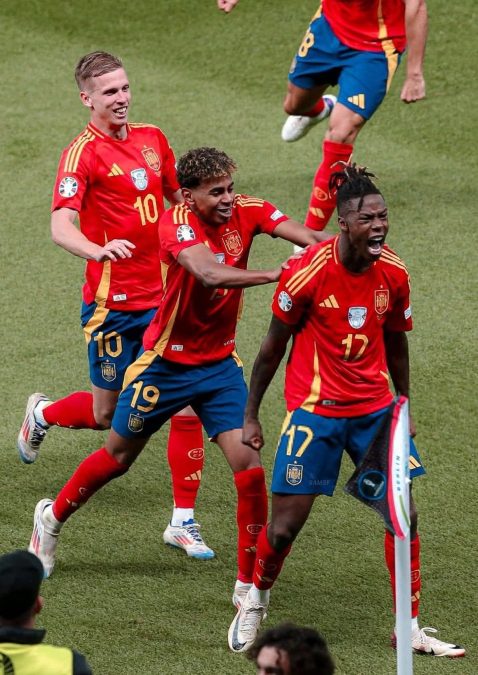
The midfield duo of Rodri and Martin Zubimendi provides stability and balance, while creative sparks come from Pedri, Nico Williams and Lamine Yamal. At the back, goalkeeper Unai Simon offers reliability and composure, while young defender Pau Cubarsi has continued to impress following his breakthrough with FC Barcelona.
The biggest concern for Spain revolves around the condition of Williams and Yamal, both of whom finished the club season battling hamstring problems. Their availability for the opening match against Cape Verde remains uncertain.
Despite still being a teenager until mid-July 2026, Lamine Yamal has already become one of the most influential figures for both club and country. Blessed with speed, vision and remarkable technical ability, the winger has developed into a prolific attacking threat. If fully fit, he is expected to be among the standout performers of the tournament.
Uruguay – Team outlook
Teams managed by Marcelo Bielsa rarely fail to entertain, and Uruguay are no exception. However, Bielsa’s demanding methods have occasionally created friction within squads, with former striker Luis Suarez previously voicing criticism of the coach.
A key question will be how the players cope with spending several weeks under Bielsa’s intense management style during the tournament.
Uruguay’s game is built around relentless pressing and high energy, an approach that can overwhelm opponents. Maintaining that intensity throughout a long competition in the summer heat of the United States could prove challenging.
Defensively, Uruguay remain formidable, with Ronald Araujo and Jose Gimenez forming a rugged central partnership. Going forward, much responsibility may fall on Darwin Nunez, whose opportunities have been limited since his move to Al-Hilal.
Midfielder Fede Valverde remains one of Uruguay’s most influential figures. The Real Madrid star combines stamina, leadership and attacking drive, often carrying his team from defense into attack. His ability to strike from long range and deliver dangerous set pieces makes him a constant threat.
Saudi Arabia, Cape Verde
Saudi Arabia’s stunning victory over Argentina at the 2022 World Cup remains one of football’s greatest shocks and serves as evidence of the talent within the squad. The growth of the domestic league has also helped raise standards across the country.
However, their road to the 2026 tournament was far from convincing. They finished behind Jordan in one qualifying phase and later trailed both Japan and Australia, forcing them into an additional round before eventually securing qualification.
Those struggles resulted in the departure of Herve Renard in March, with Georgios Donis taking over. Although Donis brings extensive experience from club football, particularly in the Middle East, this marks his first role in international management, presenting a significant challenge.

Although Cape Verde are considered outsiders in Group H, their qualification achievements suggest they should not be underestimated. The island nation, with a population of roughly half a million, finished above Cameroon in their qualifying section, a feat that attracted widespread attention.
Their success was built on defensive resilience. Aside from a heavy defeat away to Cameroon, they conceded very few goals throughout qualifying, recording seven clean sheets and remaining unbeaten defensively on home soil.
Coach Pedro Leitao Brito, better known as Bubista, deserves significant credit for creating such a disciplined side. His team’s toughest examination arrives immediately with an opening clash against Spain.
Veteran striker Ryan Mendes will lead Cape Verde into their first match as captain and the country’s all-time leading scorer. Having played professionally in several countries, including England, France, the UAE and Türkiye, the 36-year-old brings invaluable experience and leadership.