Harambee Stars to know qualifying path for AFCON 2027 as CAF schedules announcement
By Joel Masibo, May 19, 2026Africa’s football powerhouses and rising sides are set to learn their path to the TotalEnergies CAF AFCON PAMOJA 2027 qualifiers as preparations intensify for one of the continent’s most anticipated tournaments.
The draw, scheduled for Tuesday, May 19, 2026, in Cairo, will reveal how the 48 participating nations will battle for places at the finals of the continental showpiece, which is already attracting widespread attention before the competition officially kicks off.
History on horizon
For the first time ever, the Africa Cup of Nations will be organised by three host nations, Kenya, Tanzania, and Uganda, marking a historic chapter for East African football.
The ceremony, to be held at the Egyptian Football Association headquarters, signals the beginning of the next stage toward a tournament that CAF believes will promote regional unity under the theme “PAMOJA,” a Swahili term meaning “together.”

The finals are planned for June 19 to July 17, 2027, and will return the competition to East Africa for the first time since Ethiopia staged the tournament in 1976. The 2027 edition also introduces a new level of collaboration, with three countries jointly hosting Africa’s biggest football event across several cities.
CAF projects the tournament could engage over 400 million people throughout East Africa, further demonstrating the expanding influence and commercial appeal of African football.
Qualifying path
During the draw, the 48 teams will be placed into 12 groups containing four teams each. The leading two teams in every group will qualify directly for the finals. However, because Kenya, Uganda, and Tanzania already have automatic qualification as hosts, only one more team from each of their respective groups will advance.
The qualification matches will be played across three FIFA international windows between September 2026 and March 2027.
The opening two match rounds are expected between September 21 and October 6, 2026. Matchdays three and four will follow from November 9 to 17, while the final round of qualifiers is scheduled for March 22 to 30, 2027.
As in previous editions, the qualification journey is expected to produce intense competition, pressure-filled encounters, and potential surprises.
Traditional African football giants including Senegal, Morocco, Egypt, Algeria, Nigeria, Cameroon, Côte d’Ivoire, and South Africa are among the favourites to qualify, although recent campaigns have shown that no fixture on the continent can be considered straightforward.
Smaller nations have continued to close the gap in quality, with countries like Comoros and Gambia recently proving that African football’s competitive landscape is changing rapidly.
Several nations are also chasing historic milestones, as Central African Republic, Chad, Somalia, Eritrea, and South Sudan continue pursuing their maiden AFCON appearances. Burundi, Ethiopia, and Lesotho also remain in contention after successfully progressing from the preliminary round.
The earlier qualifying phase once again highlighted the unpredictability and passion associated with African football, as South Sudan, Burundi, Somalia, Lesotho, Eritrea, and Ethiopia survived difficult two-legged ties to secure places in the group stage.
Factors such as hostile away environments, goal difference, and crucial away victories are expected to heavily influence which teams eventually secure qualification to the East African tournament.
Tournament’s benefits
Beyond football, AFCON PAMOJA 2027 is increasingly being viewed as a landmark event for the future of the sport in Africa.
The strong commercial performance and worldwide attention generated by recent editions in Côte d’Ivoire and Morocco have demonstrated the tournament’s growing stature, with the East African edition expected to further boost infrastructure development, regional cooperation, and global visibility for African football.
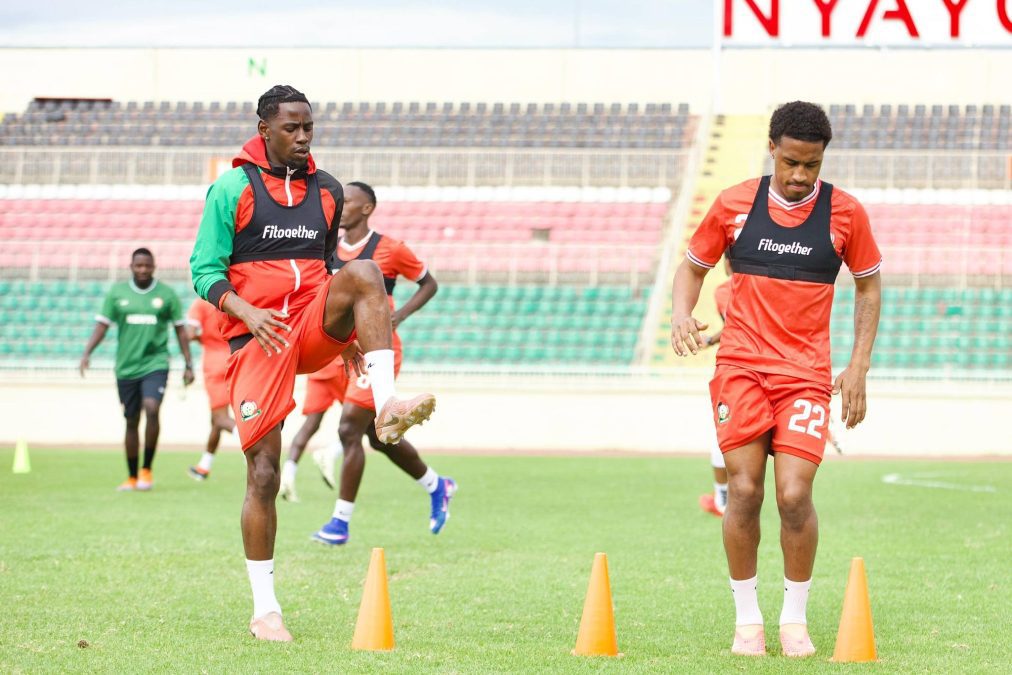
The “PAMOJA” identity also carries symbolic importance, representing CAF’s broader ambition of fostering unity across Africa through football at a time when the sport’s global profile and economic value continue to rise.
For Kenya, Tanzania, and Uganda, hosting the tournament is seen as a transformative opportunity to improve infrastructure, strengthen tourism, attract investment, and showcase East Africa’s football culture to the rest of the continent and the world.
However, before the excitement of packed stadiums arrives in June 2027, African nations must first navigate a demanding qualification campaign.
And with Tuesday’s draw in Cairo, the journey toward East Africa officially gets underway.