Kenya among regions set to witness rare 6-planet alignment on Saturday
By William Muthama, February 28, 2026Skywatchers in Kenya and across the world are in for a rare celestial spectacle on Saturday, February 28, 2026, as six planets in our solar system align for a dazzling parade.
According to NASA, the event will be visible wherever skies are clear, offering a unique opportunity to see Mercury, Venus, Mars, Jupiter, Saturn, and Uranus in a single line.
This alignment, sometimes called a “planetary parade,” happens because all the planets orbit the Sun roughly in the same plane, known as the ecliptic.
When their orbits place them on the same side of the Sun, they appear bunched together from Earth’s perspective, forming a striking line across the night sky.
Seeing six planets in one row is a rare event and a vivid reminder of the scale and structure of our solar system.
According to NASA, this event also helps the public connect with astronomy, giving a hands-on way to appreciate planetary motion and the mechanics of our cosmic neighbourhood.
How to spot the planets
Mercury and Venus will shine brightly near the horizon and are usually the easiest to spot. Mars will appear slightly above Venus with a reddish hue.
Jupiter and Saturn, the larger planets, will show steady, bright light, with Jupiter positioned slightly higher than Saturn.
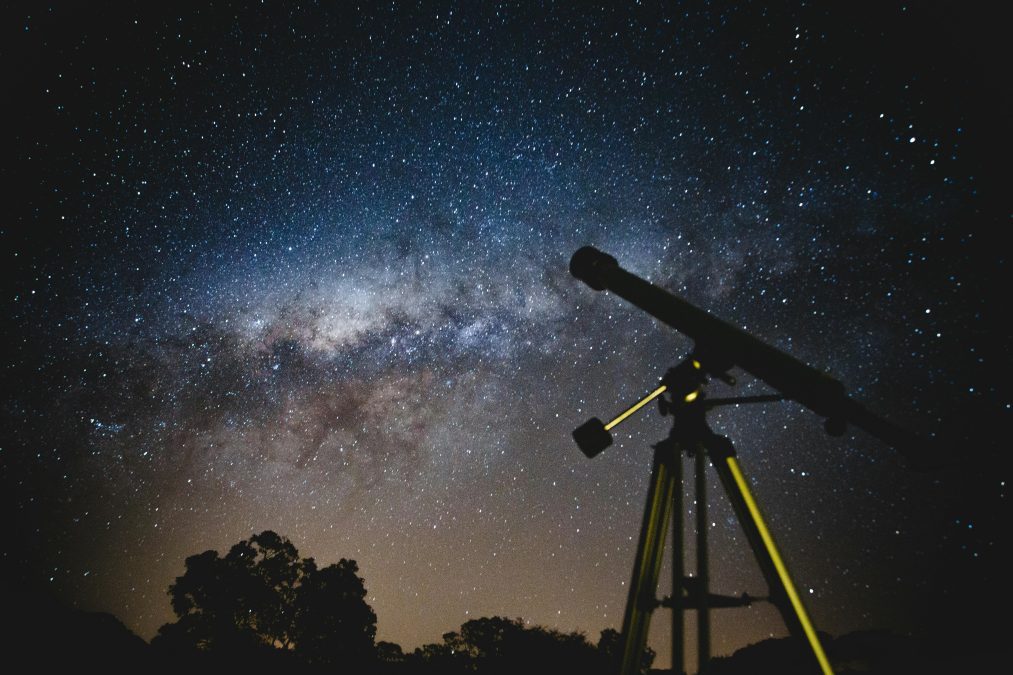
While all six planets can be spotted with the naked eye, Uranus may require binoculars or a small telescope due to its faint glow.
Where to watch
According to NASA, the spectacle will be visible to viewers in the Northern Hemisphere, and since much of Kenya lies there, residents will be able to see the planets clearly aligned in the sky.
For the clearest observation, experts recommend heading to dark, open areas away from city lights. Northern and central counties offer particularly good vantage points.
In Turkana, regions around Loiyangalani and Lake Turkana provide some of the darkest skies. Marsabit’s elevated plateaus give wide, unobstructed horizons, while the open plains of Samburu and Isiolo offer minimal light pollution.
High-altitude plains in Uasin Gishu, particularly around Eldoret, reduce atmospheric interference, and the highlands of Murang’a and Meru allow viewers to escape city lights for clearer skies.
Even in urban centres such as Nairobi, enthusiasts can catch the parade from the outskirts like Ngong Hills or Karura Forest.
Observations are best made shortly after sunset, which the Kenya Meteorological Department says will occur at 6:49 PM.