Advertisement
Why tourists aren’t supposed to take photos in India’s tiger reserves
13th May, 2026 12:54 AM
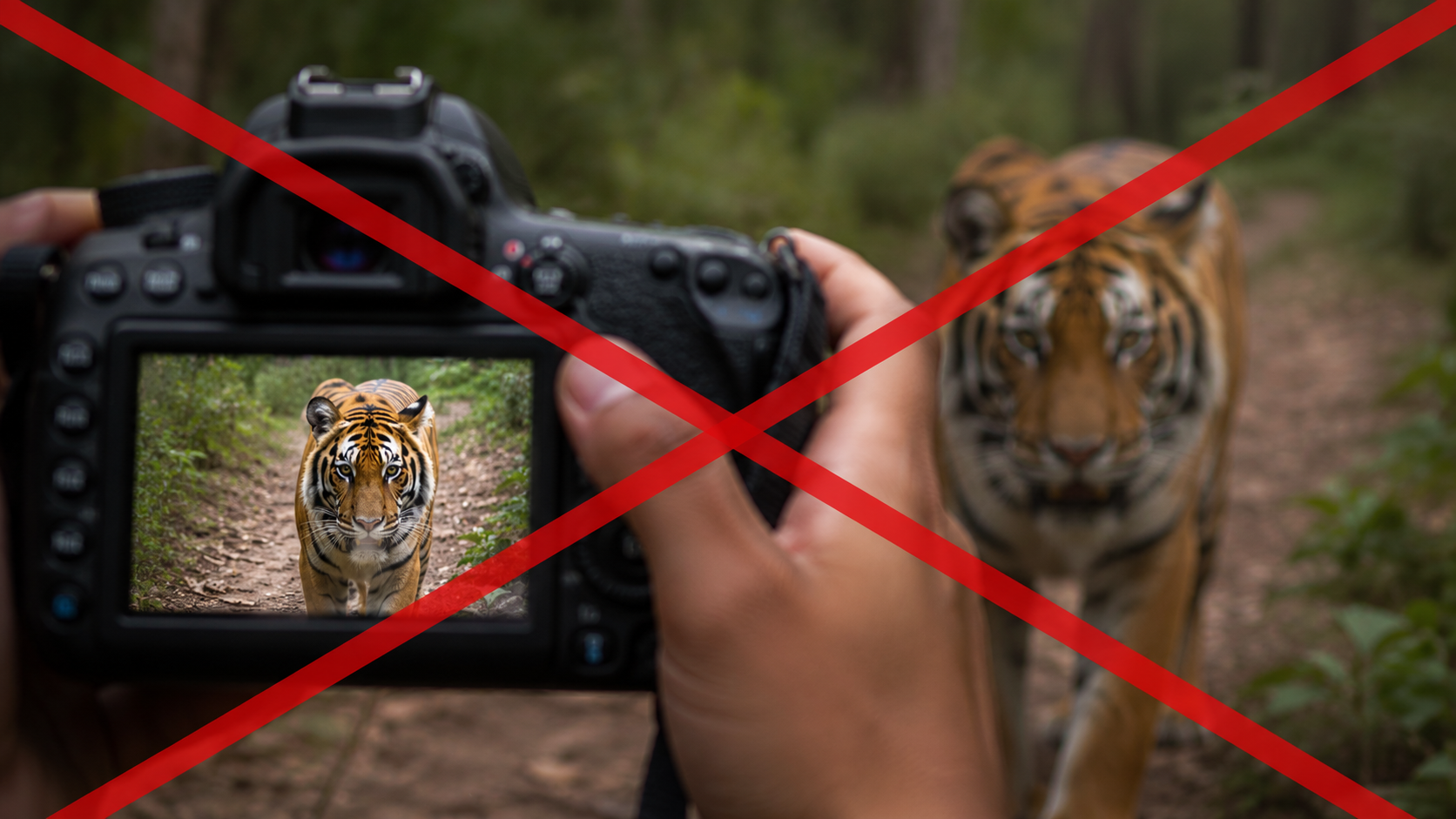
You are riding in a Jeep through a quiet forest in India when, without warning, a tiger emerges from the undergrowth. Almost instantly, phones come out. Someone tries to capture a selfie with the animal in the background while others lean out for the perfect shot before the predator disappears back into the trees.
For many travellers, moments like these represent the dream safari experience. Yet across India’s tiger reserves, concerns have been growing about how mobile phones and tourist behaviour are affecting both wildlife and visitor safety. The debate has become part of a wider conversation about whether modern tourism is changing the meaning of a safari itself.
In several tiger reserves, restrictions on mobile phone use inside core tourism zones have been introduced as authorities and conservationists attempt to reduce dangerous encounters, overcrowding and disturbances to wildlife. The concern is not simply about photography, but about how the desire to document every sighting has started to influence behaviour inside fragile ecosystems.
One of the most visible problems has been the rise of what guides call “safari jams”, where multiple vehicles crowd around a single tiger sighting. Viral videos from reserves such as Rajasthan’s Ranthambore National Park have shown tigers surrounded by safari vehicles while tourists shout, record videos and scramble for photographs. Conservationists say these scenes can leave animals stressed and cornered.
India is home to more than 3,600 wild Bengal tigers, around 75% of the global wild tiger population. Most live across the country’s network of protected tiger reserves, including Ranthambore National Park and Jim Corbett National Park. Conservation efforts have helped tiger numbers recover significantly over the past decade, but that success has also increased demand for tiger safaris.
Safari operators and wildlife experts argue that mobile phones have changed tourist behaviour in several ways. Instant messaging between drivers allows sightings to spread rapidly, bringing large numbers of vehicles to the same location within minutes. Geotagged social media posts can also reveal sensitive areas where tigers and cubs are frequently seen, drawing even more tourist attention to fragile habitats.
There have also been safety concerns linked to tourists attempting selfies or leaning dangerously from vehicles. Guides have reported incidents involving dropped phones, distracted visitors and risky attempts to capture close-up images of wildlife.
For many conservationists, the issue goes beyond phones alone. They believe modern safari culture increasingly prioritises dramatic photographs over appreciation for the broader ecosystem. Wildlife experts often argue that visitors should focus less on chasing tiger sightings and more on understanding forests, birdlife, landscapes and the natural rhythm of the environment.
The debate is not limited to India. Across the world, wildlife destinations have started tightening tourism rules as concerns grow about tourist behaviour around animals. Kenya has introduced stricter behavioural standards for safari operators after incidents during wildebeest migrations. In Svalbard, polar bear viewing regulations now require larger distances between tourists and animals. Sri Lanka has also faced calls for better management of overcrowded national parks.
Many safari guides believe the deeper challenge is managing tourist expectations. Visitors sometimes arrive believing a successful safari depends on getting as close as possible to wildlife or returning home with dramatic photographs. That pressure can influence guides and drivers to prioritise sightings over conservation principles.
Supporters of stricter safari rules argue that conservation must come first, even if it means fewer sightings, tighter restrictions and a slower style of travel. Ethical safari tourism, they say, should focus on respecting wildlife and preserving habitats rather than turning animals into social media content.
In the end, the true privilege of a safari may not be getting the perfect photograph at all. It may simply be the rare chance to witness wild animals in their natural world while leaving as little impact as possible.