Why swimming is the best full-body exercise and is important to general health
By Dan Kauna, May 6, 2026There is a quiet revolution happening in pools around the world. Kenya, for the most part, is watching from the sidelines.
Swimming has long been treated as a leisure activity here: something children do at birthday parties, something tourists do at the coast.
It rarely features in the local fitness conversation the way running does, despite Nairobi’s growing running culture and the explosion of gyms across the city.
That is a missed opportunity, because the science on swimming is genuinely remarkable.
A study from the University of South Carolina tracked 40,547 men across 32 years and found that, after controlling for age, body weight, smoking, alcohol and family health history, “swimmers had 53 per cent, 50 per cent, and 49 per cent lower all-cause mortality risks than did men who were sedentary, walkers, or runners, respectively.”
Read that again: lower mortality risk than runners.
The sport that looks the most relaxed was quietly winning the longevity race.
What your body actually gains in the water
Swimming is one of the few exercises that trains almost every system in your body simultaneously.
Your heart and lungs work hard to keep up with the demand, building cardiovascular fitness without the pounding that running puts on your knees and hips.
Your arms, shoulders, core and legs all engage with every stroke.
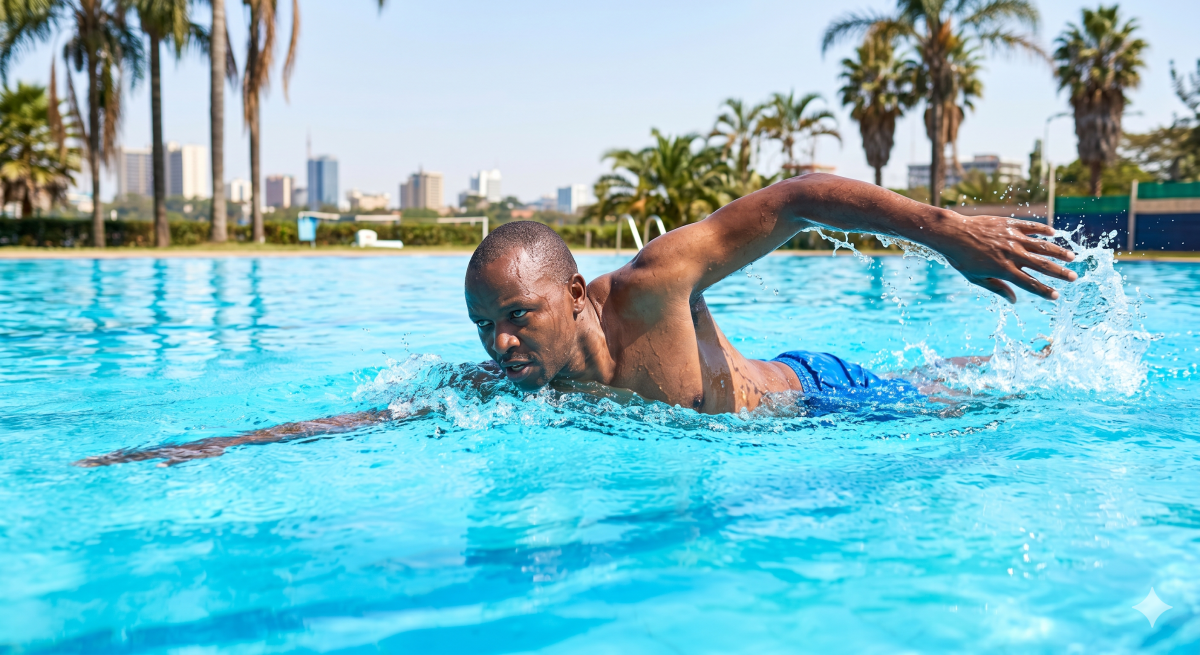
Because water supports up to 90 per cent of your body weight, the movement is as joint-friendly as it gets, making it ideal whether you are 25 and in peak condition or 55 and managing an old injury.
The mental health benefits are just as compelling.
A peer-reviewed study published in Frontiers in Public Health found that swimming “improves well-being by increasing endorphins and decreasing cortisol levels in the body,” describing endorphins as “a natural mood-boosting chemical in the brain, creating a sense of happiness, relaxation, and well-being.”
That post-swim calm is not in your head. Well, technically it is, but it is real.
How to start as an adult in Nairobi
The most common barrier adults cite is not access, it is embarrassment. Many Kenyan adults never learned to swim properly as children, and the idea of turning up to a pool as a grown-up feels daunting. It should not.
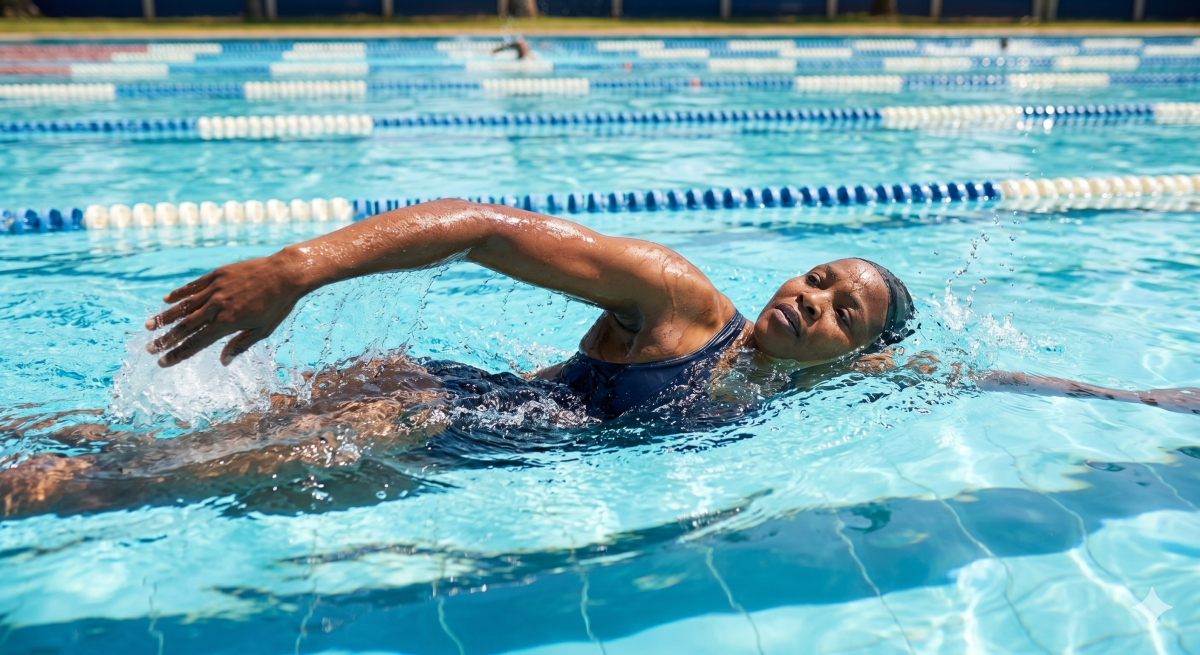
Most public and private pools in Nairobi offer adult beginner lessons. Lessons for adults typically run from Ksh 1,500 to Ksh 3,000 per session, depending on whether they are group or one-on-one.
Start with two sessions a week. Tell the instructor you are a beginner. They have heard it before, and they will not make you feel small for it. Within a month, most adult beginners are comfortable in the water. Within three, many are swimming continuous laps.