Why Nepal’s floods are raising fresh concerns over extreme weather
By Trizer Lijondo, August 27, 2026A devastating flash flood struck parts of Nepal on Wednesday, August 26, 2026, leaving communities along the Himalayan border with China’s Tibet facing deaths, destruction and a major search-and-rescue operation.
According to Reuters, the disaster began after a wall of mud and rock collapsed into a river, sending a powerful surge through mountain towns and valleys. Rescue teams were still searching for hundreds of missing people on Thursday, August 27, as the scale of the destruction continued to emerge.
Little warning
What makes the disaster particularly concerning is that it was not simply a case of heavy rainfall. Satellite imagery reviewed by Reuters indicated that part of a glacier broke away high in the mountains, falling into a valley and triggering an ice-and-rock avalanche.
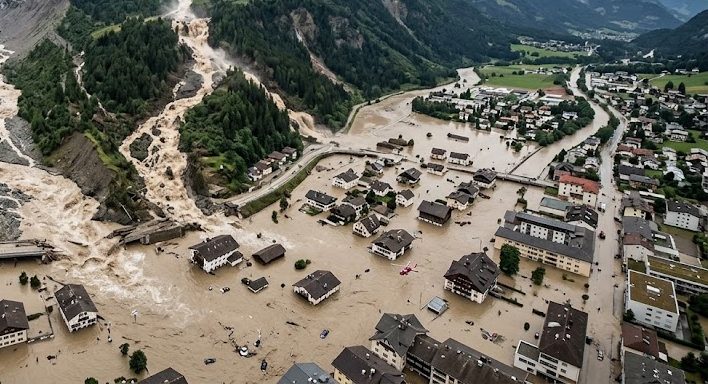
The resulting debris entered the Lhende River and contributed to a sudden surge downstream. Reuters reported that river levels in the Galchhi area rose by as much as nine metres within 30 minutes.
Initial reports suggested that an earthquake could have triggered the event. However, the US Geological Survey later said the seismic signal initially interpreted as an earthquake was actually generated by the collapsing ice, rock and debris.
Why extreme weather concerns are growing
The disaster has renewed attention on the changing conditions in the Himalayas, where glaciers are retreating and melting at faster rates.
Reuters reported that a 2023 United Nations assessment found Nepal’s glaciers had been losing ice significantly faster in recent years. Scientists are still examining the exact role warming temperatures played in Wednesday’s collapse, meaning it would be premature to attribute the entire disaster directly to climate change.
However, the incident highlights how rising temperatures, unstable glaciers, landslides and sudden flooding can combine to create hazards that are difficult for communities to predict.
A warning beyond Nepal
The Nepal disaster also offers a reminder that extreme weather does not always arrive in familiar forms. Communities can face sudden floods, landslides and other hazards with very little time to respond.

For people living in flood-prone areas, the events in Nepal underline the importance of paying attention to official warnings, knowing evacuation routes and avoiding rivers and other areas that can become dangerous within minutes.
As rescue operations continue, the Nepal floods have become another example of how quickly environmental hazards can turn into humanitarian emergencies.