Why does most kibanda tea taste better than homemade tea?
By Katemarthason Okudo, May 11, 2026There is something special about tea served at a local kibanda. It always seems richer, creamier and more satisfying than the one many people prepare at home. Even those who rarely drink tea indoors often find themselves stopping at a roadside tea spot for a hot cup before work or during a busy afternoon.
While many people think the difference comes from the outdoor atmosphere or social setting, the real reason is often found in the preparation itself. Small cooking habits can completely change the taste of tea.
Why boiling time changes everything in your tea
One of the biggest differences is how long the tea is allowed to boil. In many homes, tea is prepared quickly because people are rushing to leave for work or school. Water is heated, milk is added, and within minutes, the tea is ready. At most kibandas, however, tea is given more time to simmer. According to the Tea Research Foundation of Kenya, allowing tea to boil properly helps release stronger flavour and aroma from the tea leaves. This creates the deep taste many people enjoy.
The amount of tea leaves used also matters. Many people at home use very little tea powder to avoid making the tea too strong or to make supplies last longer. Roadside tea sellers often use enough tea leaves to give the drink a darker colour and fuller flavour. The same applies to milk. Tea with enough milk naturally tastes smoother and richer.
The cooking pot itself can also influence flavour. Tea prepared repeatedly in the same sufuria tends to develop a deeper taste over time. Food experts explained that repeated heating in cooking pots can affect how flavours blend, especially in drinks prepared daily using milk and spices.
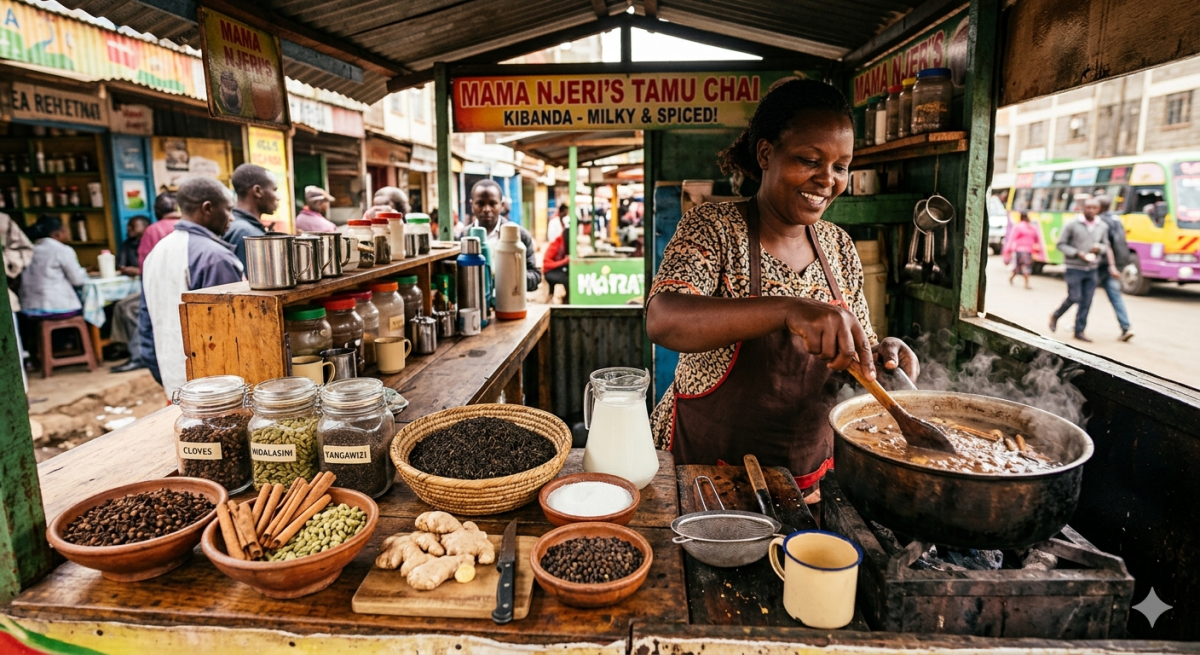
Sugar balance is another detail that changes the final result. Tea sold at many kibandas is usually slightly sweeter than homemade tea. Instead of adding sugar after serving, many tea sellers boil the sugar together with the tea. According to food experts at Healthline, ingredients mixed during cooking blend more evenly compared to those added later.
Hidden ingredients behind the flavour
Spices also make a major difference. A little ginger, cardamom or cinnamon can transform ordinary tea into something more comforting. Fresh ginger especially gives tea warmth and a stronger aroma. Many kibandas quietly rely on spices to make their tea memorable without making the flavour too heavy.
Milk quality is another factor people often overlook. Fresh milk usually creates creamier tea compared to processed long-life milk. The Food and Agriculture Organisation (FAO) noted that milk fat contributes greatly to texture and flavour in hot beverages.
Simple fixes to make your home tea taste better
For people trying to improve tea at home, the solution may be simpler than expected. Use enough tea leaves, allow the tea to boil longer, add small amounts of spice and avoid rushing the preparation. Even warming the cup before serving can help preserve flavour and temperature.