Why do earphones lose sound quality over time?
By David Nthua, April 13, 2026Earphones rarely sound worse for just one reason. In most cases, the drop in sound quality happens slowly because of everyday wear.
Earwax blocks the sound outlet, moisture affects internal parts, cables weaken, batteries age and tiny speaker drivers get stressed over time.
That is why a pair that once sounded clear, loud and balanced can later start sounding dull, quiet, distorted or uneven.
Earwax and dirt
For many users, the problem is not that the earphones are “spoilt” but that the mesh or nozzle has become partly blocked.
When earwax, dust or pocket lint covers the sound outlet, less sound reaches your ear, and the audio can seem muffled or quieter on one side.
Apple says debris on the speaker mesh can make AirPods too quiet, while Sony and Shure give the same warning for earbuds in general.
This is why people sometimes think the bass is gone, or one bud is dying, yet a careful cleaning improves the sound immediately.
Moisture
Sweat, humidity and light water exposure can also change how earphones sound.
Shure notes that excessive moisture can reduce output level or alter sound quality, and that moisture can block the tiny tube carrying sound into the ear canal.
This matters more than many people realise. If you use earphones during workouts, walks in the rain or long hot commutes, moisture can build up gradually and interfere with clear audio.
Fit changes sound
Sometimes the earphones themselves are fine, but the seal in your ear is not.
Sony says poor earbud fit can reduce sound quality, bass and even cause distortion, and that choosing the right tip size helps create the best sound experience. Shure also says fit greatly affects sound quality.
That means ageing ear tips, loose silicone sleeves or worn foam tips can make the same earphones sound much worse over time. If the seal weakens, bass usually drops first.
Cables and connectors wear down
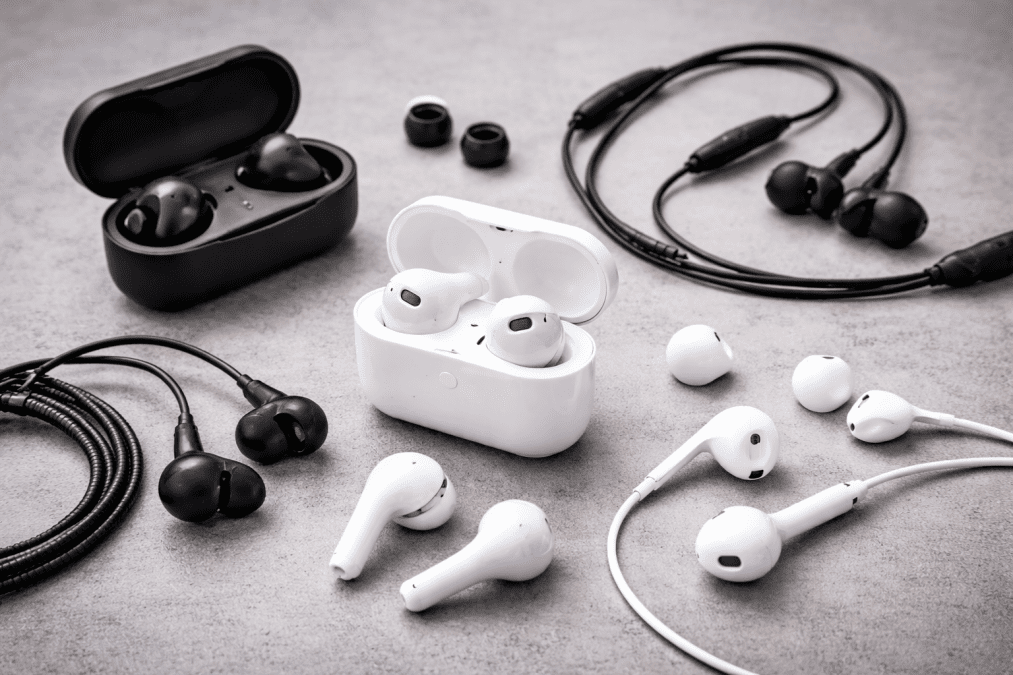
On wired earphones, repeated bending, pulling and wrapping can slowly damage the internal wires.
This often causes crackling, sound cutting in and out, lower volume on one side or total loss of one channel.
While support pages more often focus on troubleshooting than theory, this kind of wear is a basic and well-known failure point in wired audio gear, especially near the jack, remote section or where the cable enters the earpiece.
This is why older wired earphones may sound fine when held still, then suddenly distort when the cable moves.
Tiny speaker drivers can weaken or get damaged
Inside each earbud is a very small driver that creates sound. Over long use, especially with heavy volume, drops, moisture or dirt buildup, that driver can stop moving as cleanly as it once did.
The result may be distortion, rattling, weak bass or reduced clarity.
Physical damage does not always happen in one dramatic moment. It can build up slowly through heat, pressure and strain.
Your ears may be changing too
Sometimes the earphones are blamed when the real issue is hearing fatigue or hearing loss.
The CDC says that over time, sounds at 85 decibels or higher can damage hearing, and the WHO warns against listening at high volume for long periods.
This is important because if your hearing becomes slightly dulled, your earphones may seem weaker or less detailed even when they are working normally.
Why one side often sounds worse first
When one earbud becomes quieter than the other, the most common causes are uneven wax buildup, moisture in one side, partial cable damage or a balance setting issue.
Apple specifically recommends checking the mesh and audio balance when one AirPod sounds too quiet.
That is why one-sided sound loss should not immediately be treated as a dead earbud. It is often a maintenance issue first.
How to make earphones sound good for longer
Cleaning them gently and regularly helps prevent blocked sound outlets.
Keeping them dry matters, especially after workouts. Replacing worn ear tips can restore fit and bass.
Avoiding very high volume for long periods protects both the drivers and your hearing. For wired pairs, careful handling of the cable reduces internal breakage.