Why bone broth is the most underrated kitchen staple
By Dan Kauna, May 18, 2026If you have ever rescued a rough Sunday morning with a steaming, peppery bowl of supu, you already know its reviving power.
Yet, in most Kenyan kitchens, bones are treated as the ultimate afterthought – the debris left over from Friday’s nyama choma that we casually toss into the bin once the meat is stripped away.
We are quite literally throwing away liquid gold. That long, low, intentional simmer is the difference between ordinary soup and bone broth, and it is easily the most powerful, gut-healing staple you are not making.
What it is and why it works
Bone broth is made by simmering animal bones – beef, chicken, goat, whatever you have, in water for eight to 12 hours, sometimes longer.
The slow cook draws out collagen, amino acids, and minerals including calcium, magnesium, and phosphorus. What you end up with is a deeply flavoured, nutrient-dense liquid that works perfectly as a soup base, a cooking liquid for rice or stews, or even a warm drink on its own.
The gut benefits are where the research has started to pay attention.
A 2021 study published in Medicina by Mar-Solís and colleagues found that “bone broth has anti-inflammatory properties, and its consumption can decrease the symptoms of ulcerative colitis.”
The key drivers are amino acids – particularly glycine and proline, which support the integrity of the gut lining and help calm inflammation in the digestive tract. Over half of the amino acids in bone broth are essential, meaning your body cannot produce them on its own.
For joints, the collagen extracted from bones and connective tissue is the relevant component. As you age, your joint cartilage gradually thins, and collagen is what keeps it supple.
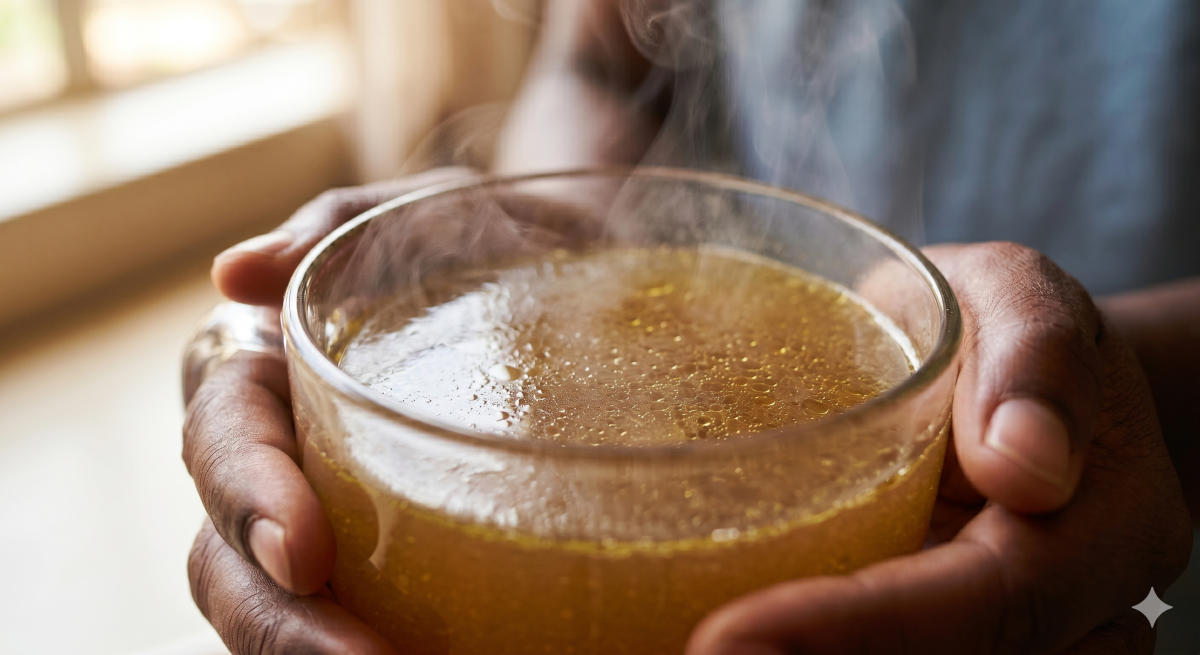
Bone broth made from joints and knuckles (the kind Kenyan butchers will happily sell you cheaply) contains Type II collagen, the specific form found in joint cartilage.
The minerals and amino acids in broth support white blood cell production and help the body recover from illness faster, which is why bone broth has shown up in sick-room cooking across virtually every culture on earth.
How to make a weekend batch
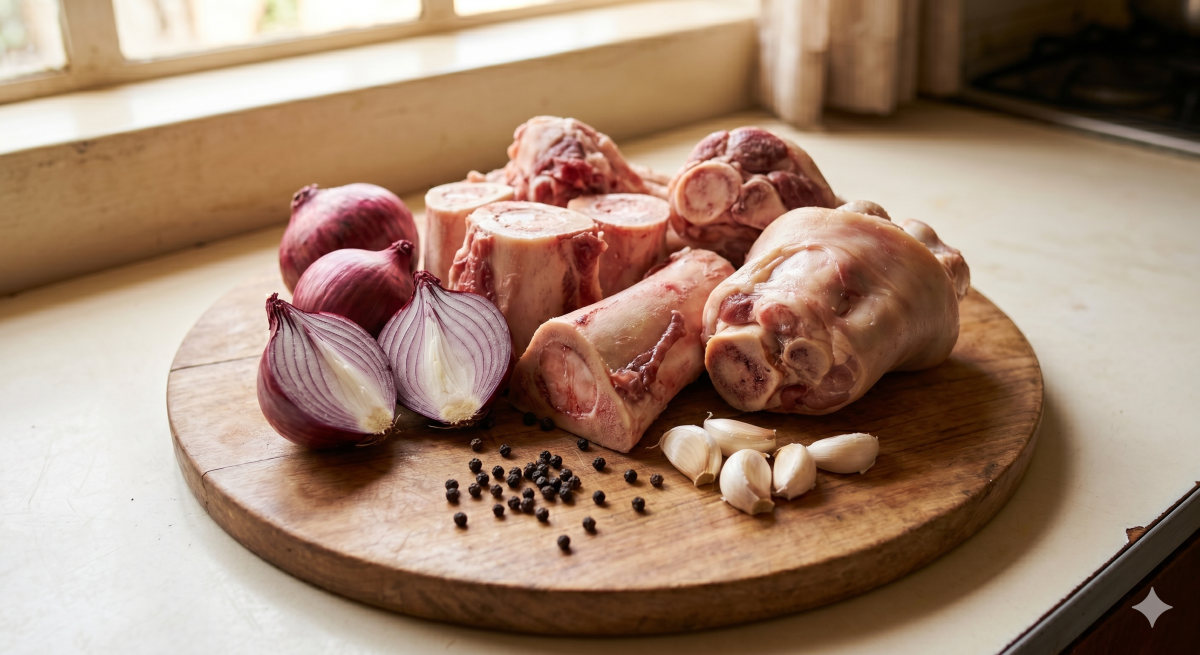
Get about one kilogram of mixed bones from your butcher: marrow bones, knuckles, and a few meaty ones for flavour.
Roast them in the oven or in a dry pan until browned. Put them in your largest pot, cover with cold water, add a splash of apple cider vinegar (it helps pull minerals from the bones), two onion halves, garlic, black pepper, and whatever vegetable scraps you have.
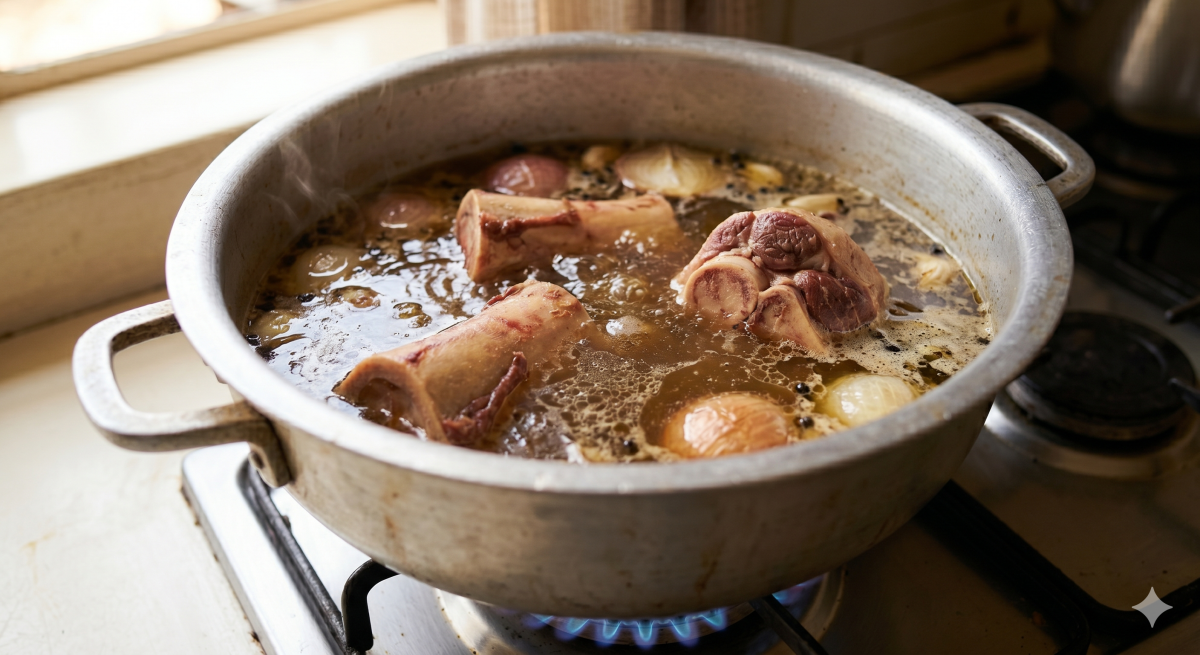
Bring to a boil, skim the foam, then reduce to the gentlest simmer you can manage.
Leave it for at least eight hours, longer if possible. Strain, cool, and store. It keeps in the fridge for five days or the freezer for three months.
Use it anywhere you would use water or stock. Your rice, soups, stews, and even your ugali will thank you.