How NTSA training of 4,000 PSV drivers could change the way Kenyans travel
By Katemarthason Okudo, September 23, 2026For millions of Kenyans, matatus are part of the daily routine. From the early morning rush to evening trips home, passengers rely on public service vehicles to get to work, school, businesses and other destinations.
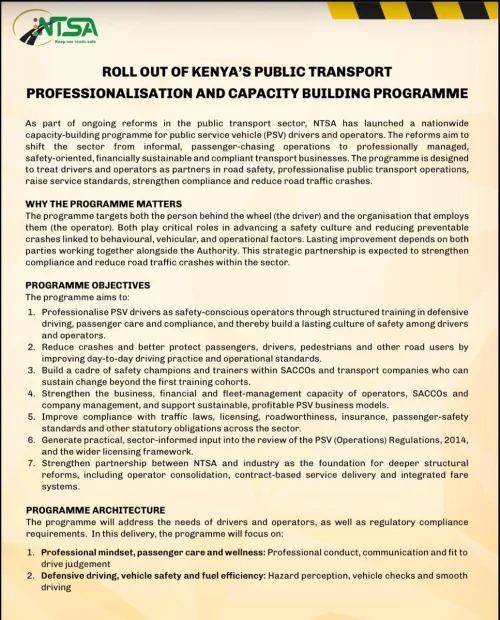
Now, the experience of using a matatu could gradually change as the National Transport and Safety Authority (NTSA) rolls out a new training programme targeting drivers, SACCO managers and transport company supervisors.
The programme, launched on Monday, September 21, 2026, is expected to train more than 4,000 people involved in the public transport sector. The first sessions are taking place in Voi, Mombasa and Garissa, ahead of the busy festive season.
A different approach to matatu training
The new programme goes beyond teaching drivers how to operate vehicles safely. It also focuses on how passengers are treated, how vehicles are managed and how transport businesses can operate more professionally.
According to NTSA, the training is intended to strengthen road safety, improve service standards and encourage public transport operators to view safety as part of their daily work.
For passengers, this could eventually mean a greater focus on how drivers behave on the road and how they interact with those inside their vehicles.
Instead of concentrating only on enforcement after traffic offences occur, the authority is placing more emphasis on preventing unsafe practices through training and professional development.
Passengers could notice changes in driver behaviour
Drivers taking part in the four-day training will cover areas such as defensive driving, identifying road hazards, passenger care, vehicle safety checks and emergency response.
They will also learn about fuel-efficient driving and digital systems used in transport regulation.
If the lessons are applied consistently, passengers could experience changes such as smoother driving, better attention to road conditions and improved handling of emergencies.
Customer service is also part of the training, meaning the programme is not focused solely on getting passengers from one destination to another. The way passengers are treated is also being considered as part of public transport standards.

SACCO managers are also being trained
The changes are not limited to the person behind the steering wheel.
NTSA is also training SACCO managers, operators and supervisors in areas including governance, financial management, fleet operations, customer experience and compliance.
According to NTSA, stronger management is important because road safety does not depend on drivers alone. How vehicles are maintained, how drivers are managed and how transport businesses operate can also affect the safety and quality of a passenger’s journey.
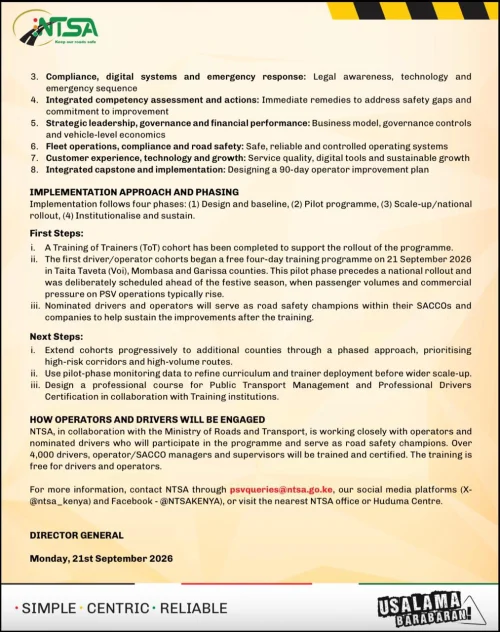
Managers will also be expected to develop 90-day operational improvement plans as part of the programme.
What this could mean during the festive season
The timing of the training is significant because passenger numbers usually rise during the festive season as people travel between towns and visit relatives.
The programme will gradually expand after the pilot phase, with high-risk corridors and busy routes expected to receive priority.
The changes may not be immediate for every passenger, particularly because the programme is being rolled out in phases. However, the training is intended to create a network of road safety champions who can continue promoting the lessons within their SACCOs and transport companies.
The initiative also forms part of wider efforts to professionalise public transport. NTSA has previously outlined proposed measures covering commercial vehicle licensing, maintenance, driver requirements and operational standards.
In the longer term, the authority plans to work with training institutions on professional driver certification and specialised public transport management courses.
For passengers, the bigger expectation is that these measures will gradually make everyday matatu travel more organised, safer and more customer-focused.