What happens when you flush an aeroplane toilet
By Dan Kauna, June 28, 2026We have all heard the old rumour that aeroplanes simply drop human waste into the sky mid-flight.
Thankfully, that is just a myth.
The reality is a clever system designed to manage waste cleanly, safely, and without using unnecessary water while flying at 35,000 feet.
Older aircraft relied on water-based flushing mechanisms. These required huge amounts of blue chemical deodorants, which made the planes heavy, increased fuel consumption, and occasionally leaked.
James Kemper patented the modern vacuum toilet system on November 11, 1975. Boeing adopted it in 1982, solving the weight and leak issues permanently.
How the flush works mid-flight
The system relies on a basic rule of physics: air pressure. At cruising altitude, the aeroplane cabin is artificially pressurised so passengers can breathe comfortably, while the outside air is incredibly thin.
When you press the flush button, a valve opens at the bottom of the toilet bowl. This immediately creates a powerful vacuum, causing the higher cabin air pressure to push everything down the pipe at high speed.
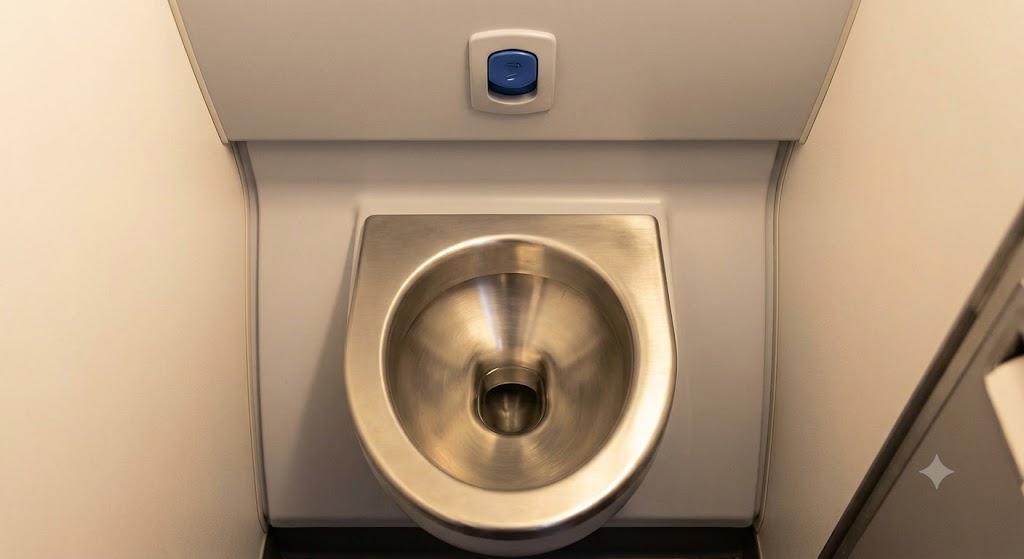
Because the air pressure does the heavy lifting, the toilet needs very little liquid to clean the bowl. A peer-reviewed study published by AIP Publishing notes that “compared to the gravity flushing system, it is cleaner, more hygienic, and water efficient.”
A standard home toilet uses several litres of water, but an aeroplane toilet needs less than a cup of fluid per flush.
Managing the waste on the ground
What happens when the plane is on the tarmac or flying low? Since the pressure difference is not big enough, an electric vacuum generator turns on automatically to create the necessary suction.
The waste travels through non-stick pipes directly to a large, insulated collection tank located at the back of the aircraft. This tank is completely sealed to keep unpleasant odours out of the passenger cabin.
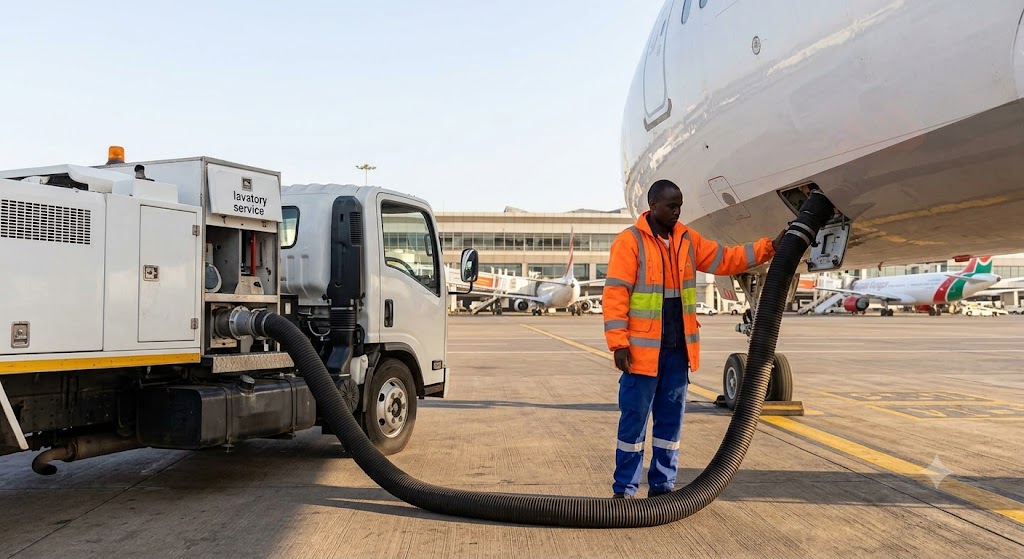
Once the aeroplane lands safely, the final step begins. Ground crews drive a specialised service truck to the plane and connect a heavy-duty hose to the external waste valve.
They vacuum out the storage tank and transport the waste to the airport sewage facility for proper disposal. It’s a rather simple yet highly calculated piece of infrastructure that solves a messy problem without passengers ever having to think about it.