Apple enters the foldable phone race: Can its new iPhone take on Samsung?
By Ascah Mwango, September 9, 2026For years, Samsung has had the foldable phone market largely to itself, turning screens into books, phones into mini tablets and curious shoppers into people willing to spend a small fortune on technology that bends. Apple stayed away. Until now.
Apple’s foldable iPhone could bring a fresh twist to the long-running rivalry between the two technology giants. But with Samsung already years ahead, the big question is whether Apple can fold its way to the top.
Samsung has been folding for years
Samsung has spent years developing foldable devices and learning what works and what does not.
Its first Galaxy Fold arrived in 2019 and attracted huge attention, although it also faced early problems with durability. Since then, Samsung has released several generations of the Galaxy Z Fold and Galaxy Z Flip, making improvements to the screens, hinges, cameras and overall design.
The company has slowly moved foldable phones from strange-looking technology into devices that people can actually use every day.
Samsung’s biggest advantage is simple: experience.
It understands that making a phone fold is only the beginning. The device must also survive thousands of openings and closings, fit comfortably in a pocket and offer software that makes good use of the larger screen.
Apple is entering a market where Samsung has already done plenty of homework.
Apple has been watching and learning
Being late is not always a bad thing in the technology world.
Apple has often taken its time before adopting new ideas. The company did not invent the smartphone, the smartwatch or wireless earbuds, but it entered those markets and turned its products into major successes.
The same approach could work with foldable phones.
Apple has had years to watch Samsung and other manufacturers deal with problems that come with folding screens. Issues such as visible creases, fragile displays and complicated hinges have all been part of the foldable phone journey.
Instead of rushing to be first, Apple appears to have focused on developing a device that addresses some of these concerns.
This could give the company an advantage.
Nobody wants to spend a fortune on a phone and then treat it like a newborn baby because they are afraid of damaging the screen.
If Apple can make its foldable iPhone feel strong and simple, it could attract customers who have been curious about foldable phones but were not ready to take the risk.
The foldable iPhone could change how people use their phones
The biggest selling point of a foldable phone is the ability to have a smaller device that can become a larger screen when needed.
Closed, it can fit into a pocket. Opened, it can offer more space for watching videos, reading, browsing, gaming and working.
That means a foldable iPhone could appeal to people who want the convenience of a smartphone and the larger display of a tablet without carrying both.
For example, someone could answer messages on the smaller screen while travelling and then open the phone to watch a movie or work on a document.
The challenge for Apple will be making sure the larger screen does more than simply look impressive.
Samsung has spent years developing multitasking features for its foldable phones. Users can open several applications, drag content between windows and use the larger display for work and entertainment.
Apple will need to create an experience that makes people think, “Yes, I actually need this.”
That is harder than simply making a phone bend.
Apple’s loyal customers could give it a big boost
Apple may be new to foldable phones, but it is not new to selling expensive technology.
The company has millions of loyal customers around the world who already use iPhones, Apple Watches, MacBooks, AirPods and iPads.
That ecosystem could become one of Apple’s biggest weapons against Samsung.
For many Apple users, changing to a Samsung phone means leaving behind services and devices they use every day. A foldable iPhone would allow them to try a new type of smartphone without abandoning the Apple ecosystem.
This could be particularly important for customers who have wanted a foldable phone but did not want to switch from iOS to Android.
Apple could simply offer them a new option while keeping everything they already know.
That kind of customer loyalty should not be underestimated.
Samsung will not give up its crown easily
Apple may bring excitement to the foldable market, but Samsung is unlikely to sit back and watch.
Samsung has built a strong reputation in the foldable phone business and continues to improve its Galaxy Z Fold and Galaxy Z Flip devices.
The company has another important advantage: choice.
Samsung offers different foldable designs for different users. Some people prefer a phone that opens like a book, while others prefer a smaller device that folds in half.
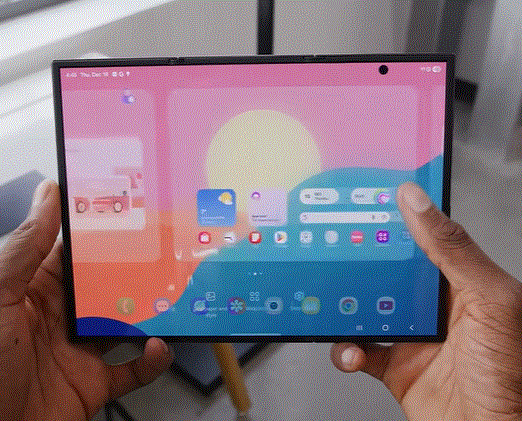
Samsung Galaxy Z Tri Fold. PHOTO/Screengrab by K24 Digital
Apple’s first foldable iPhone will need to compete with a company that already understands different types of foldable phone buyers.
Samsung also has experience with Android software, which gives users plenty of options for multitasking and customisation.
Apple, on the other hand, is known for keeping things simple.
This could create an interesting divide.
Samsung may appeal to people who want flexibility and more control, while Apple could target users who want a smooth experience without spending hours adjusting settings.