It’s not just period pain: Understanding Endometriosis and why it shouldn’t be ignored
By Katemarthason Okudo, May 4, 2026For a long time, painful periods have been treated as something women simply have to endure. In many conversations, it’s brushed off as normal, something to push through with painkillers and rest.
But doctors are now urging women to pay closer attention, warning that persistent, intense pain could be a sign of a deeper condition: endometriosis.
How widespread is Endometriosis?
The condition, highlighted by the World Health Organization, affects about 1 in 10 women of reproductive age worldwide. Yet, despite how common it is, awareness remains low, and many women go years without a proper diagnosis.
According to the WHO, Endometriosis is a disease in which tissue similar to the lining of the uterus grows outside the uterus, a process that can lead to pain and, in some cases, infertility.
In simple terms, tissue that is supposed to stay inside the uterus begins to grow elsewhere on the ovaries, fallopian tubes, or other parts of the pelvis. Each month, this tissue reacts to hormonal changes just like the uterine lining, but because it has nowhere to go, it causes inflammation, pain, and sometimes scarring.
For many women, the signs are easy to overlook. Painful periods, heavy bleeding, or fatigue are often dismissed as part of a normal cycle. But doctors say the difference lies in how severe and disruptive the symptoms become.
At Aga Khan University Hospital, Nairobi, specialists note that delayed diagnosis is common. “It can take years before a patient receives the correct diagnosis because symptoms are often mistaken for normal menstrual issues,” doctors explain.
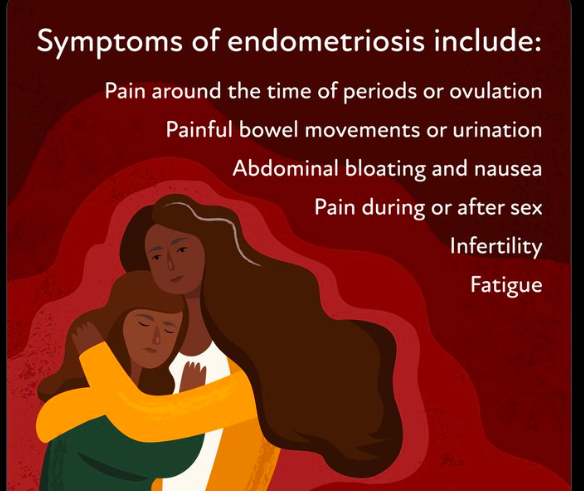
The symptoms vary from person to person. Some women experience intense cramps, while others deal with chronic pelvic pain that extends beyond their periods. There are also cases of pain during or after sex, discomfort during bowel movements, bloating, and ongoing fatigue.
Health experts say one of the biggest challenges is how normalised the pain has become. At Nairobi West Hospital, gynecologists say many patients only seek help after years of discomfort. “We see patients who have lived with severe period pain thinking it is normal, only to later discover it is endometriosis,” a specialist explains.
Beyond the physical pain, the condition can also affect emotional well-being. Living with ongoing discomfort, uncertainty, and in some cases, fertility struggles can take a toll, especially when the condition is not immediately understood or diagnosed.
Medication
While there is currently no cure for endometriosis, treatment focuses on managing symptoms. Doctors often start with pain relief medication and hormonal treatments to control the growth of the tissue. In more severe cases, surgery may be recommended to remove the affected tissue, although symptoms can return over time.
Lifestyle also plays a role in management. Some women find relief through regular exercise, balanced diets, and reducing stress, though these do not replace medical care.What stands out most to doctors is the importance of listening to your body. Pain that disrupts daily life, whether during periods or beyond, is not something to ignore.
Endometriosis is more than just a painful period. It is a condition that affects how women live, work, and experience everyday life. And as more conversations begin to open up around it, one message is becoming clear: not all pain is normal, and seeking answers matters.