How your phone is making you less intelligent, and what to do about it

Somewhere between the third Instagram scroll and the seventh notification, something quieter is happening.
Your brain is being gradually remodelled, without your awareness, and in ways most of us have not paused long enough to notice.
You might also like
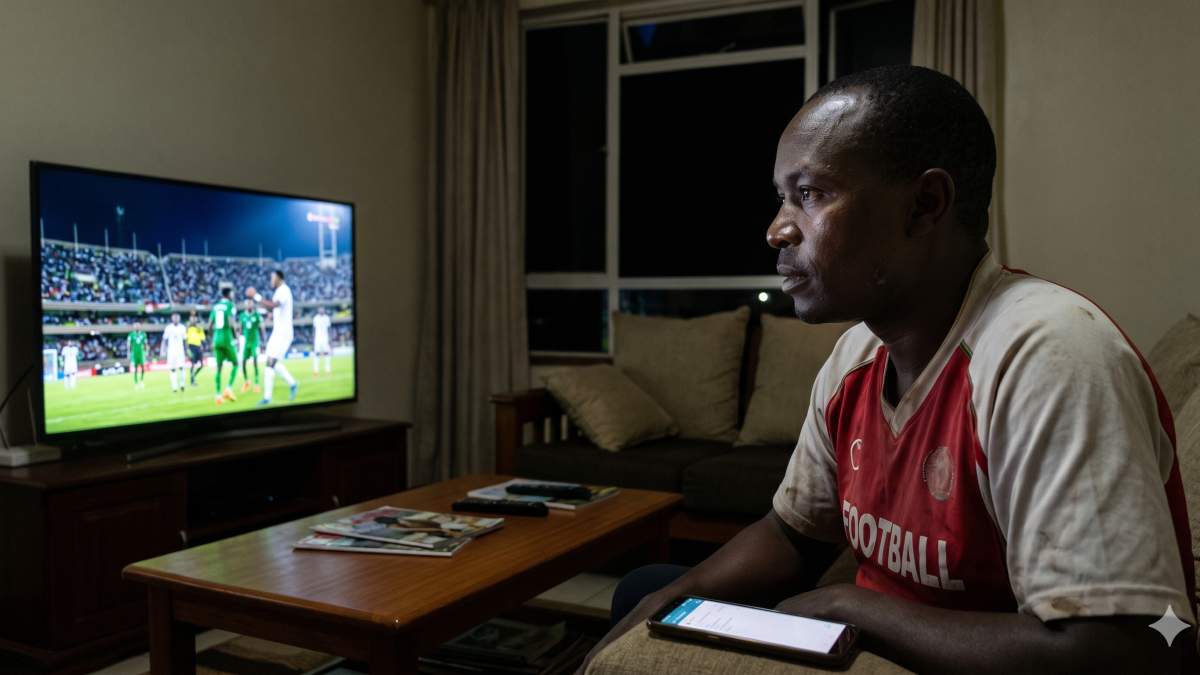


The average person picks up their phone over 100 times a day. That rhythm of constant checking has become so ordinary it barely registers as a habit.
But researchers are paying close attention, and what they are finding is worth setting the phone down for.
What the science actually says
In a 2023 study published in Scientific Reports, researchers at Paderborn University in Germany put participants aged 20 to 34 through concentration and attention tests – sometimes with a smartphone visible nearby, sometimes without one present. Their conclusion was striking.
The results of the experiment implied that “the mere presence of a smartphone results in lower cognitive performance,” supporting the hypothesis that the device’s proximity uses up limited mental resources.
Read that again. The phone did not ring. No notification fired. It just sat there, and performance dropped anyway.
This is what researchers call the “brain drain” effect: a portion of your mental energy is quietly diverted toward managing the urge to check your phone, leaving less available for the task in front of you.

The same study found that the effect held true regardless of whether the phone was switched on or off. Distance, not power status, was what determined the cognitive cost.
The attention hit is only part of the picture.
Neurophysiological research reports that heavy smartphone use is associated with impairments in attention, number processing, and right prefrontal cortex excitability – pointing to effects that go beyond distraction and into brain function itself.
Working memory, the system that holds and processes information in real time, is particularly affected. Studies have shown that people perform better on memory recall tasks when their phone is in another room entirely
Then there is decision fatigue. Every notification, every quick scroll, every micro-choice about whether to reply or swipe demands a small cognitive tax.
Over the course of a day, those taxes compound.
By evening, the willpower most of us rely on for sound decisions (what to eat, whether to exercise, how to respond to a difficult conversation) is running low.
The habits that can reverse it
The encouraging part is that most of these effects appear to be behavioural rather than permanent. A few deliberate adjustments can meaningfully protect your focus and mental clarity.
Start the morning phone-free. Even 20 to 30 minutes without reaching for your device gives your brain a chance to operate on its own terms before the notification economy kicks in. Use that window for a walk, journaling, or simply a quiet cup of tea.
Put it out of sight. The Paderborn research found that moving the phone to another room produced the most significant improvement in cognitive performance. If that feels dramatic, a drawer is a reasonable place to start.

Audit your notifications. Most people have dozens of apps enabled to interrupt them at any moment. Go through your settings and switch off every non-essential alert. Social media and emails can wait; your sustained attention cannot keep absorbing those interruptions indefinitely.
Try monotasking. Smartphones have conditioned many people to do several things at once – half-watching something while half-scrolling something else. Deliberately doing one thing at a time, even in short bursts, begins to rebuild the focus that passive phone use quietly chips away.
Check on your schedule, not theirs. Rather than reacting to your phone throughout the day, set two or three fixed windows for messages and social media. Outside those times, the phone stays elsewhere.
The phone itself is not the problem. As a tool, it connects, informs, and opens doors. The issue is the relationship. One that, left on autopilot, quietly trains the brain toward distraction rather than depth.
A little intentionality goes a long way. Your attention is worth protecting.