How to hold on to your culture when you move to a new city
By Katemarthason Okudo, April 30, 2026Moving to a city often begins with excitement, the promise of opportunity, independence, and a new rhythm of life.
However, the process of adapting to the new way of life is quite stressful, and many people begin to feel a quiet shift within themselves. It’s not always obvious at first, but over time, the distance from home becomes more than just physical.
For many who relocate from rural areas or smaller towns, the transition into city life comes with subtle compromises. Language is often the first to go. Native tongues are replaced with Kiswahili or English, sometimes out of convenience, other times out of fear of standing out.
Need to adapt
Cultural practices that once felt natural begin to fade, pushed aside by various schedules and the need to adapt.
The city has a way of reshaping people. It demands speed, flexibility, and a certain kind of awareness. In that environment, holding on to cultural identity can feel like extra weight. But the loss of that identity often brings a different kind of discomfort, one that shows up as disconnection.
According to the Kenya National Bureau of Statistics, urban migration continues to increase, especially among young people seeking education and employment. As more individuals settle in cities, questions around identity and belonging become harder to ignore.
Sometimes, the challenge is not migration itself, but how people navigate the change. Adapting to a new environment doesn’t mean abandoning your background. The danger comes when people feel pressure to erase parts of themselves to belong.
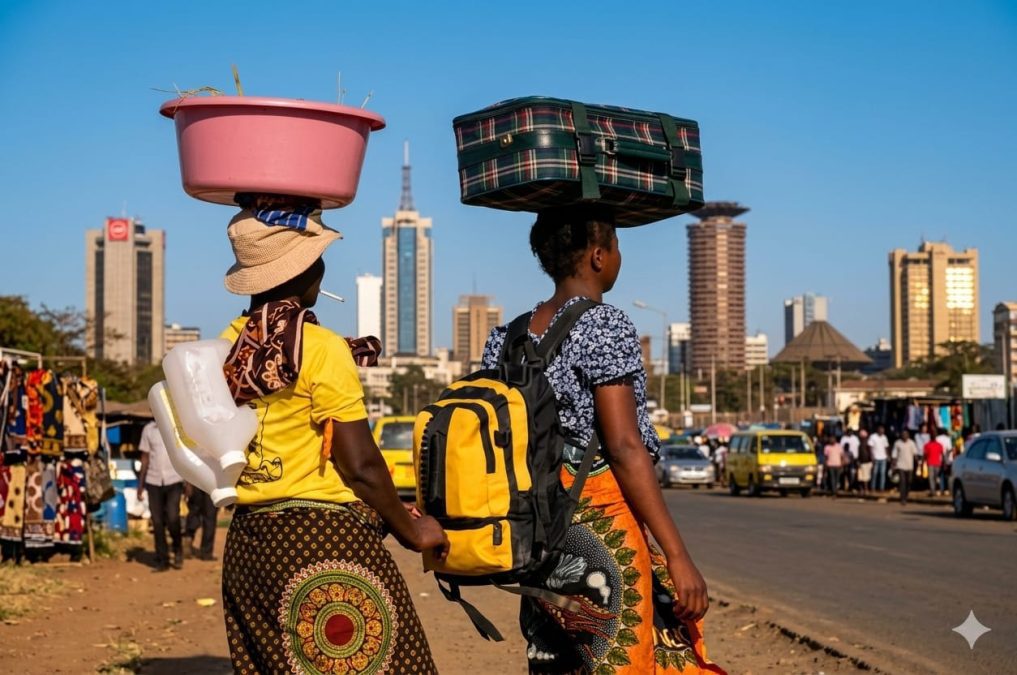
In many cases, staying connected to culture comes down to the choices one has to make every day. Food plays a big role. Preparing traditional meals, even occasionally, can bring a sense of familiarity in an otherwise unfamiliar environment. Music, too, acts as a bridge; songs from home often carry memories and emotions that remain unchanged despite the distance.
Finding community
There is also growing importance in finding community. Across the city, small circles continue to form among people with shared backgrounds. These groups meet in homes, churches, or informal settings, creating spaces where language, traditions, and shared experiences are freely expressed. There’s comfort in being around people who understand where you come from without explanation. It allows you to relax and be yourself in a place that often feels demanding.
Still, the balance between fitting in and staying rooted is not always clear. The city rewards those who adapt quickly, and sometimes cultural identity can feel like something that slows the process. But over time, many come to realize that losing touch with their roots creates a gap that no level of success can fill.
The idea is not to resist change, but to carry forward what matters. Identity is not fixed; it evolves, but it doesn’t have to disappear in the process. Holding on to culture can be as simple as speaking your language when you can, staying connected with family, or making space for traditions, even in small ways.
In a city that constantly pulls people in different directions, it is that connection to where they come from that provides stability.