Why your house’s window orientation matters more than you think
By Dan Kauna, July 10, 2026Most Kenyans hunting for a flat check the rent, the estate, and the water pressure. Almost nobody asks which way the windows face. Yet in a city sitting almost directly on the equator, that one detail quietly shapes your sleep, your mood, and even your electricity bill.
Nairobi’s position at roughly 1.3 degrees south means the sun tracks nearly overhead year-round, tilting slightly north during the June-July cold season.
A north-facing unit catches the most light during these cooler months, while south-facing rooms miss out.
East-facing windows fill up with soft morning light, the kind that helps you wake up properly. West-facing ones take the full force of the afternoon sun, which can turn a sitting room into a sauna by 4pm.
How light exposure affects the body
Daylight is the main signal the body uses to set its internal clock, and that clock governs far more than sleep.
A study on residents living with different window setups found that “light–dark patterns are key for circadian alignment and are ultimately fundamental to multiple dimensions of health, including sleep and mental health.”

In the research, participants with greater daylight access fell asleep earlier and slept more consistently than those in dimmer conditions.
The same body of research points to something many renters already feel instinctively: a home starved of natural light tends to leave people groggier during the day and restless at night.
Modern lifestyles, largely spent indoors, limit how much of this beneficial daylight people actually get, which is part of why orientation matters more in a compact flat than it might in a house with windows on every side.
What to check before you sign a lease
Before committing to a unit, stand in the main living space at different times of day if you can, or simply ask which direction the balcony or main window faces. A north or east-facing unit tends to feel brighter and more liveable without running curtains permanently shut.
A west-facing one is not a dealbreaker, but sheer curtains or reflective film can cut the worst of the afternoon heat.
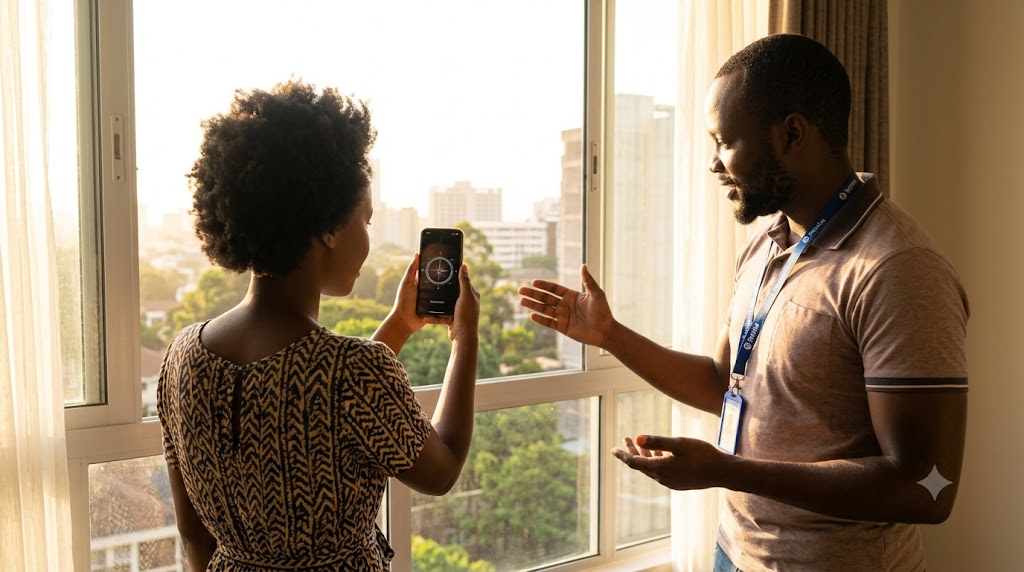
If you already live in a poorly lit unit, small fixes still help. Mirrors placed opposite windows bounce available light deeper into a room, and swapping heavy drapes for sheer ones during the day makes a noticeable difference without sacrificing privacy in the evening.
Orientation will not fix a bad location or a leaking roof. But for something that costs nothing to check before you move in, it is one of the more overlooked ways to protect your sleep and your mood in a small city flat.