Advertisement
How elevating legs releases lower back pressure after sitting
27th July, 2026 09:09 PM
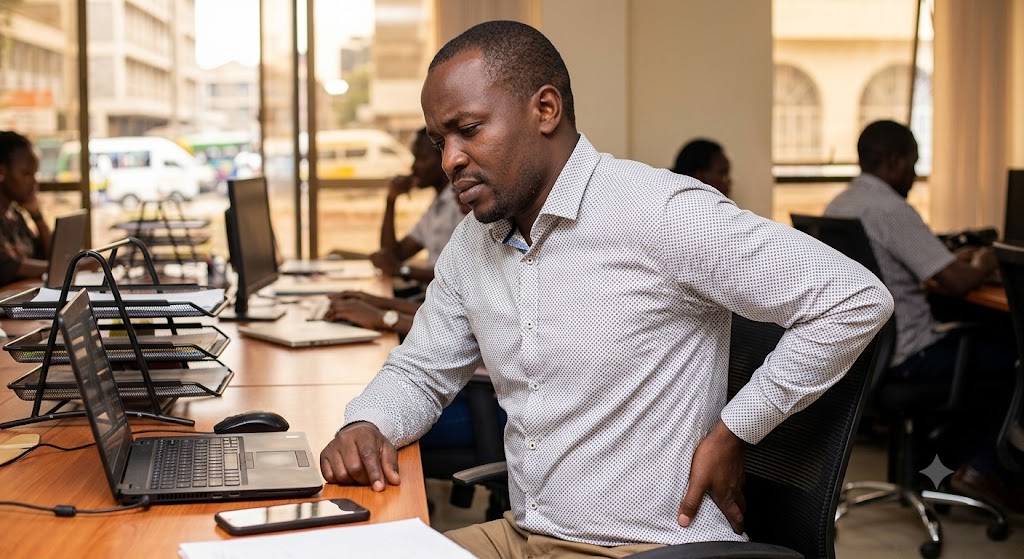
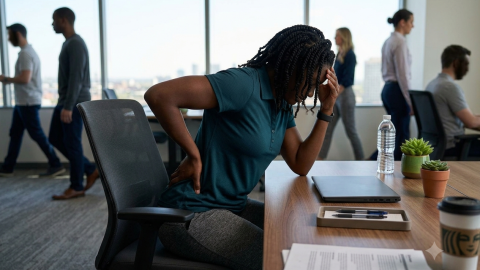
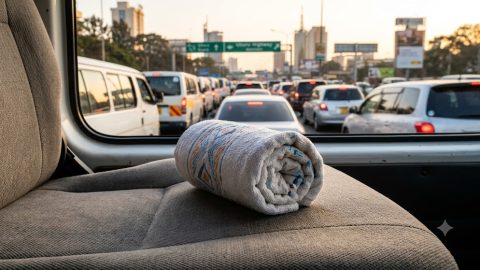
Sitting for hours at a desk or spending long periods stuck in traffic takes a heavy toll on your lower back. By evening, your lower spine often feels tight, stiff, and sore.
Luckily, you do not need expensive therapy or fancy equipment to get relief. Spending just ten minutes lying on the floor with your legs resting on a chair can ease that pressure quickly.
When you sit for long stretches, your upper body weight presses down on the soft discs in your spine. Sitting also causes a deep hip muscle, called the psoas, to stay pinched and shortened.
This muscle connects your spine to your thigh bone, so when it stays tight, it pulls constantly on your lower back, keeping your spine arched and strained even after you stand up.
How leg elevation flattens your spine
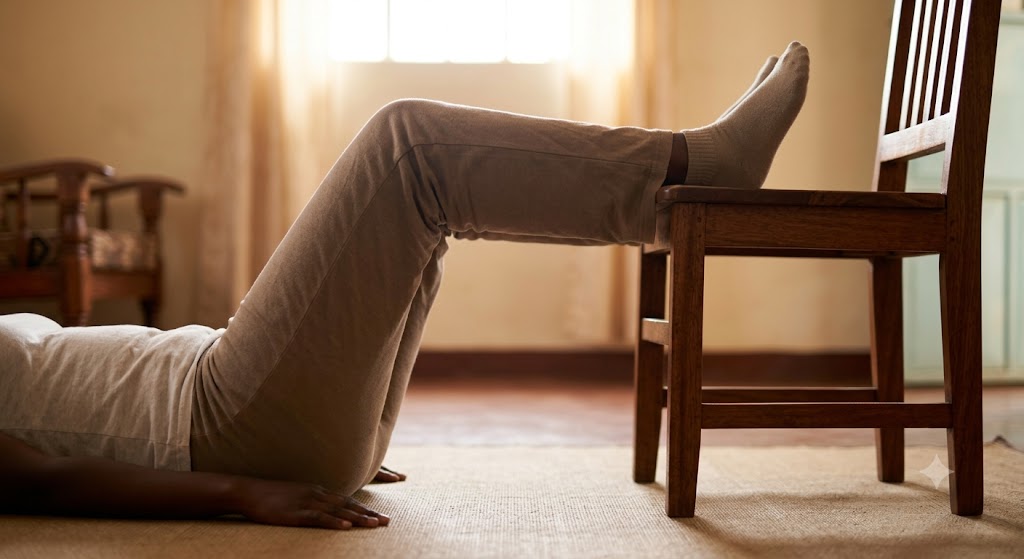
Lying flat on your back with your legs resting at a 90-degree angle changes everything.
This position allows your hips to settle and your pelvis to tilt slightly backward, which flattens your lower back against the floor and takes the heavy pressure off your spine.
Science supports this simple move.
In a study published in the Journal of Anatomy, medical researchers explained that keeping the hips and knees bent at this angle helps by “relaxing the psoas muscle and removing the force that it would otherwise place on the spine.”
Once this deep muscle releases its grip, the surrounding lower back muscles can finally stop overworking and relax.
Simple steps to practise at home
Trying this routine at home is easy and takes minimal effort after work. Lie flat on a mat or carpet, then lift your lower legs onto the seat of a sturdy chair, sofa, or bed.
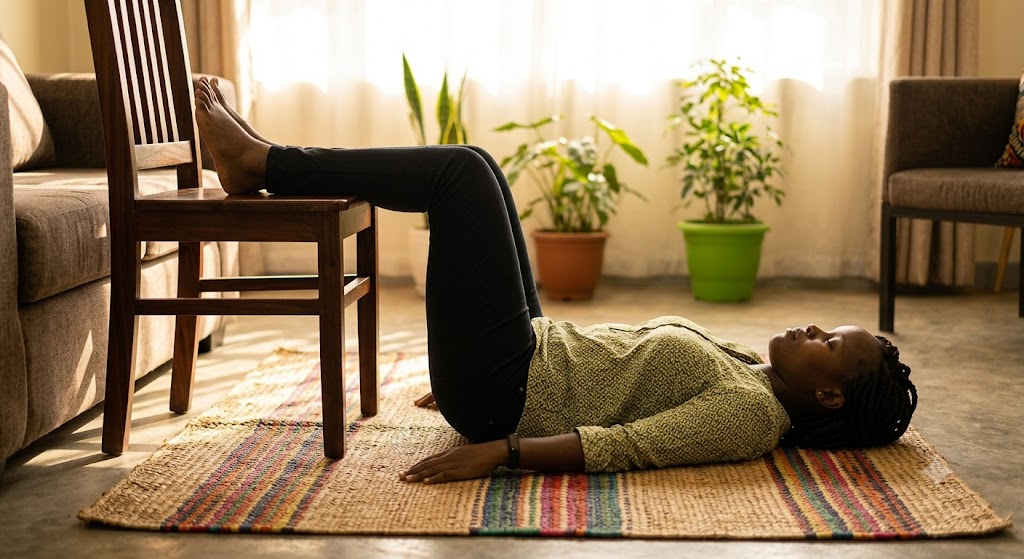
Make sure your hips and knees both bend at about 90 degrees. Rest your arms by your sides and breathe deeply for ten minutes.
Avoid using thick pillows under your head, because keeping your spine straight from neck to hips gives the best results.
Practising this leg elevation daily restores space between your discs, improves blood flow, and leaves your lower back feeling loose and refreshed.