Functional fitness: How to adopt training regimen that mimics real-life movements
By Dan Kauna, September 12, 2026For years, gym routines followed a familiar script. You sat on a machine, isolated a single muscle, and pushed weight in a fixed line. Bicep curls, leg extensions, and pec decks dominated fitness spaces.
Today, the script is flipping as fitness enthusiasts swap traditional weightlifting for movements that mirror daily life.
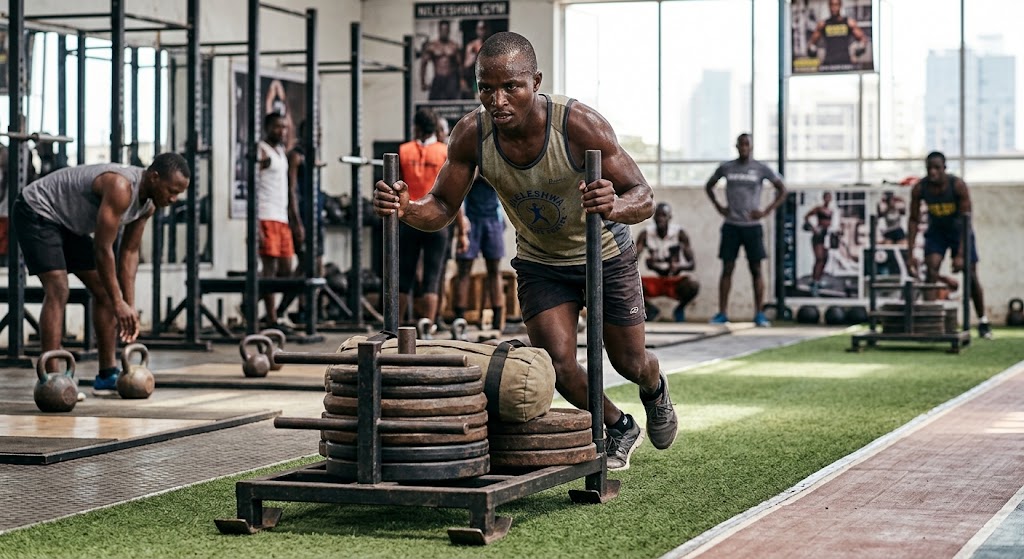
Step into a modern training center, and you are far more likely to see someone marching across the floor carrying heavy trap bars or driving a loaded sled across artificial turf. This shift toward functional fitness moves away from isolated aesthetics.
The goal now is building strength that translates to real-world tasks.
Carrying heavy sacks from the boot of a car, hauling water canisters, or moving household furniture require your entire body to work as an integrated unit. Machine exercises isolate muscles, but daily chores never do.
Exercises like the farmer’s carry and sled push require full-body integration. When you grab a heavy pair of weights and walk, your grip, shoulders, core, glutes, and legs must fire continuously to keep you upright and moving forward.
Similarly, pushing a weighted sled forces your legs to generate force while your core stabilises your spine under load.
Research supports this practical pivot. A review published in Frontiers in Physiology evaluated the physical impacts of these movement patterns, noting that “functional training significantly impacts speed, muscular strength, power, balance, and agility.”
Power over machine isolation
Beyond real-world usefulness, functional routines offer an advantage for busy urban schedules. Isolation workouts require individual focus on separate muscle groups, often taking hours to complete.
Compound functional movements train multiple muscle groups simultaneously, giving you a full-body workout in less time.
These movements also lower the strain on your lower back. Unlike heavy conventional deadlifts or back squats, which compress the spine, a loaded carry keeps your torso upright.
This makes it an ideal option for office workers sitting in traffic or at desks all day, building core stability without unnecessary spinal compression.
Workouts to upgrade your everyday movement
Farmer’s Carries: Pick up two heavy dumbbells or kettlebells, draw your shoulders back, keep your chest tall, and walk 30 to 50 metres without letting the weights swing.

Suitcase Carries: Hold a single weight on one side and walk. Your opposite obliques and hip stabilizers will work double-time to keep you standing straight.
Sled Pushes: Grip the sled handles, lean forward at a 45-degree angle, keep your spine neutral, and drive through your legs with firm, steady steps.
Fitness is no longer just about how much weight you can bench press on a flat surface. By building stability, balance, and power, functional training ensures your time in the gym directly improves how well you move outside it.