How to spot and buy durable school shoes that last the entire term on a budget
By Dan Kauna, August 20, 2026Back-to-school season always puts a real squeeze on family finances, and buying school shoes often takes up a big chunk of the budget.
Whether shopping in busy open-air hubs like Gikomba and Toi Market or stepping into town shoe shops, getting durable shoes saves parents from spending twice.
A quick five-minute hands-on check before paying is all it takes to spot genuine leather footwear that will last.
Checking leather quality and seam stitching
Real full-grain leather carries tight surface fibres that handle daily scuffs and rainy weather without peeling. Cheap plastic or bonded leather looks overly smooth in the shop, but it cracks easily across the toes after just a few weeks of active school play.
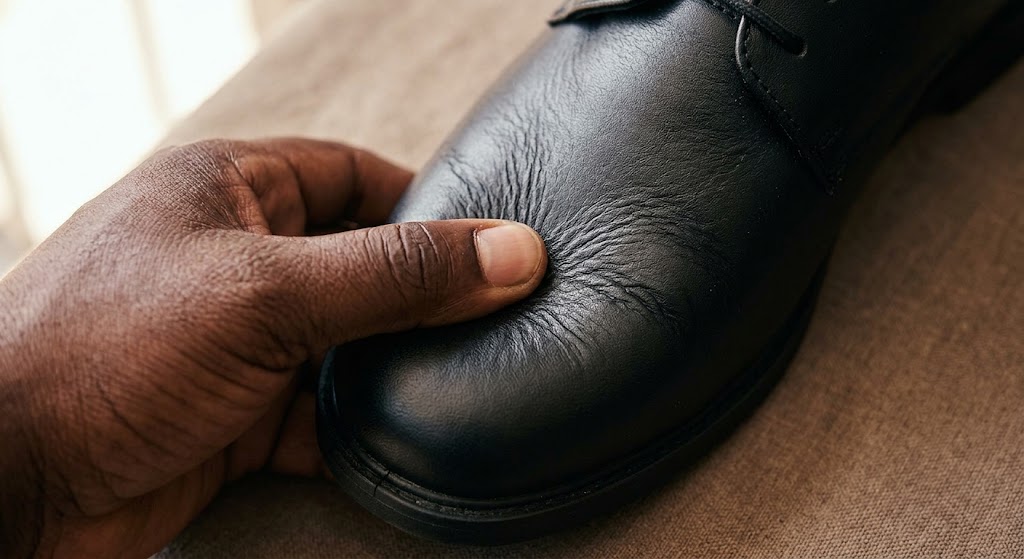
Testing this is simple. Press a thumb hard into the leather surface. Genuine leather forms small, natural wrinkles under pressure and smooths out immediately when released, whereas artificial materials stay stiff or leave dented marks.
A peer-reviewed study on footwear materials notes that “the physical strength of the upper leathers used in shoe production is of great importance for consumer and producer” because weaker, thinner leathers tear much faster under daily stress.
Strong seams also keep shoes together. Double-stitched seams, where thread fastens the upper material securely to the sole unit, hold up far better than weak glue alone.
Heavy mud and rainwater easily soften cheap shoe glue, causing the sole to detach. Running a quick finger along the border ensures the stitching is tight, even, and free of loose threads.
Testing sole flexibility to prevent heel splits
Stiff, rigid soles are the main cause of early heel splits. A reliable shoe sole needs to bend easily where the toes flex, not in the middle. Hold the shoe, place a hand under the toe cap, and bend it upwards.
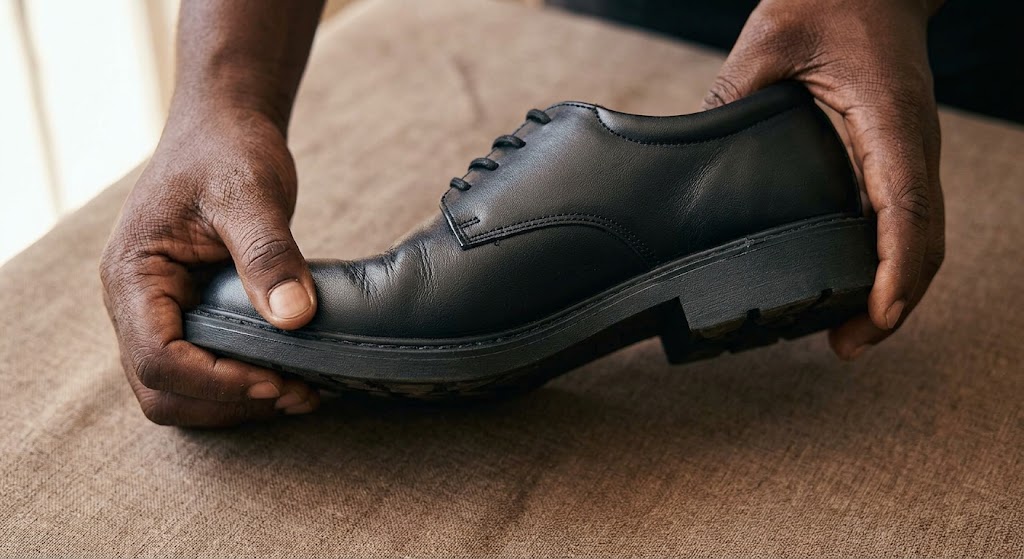
If the shoe refuses to bend, or if it folds right across the middle arch, walking puts heavy strain on the heel joint, cracking the rubber within a few weeks.
Thick natural rubber soles absorb shocks well and wear down slowly on rough tarmac or gravel roads. Spending between Ksh1,500 and Ksh3,000 makes good financial sense when the shoes have sturdy rubber bases and well-reinforced heels.