How to layer necklaces of different lengths without them tangling
By Dan Kauna, September 20, 2026Layering necklaces adds instant style to an outfit, but a tangled clump of chains around your neck can quickly ruin the look. This frustrating issue comes down to movement and friction.
Research on string dynamics published in the Proceedings of the National Academy of Sciences found that “above a critical string length, the probability P of knotting at first increased sharply with length” meaning the longer a necklace is, the easier it tangles.
Understanding these dynamics makes preventing knots easier. Here is a guide to wearing multiple chains comfortably without the headache.
Space out your lengths
The primary rule of layering jewellery is maintaining a clear distance between every piece. Wearing two chains of identical length causes them to cross paths and wrap around each other almost instantly.
Keep a gap of two to five centimetres between each strand. For instance, pair a short 40-centimetre choker with a 45-centimetre chain and a 50-centimetre matinee necklace.
Mix different weights and textures
Chains of the same style and thickness cling together easily. Combining different textures and weights reduces this friction significantly.
Pair a smooth, heavier snake chain with a delicate cable or box chain. The heavier piece stays grounded against your chest, while the lighter strand rests comfortably above it without catching.
Invest in a necklace spacer clasp
If you regularly layer three or more pieces, a multi-strand spacer clasp is an essential tool.
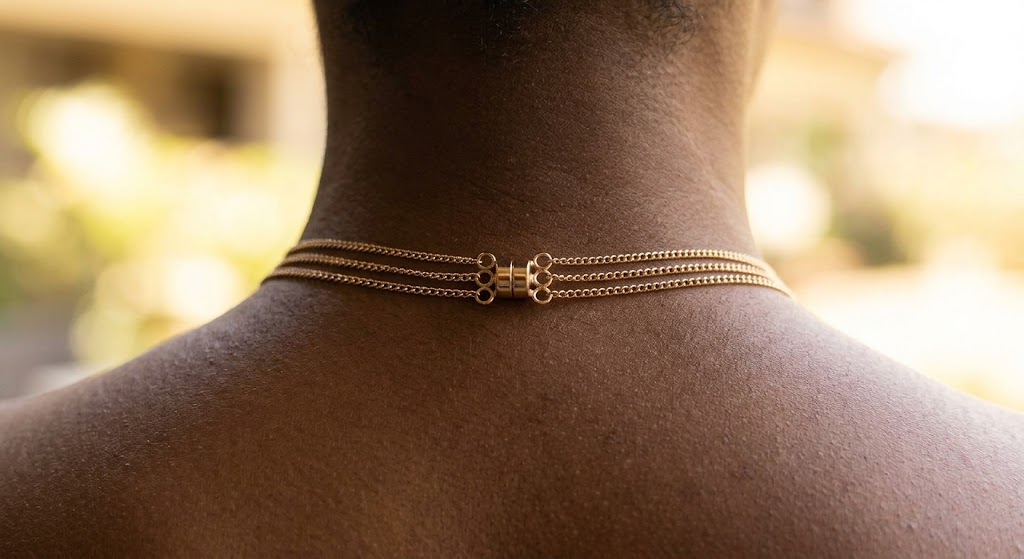
Available in local beauty shops and online platforms for between Ksh300 and Ksh800, these small metal separators hold the ends of your chains at fixed intervals.
You hook each necklace into the separator, which then fastens behind your neck as a single unit, keeping every strand completely isolated.
Anchor your stack with a pendant
Place your heaviest pendant on the longest chain in your arrangement. Gravity pulls the pendant downward, creating continuous tension that keeps the chain straight and anchored in place.
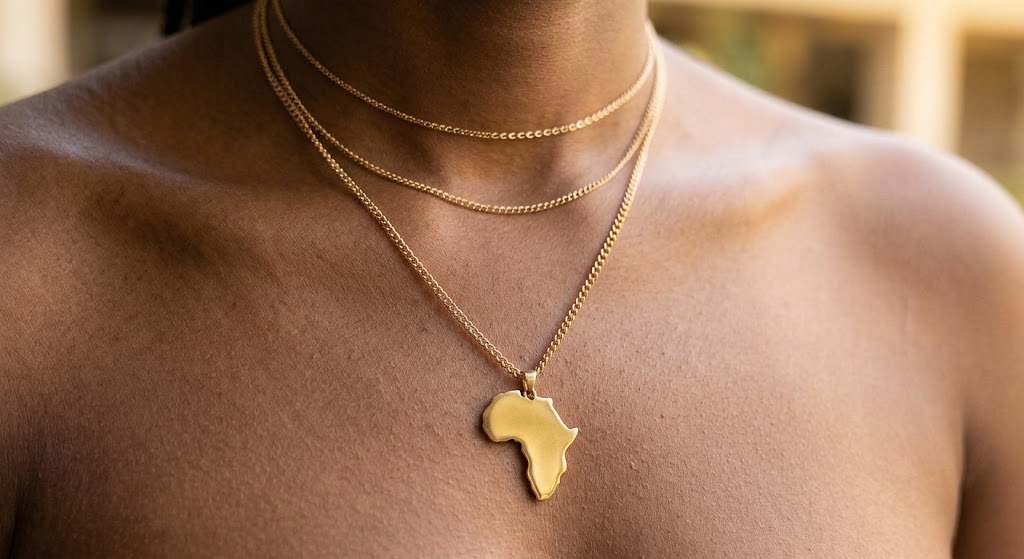
This downward pull prevents the longer piece from riding up into the shorter chains above it.
Store them properly when not in use
Tangling often begins inside your jewellery box rather than on your body. Always fasten clasps before putting necklaces away.
Threading delicate chains through a paper drinking straw or hanging them individually on small hooks prevents knots from forming while they sit in storage.