Glass hair trend: Inside the viral K-beauty craze taking over TikTok
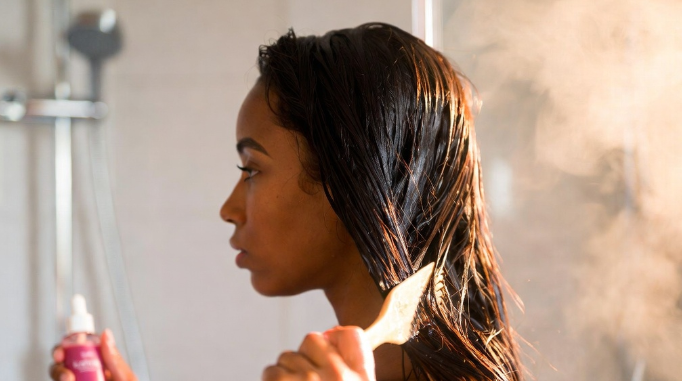
By CNN, June 9, 2026Long, shiny locks shimmer in video after video on TikTok and Instagram. This isn’t just glossy hair, it’s “glass” hair, so perfectly polished its sheen is mirror-like.
The K-beauty craze is an evolution of the “glass skin” trend that sees radiance and luminosity as a signifier of overall health, says Rena Kim, global communications lead at CJ Olive Young, South Korea’s biggest beauty retailer.
“The Korean haircare market has traditionally placed strong emphasis on consistent cleansing routines and maintaining smooth, glossy, well-groomed hair,” says Kim.
Glass hair is an extension of that, with a range of products and practices to help tresses lie flat through conditioning, strengthening and protecting, rather than high-heat straightening or weighing down with products, she adds.
Achieving glass hair comes from cuticle alignment, says Anabel Kingsley, consultant trichologist at hair and scalp-care brand Philip Kingsley.
Hair cuticles are the protective outer layer on each strand of hair, made up of overlapping cells, “like tiles on a roof,” explains Kingsley. “It defends the inner part of your hair from damage, and also a healthy, flat, closed cuticle, reflects light better, so it shines better, so it is really important.”
Damage to the hair from harsh chemicals in dyes and perms, or heavy-handed brushing and heat styling, can cause the cuticle to open, leading to frizziness or split ends.
Many glass hair products promote shine by “sealing the hair cuticle,” helping to strengthen and smooth hair, says Kim. Pioneering brands like Mise-en-Scène and UNOVE — the latter of which launched earlier this year in Sephora’s US stores utilise low-pH formulas to help hair cuticles lie flat, and protein treatments to fill in gaps on damaged strands.
“Alongside these treatments, styling devices and specialised hairbrushes designed to produce a sleek finish are also gathering market attention,” Kim adds.
Style over substance?
The trend for a flawless, polished aesthetic is a reflection of South Korea’s high — and often unrealistic — beauty standards.
Both men and women face enormous pressures to look a certain way, and the nation has the highest rates of cosmetic surgery and the biggest per-capita spend on beauty products globally.
High-shine hair can be the result of healthy tresses, but unless you have naturally straight locks, “what most people have to do to get it is going to damage their hair,” says Kingsley.
For many hair types, achieving the “flat” finish needed for that glassy look usually requires high heat styling and strong tension, like brushing and pulling hair taut. Once hair is damaged, it can’t be repaired, only protected, says Kingsley, and she warns against taking the trend too seriously as “everyone’s hair is different.”
A model has her hair styled backstage ahead of the Chet Lo show during London Fashion Week in February 2026. Nicky J. Sims/Getty Images
Gentle styling with lower heat and a good protectant, along with deep conditioning treatments and weekly bond repair treatments, are the best ways to maintain good hair condition, “which has a huge impact on shine,” Kingsley says.
While glass hair can be achieved through potentially damaging methods, Kim notes that consumers are generally shifting away from “rigid, heavy-hold styles” toward more natural styling, with a surge of interest in damage-prevention products like UV and heat protectants, and nourishing rinse-off or leave-in hair masks, indicating a more holistic approach to haircare.
“There has been growing focus on scalp care as the foundation of healthy hair, with consumers increasingly viewing scalp care, hair conditioning, and styling as part of a connected routine,” says Kim.
Scalp-first philosophy
K-beauty’s global push into haircare comes at a time when hair loss problems are growing.
Hair thinning is more common as people age, and by 2030, when 1 in 6 people will be over the age of 60, the value of the global hair‑thinning market is projected to increase 82% from 2024, according to analysis from Grand View Research.
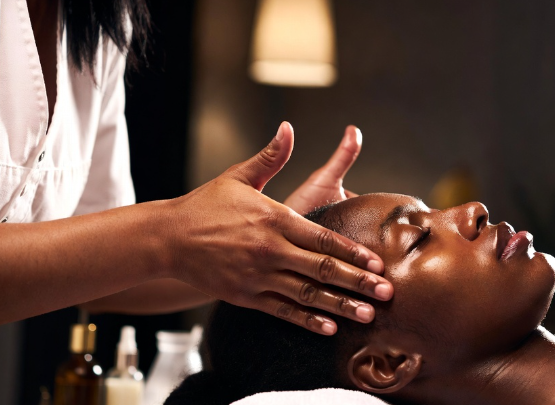
International travellers are already flocking to South Korea for scalp massages and head spas, with one tourism experience platform seeing a 219% rise in scalp care bookings in the first 11 months of 2025 compared to the same period the previous year.
In December, South Korean President Lee Jae Myung put Korean haircare in the spotlight again when he publicly called for hair loss treatments to be covered by health insurance.
A model walks the runway at Milan Fashion Week 2025 with smooth, glossy hair. Alfonso Catalano/SGP/Shutterstock
The scalp-first approach is deeply embedded in Korean self-care culture, says Kim, which is leading to the rise of “scalp skinification” applying the approaches common in facial skincare to the scalp.
“A popular saying in Korea, ‘if the scalp sags by one centimetre, the face sags by three centimetres,’ has fueled consumer attention around scalp massage and fascia-release routines as part of broader self-care and beauty rituals,” Kim says.